
 Worksheets
Supply & Demand
Total questions: 25
Worksheet time: 25mins

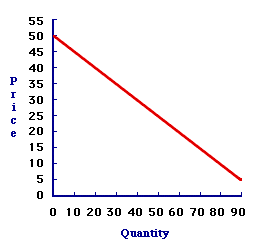
Supply is
how much consumers are willing to buy.
how much a producer (a business) is able and willing to make for sale to consumers.
the goods that are left over after a sale.
All of the above

Assume the image is showing the market for apples. Which of the headlines could indicate the pictured shift is occurring in the market?
Pesticides on apples linked to mouth cancer.
Storms destroy apple orchards.
An apple a day really does keep the doctor away.
New genetic strain leads to apple trees that produce twice as many apples.
New technology advances the rate at which furniture can be assembled. Why does this change the supply?
Change in cost of production
Changes in number of producers
Changes in expectations
Assume the image is showing the market for apples. Which of the headlines could indicate the pictured shift is occurring in the market?
Pesticides on apples linked to mouth cancer.
Storms destroy apple orchards.
An apple a day really does keep the doctor away.
New genetic strain leads to apple trees that produce twice as many apples.

Which of the following is NOT a determinant of the supply of peanut butter?
The price of peanuts
The wages of peanut butter factory workers
The income of peanut butter consumers
Existing peanut butter making technology

Which of the following will cause an increase in demand for snowboards?
More costly production methods
A decrease in the price of lift tickets at resorts in Colorado
A decrease in consumer income
A decrease in the population

Which of the following defines "Complementary Goods?"
Goods that can be used to replace the purchase of similar goods when prices rise
Goods that are commonly used with other goods
Goods that are independent of other markets
If only the price for a good or service changes, does the demand curve shift? Why or why not?
Yes, Price shifts the demand curve to the right because less people are being goods
Yes, Price shifts the demand curve to the left because more people are buying goods
No, Because price does not shift the curve. Price stays on the line
No, because price does not impact the points on the curve
Yes and No. The price shifts the curve sometimes, but not always

Americans revive their love of SUV’s and the newly remodeled, but still “gas guzzling” Hummer. What happens to the market for gasoline?
Demand for gasoline will decrease
Demand for gasoline will increase
Demand for gasoline will stay the same
A hurricane wipes out an orange crop in Florida, sharply affecting the supply of oranges. Which chart demonstrates this concept?


When the gov't pays money to businesses, usually to encourage them to produce a certain product..
taxes
regulations
competition
subsidies
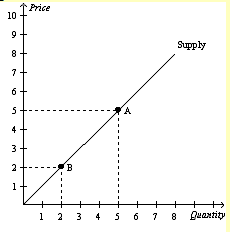
increase in the price.
decrease in the quantity supplied.
shift in the supply curve.
All are correct.
An example of a public good is...
Firefighters
police officers
parks
all answers are correct
uncompensated side effects that either benefit or harm a 3rd party not involved in the activity
economics
map
spillover effects

An ___________ is when a few companies have significant control over a given market.
partnership
oligopoly
monopoly
revenue
Price ceiling is located above the equilibrium price.
True
False
What is monopolistic competition?
A type of market structure where many companies are present in an industry, and they produce similar but differentiated products.
A type of market structure where many companies are present in an industry, and they produce the same exact products.
The game monopoly
When people make products that are not similar to one another.

