wayground logo

Free Printable Worksheets

Font size

S
M
L
XL
Worksheets

Biomolecules and Reaction Rates

Total questions: 25

Worksheet time: 25mins

Name
Class
Date
1.

Which of the following is the correct monomer of protein?

a)

amino acids

b)

fatty acids

c)

monosaccharides

d)

nucleotides

2.

Which of the following groups are all monosaccharides?

a)

glycogen, cellulose and starch

b)

glucose, galactose and fructose

c)

maltose, lactose and fructose

d)

sucrose, glucose and fructose

3.

Which of the following biomolecules contain mainly carbon, hydrogen, and oxygen?

a)

Carbohydrates

b)

Lipids

c)

Nucleic Acids

d)

Proteins

4.

Which among the following correctly describes lipids?

a)

it is soluble with water

b)

it is insoluble with water

c)

all forms of lipids are bad for the health

d)

its monomer is amino acid

5.

Which two biomolecules can supply us energy?

a)

Carbohydrates & Proteins

b)

Carbohydrates & Lipids

c)

Proteins & Lipids

d)

Nucleic Acids & Carbohydrates

6.

1Which among the following biomolecules codes for hereditary traits by controlling the production of protein?

a)

Carbohydrates                 

b)

Lipids

c)

Nucleic Acids

d)

Proteins

7.
Which biomolecule has sugars and starches?
a)
Lipids
b)
Proteins
c)
Carbohydrates
d)
Nucleic Acid
8.
Which biomolecule is made of nucleotides and contain you DNA?
a)
Carbohydrate
b)
Lipids
c)
Protein
d)
Nucleic Acid
9.
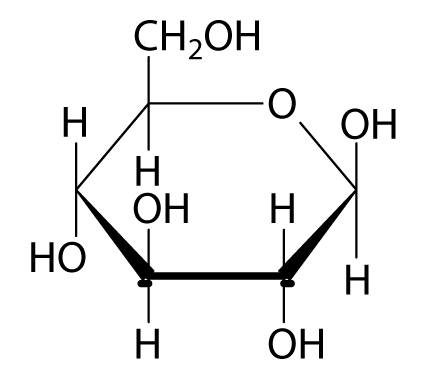
Identify the biomolecule
a)
Carbohydrate
b)
Lipid
c)
Protein
d)
Nucleic Acid
10.
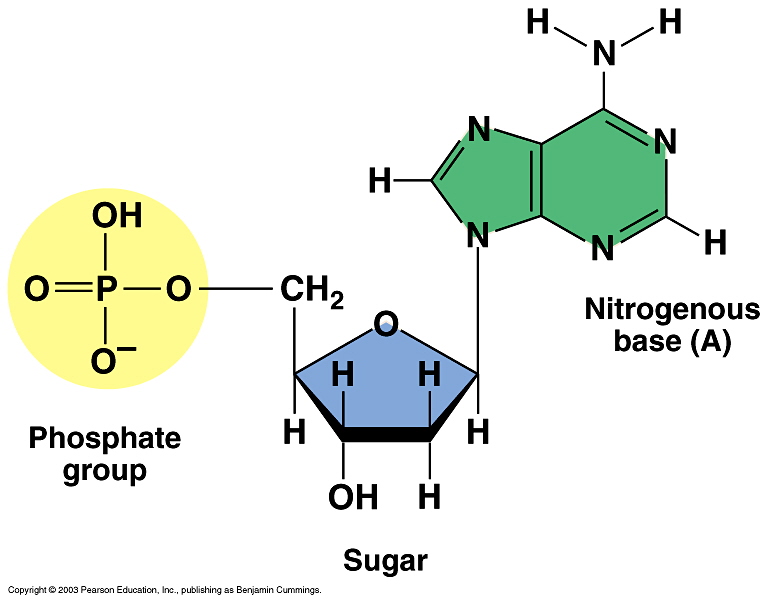
Identify the biomolecule
a)
Lipid
b)
Protein
c)
Carbohydrate
d)
Nucleic Acid
11.
What is the monomer of nucleic acids?
a)
Glycerol
b)
Monosaccharides
c)
Amino Acids
d)
Nucleotides
12.
Which biomolecule is this a picture of?
a)
Protein
b)
Nucleic Acid
c)
Lipid
d)
Carbohydrate
13.
The arrangement of which three components is used to distinguish one molecule from another?
a)
carbon, hydrogen, and oxygen
b)
glucose, fructose, and ribose
c)
peptide, fatty acid, and purine
d)
water, carbon dioxide, and notrogen
14.
The waxy, organic substances used by aquatic birds to coat their feathers, when analyzed consists mostly of 
a)
lipids
b)
proteins
c)
carbohydrates
d)
nucleic acids
15.
The rate of a reaction increases as temperature__________________.
a)
Decreases
b)
Increases
c)
Stays the Same
16.
A ______________ is a substance that increases the rate of a reaction without being used up during the reaction. 
a)
catalyst
b)
product
c)
reactant
d)
solute
17.
Smaller particle size allows for a _________ surface area to be exposed for the reaction.
a)
larger
b)
smaller
18.
Increasing the concentration of the reactants will slow down the reaction.
a)
false 
b)
true
19.
Products will form faster if____________
a)
the particle size of the reactants are larger.
b)
temperature is decreased.
c)
concentration of the reactants are increased.
d)
the reaction is not stirred.
20.
The rate of a chemical reaction is NOT affected by which of the following:
a)
temperature
b)
concentration
c)
particle size (surface area)
d)
All of these affect reaction rates
21.

Which of the following increase the reaction rate?

a)

less surface area

b)

lower temperature

c)

increasing pressure

d)

low concentration

22.

If the temperature is reduced, a reaction rate will ______

a)

increase

b)

decrease

c)

stay the same

23.

Which of the following will lower the rate

of reaction?

a)

adding an enzyme to the reaction

b)

decreasing the temperature from 40°C to

10°C

c)

breaking a chunk of calcium up into

smaller pieces

d)

increasing the amount of solute

dissolved in a solution

24.

Which of the following statement is correct?

a)

Smaller size of reactants, smaller total surface area, higher reaction rate

b)

Larger size of reactants, smaller total surface area, higher reaction rate

c)

Smaller size of reactants, larger total surface area, higher reaction rate

d)

Larger size of reactants, larger total surface area, higher reaction rate

25.

Which of the following are the factors that affecting the rate of reactions?

a)

Size of reactants

b)

Concentration of reactants

c)

Temperature

d)

Presence of catalyst

e)

All of above