wayground logo

Free Printable Worksheets

Font size

S
M
L
XL
Worksheets

1st 9 Midterm Review

Total questions: 47

Worksheet time: 24mins
Name
Class
Date
1.
When you step out into the cold, your body shivers in order to keep its temperature at 98.6F.
a)
All living things use energy
b)
All living things contain cells
c)
All living things maintain homeostasis
d)
All living things grow
2.
Green plants produce their own food through the process of photosynthesis.
a)
All living things use energy
b)
All living things contain cells
c)
All living things maintain homeostasis
d)
All living things grow
3.
A camel has eyelashes that work to keep the dust and sand out of its eyes.
a)
All living things adapt to their environment
b)
All living things grow
c)
All living things have cells
d)
All living things use energy
4.
Over three years, Tim's height has increased from 5'4" to 5'11".
a)
All living things contain cells
b)
All living things maintain homeostasis
c)
All living things use energy
d)
All living things grow
5.
The roots of a plant grow towards a source of ground water.
a)
All living things use energy
b)
All living things reproduce
c)
All living things respond to their environment
d)
All living things grow
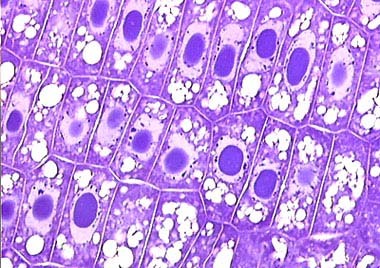
6.
This is a example of ........
a)
cell
b)
organ system
c)
organ
d)
tissue
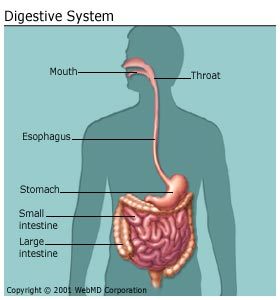
7.
This is a example of ........
a)
cell
b)
tissue
c)
organ 
d)
organ system
8.

Which organelle contains DNA and controls the cell?

a)

Cell membrane

b)

nucleus

c)

nucleolus

d)

lysosme

9.

Which organelle controls what goes in and out of the cell?

a)

nucleus

b)

nucleolus

c)

cell membrane

d)

nuclear membrane

10.

Proteins are produced at this organelle.

a)

golgi body

b)

ribosome

c)

cytoskeleton

d)

cilia

11.
Which of the following is the correct order of organization in living things from most basic (simple) to most complex?
a)
a.  Organism, cell, tissue, organ, organ system
b)
a.  Organ system, organ, tissue, cell, organism
c)
a.  Cell, tissue, organ, organ system, organism
d)
a.  Cell, organ, tissue, organ, organism, organ system
12.
Anything that can perform life processes by itself is a/an
a)
cell
b)
organ
c)
organism
d)
organ system
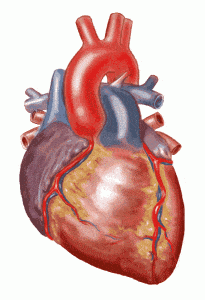
13.
This is a example of........ 
a)
organ system
b)
cells
c)
organ
d)
tissue
14.
All cells come from___________ cells.
a)
pregnant
b)
pre-existing
c)
paternal
d)
pin size
15.
______________ are the basic unit of life.
a)
DNA
b)
RNA
c)
Cells
d)
Takis
16.

Homeostasis

a)

allows for a wildly fluctuating internal environment

b)

is impossible in vertebrates

c)

is the maintenance of a relatively stable internal environment and often incorporates a form of feedback regulation

17.

When you are cold, you shiver and your blood vessels contract, which warms you up. When you are hot, you sweat and your blood vessels expand, which cools you down.

a)

False

b)

True

18.
What is another word that can be used to describe "homeostasis"?
a)
STABLE
b)
EQUAL
c)
COMPLETE
d)
CORRECT
19.

Which of the following is NOT an example of feedback?

a)

The immune system healing a cut

b)

The circulatory system increase your heart rate during exercise

c)

The respiratory system increasing your rate of breathing when you get scared

d)

The integumentary system growing hair

20.

Which is NOT an example of feedback?

a)

After getting a cut, blood begins to clot to make a scab

b)

You get really cold so you begin to shiver and get goosebumps

c)

You get really bored of your parent's lecture, so you stop listening

d)

You work out and begin to breathe heavily

21.

Which is NOT a function of the muscular system?

a)

Regulating body temperature

b)

Movement

c)

Protecting delicate organs

d)

Preventing disease

22.
Proteins are made of monomers called ___________
a)
Nucleotides
b)
Monosaccharides
c)
Amino Acids
d)
Glycerol and fatty acids
23.
DNA and RNA are examples of 
a)
Carbohydrates
b)
Lipids
c)
Proteins
d)
Nucleic Acids
24.
Nucleotides are monomers of
a)
Carbohydrates
b)
Lipids
c)
Proteins
d)
Nucleic Acids
25.
Monosaccharides are monomers of
a)
Carbohydrates
b)
Lipids
c)
Proteins
d)
Nucleic Acids
26.
Waxes, oils and fats are examples of
a)
Carbohydrates
b)
Lipids
c)
Proteins
d)
Nucleic Acids
27.
What is the function of nucleic acids?
a)
store genetic information
b)
store energy (long-term)
c)
store energy (short-term)
d)
build skin, hair, nails, muscles
28.
Which of the following organic compounds is the main source of energy for living things?
a)
carbohydrates
b)
lipids
c)
nucleic acids
d)
proteins
29.
Which macromolecule stores energy, insulates us, and makes up the cell membrane?
a)
lipids
b)
proteins
c)
carbohydrates
d)
nucleic acids
30.
All polymers are made up of...
a)
monosaccharides
b)
monomers
c)
proteins
d)
None of these
31.
Lipids can be digested into what smaller subunits?
a)
nucleic acids
b)
amino acids
c)
fatty acids
d)
glucose
32.

Enzymes belong to which class of macromolecules?

a)

lipids

b)

carbohydrates

c)

proteins

d)

nucleic acids

33.

Which macromolecule is shown?

a)

lipid

b)

protein

c)

nucleic acid

d)

carbohydrate

34.
What type of macromolecule is being represented in this image? 
a)
carbohydrate
b)
lipid
c)
protein
d)
nucleic acid
35.
Which major macromolecule is being represented in this image? 
a)
carbohydrate
b)
lipid
c)
protein
d)
nucleic acid
36.
Examples of which biological macromolecule include glucose, fructose, starch, and glycogen?
a)
Lipids
b)
Carbohydrates
c)
Nucleic Acids
d)
Proteins
37.
What does POLY- mean?
a)
Two
b)
A name for a parrot
c)
Many
d)
One
38.
_______ is a carbohydrate that forms plant cell walls, and _______ makes hard shells.
a)
Chitin, cellulose
b)
Phospholipid, chitin
c)
Cellulose, chitin
d)
Amino acid, phospholipid
39.
__________________ provide us with quick energy, while _________________ are our secondary energy source.
a)
Lipids, proteins
b)
Carbohydrates, nucleic acids
c)
Proteins, carbohydrates
d)
Carbohydrates, lipids
40.

Elements in Carbohydrates are: (CHECK ALL THAT APPLY)

a)

C

b)

H

c)

N

d)

O

41.

ELEMENTS THAT MAKE UP LIPIDS ARE: (CLICK ALL THAT APPLY)

a)

C

b)

H

c)

N

d)

O

42.

What elements (monomers) make up a protein?

a)

C, H, O

b)

C, H, O, N

c)

C, H, O, N, P

43.

What elements make up 90% of an organism?

a)

C, H, O

b)

C, H, O, N

c)

C, H, O, N, P

d)

C, H, O, S

44.

What elements (monomers) make up nucleic acids?

a)

C, H, O

b)

C, H, O, N, (S)

c)

C, H, O, N, P

45.

Match the protein with the correct picture.

a)
b)
c)
d)
46.

Identify the lipid:

a)
b)
c)
d)
47.

Carbohydrates have C, H, O. What is the ratio of elements?

a)

2:1:2

b)

1:3:1

c)

1:2:1

d)

3:1:3