
 Worksheets
AP World Unit 1 Review
Total questions: 199
Worksheet time: 3hrs 31mins
Which statement best summarizes the influence of the bureaucracy during the Song Dynasty (960-1279 CE)?
It promoted foreign trade, but made tax collection difficult
It made managing the empire more efficient, but it was very expensive
It ended corruption, but it weakened the scholar gentry class
It strengthened Buddhism, but it undermined Confucianism
A major difference between the Inca and the Aztecs in their treatment of conquered people is-
Required labor rather than payment of tribute
Treated conquered people more harshly
Refrained from enslaving their captives
Allowed conquered people to retain their culture
What would be most responsible for the spike in population in China in the postclassical era?
the perfecting the manufacturing of Porcelain
the prolific trade on the Silk Road
the introduction of Champa rice to the Chinese diet
the high demand for Chinese silk
Which of the following is an indicator of increasing patriarchy in China?
Civil Service Exam
Veiling of Women
Footbinding
Issuing of Dowry's

What political system form due to the collapse of the Roman empire in Europe?
Feudalism
Communism
Republic
Confucianism

What institution held tremendous power and gave people hope in Europe during the Middle Ages?
Catholic Church
The Patriarchy
Serfs
Crusaders

Of the following, what reflects the role Islam played in intellectual exchange and innovation?
The Ka'aba
The Taj Mahal
Borobrodur
The House of Wisdom
How did the Inca expand and control of their empire?
The cut off trade with other places.
They killed everyone.
They built roads.
They made their own currency system.
Although India was fractured politically in this era, its people were unified by
Islam
Hinduism
socialism
a shared hatred of Mongols
monotheism
The Bhakti Movement
emphasized a personal relationship with Allah
occurred mainly in the Middle East
was a spiritual movement that emphasized connecting with one Hindu god
emphasized loyalty to your ruler
was an example of Buddhism influencing Hinduism
Empires such as the Khmer in Southeast Asia reflected the influence of
Hindu and Buddhist culture
trade with China
their Mongol rulers
the Dehli Sultanate
the Trans-Saharan trade
In the Americas, the Mississippian people were known for
human sacrifices
mound building
huge defensive walls
gold mining
technology such as the printing press
The main form of Mayan government was
democracy
totalitarianism
city-states
anarchy (no government)
oligarchy
The Mayans would best be described as
primitive hunter-gatherers
a class consisting of mainly warriors
innovative, especially in math and astronomy
strictly monotheistic
people who lived after the Aztecs and Incas
All of these are true of the Aztecs EXCEPT
they worshipped many gods (polytheism)
they worshipped one main God (monotheism)
their government was a theocracy (rule by religious laws)
they included human sacrifices in their ceremonies
they built huge pyramids and temples to their gods
Kin-based networks formed in Sub-Saharan Africa, which are based on
trade
families
slavery
religion
monotheism
All of these are true about the Mali Empire EXCEPT
grew wealthy mining gold
achieved its peak under Mansa Musa
was mainly Islamic
wealth was based mainly on the ivory trade
included Timbuktu, which housed great universities
The Great Zimbabwe was
the king of Zimbabwe
the river, which was worshipped by the people
the main god worshipped by the people
a huge wall constructed for defense
the main trade route in West Africa
Griots were important because they
held all the cultural knowledge and history of their people
provided safe transportation for traders
used as weapons in combat
were slaves used for specialized jobs
decided when city-states would go to war
This technology spread from Silk Road to Europe?
Sugar
Silk
Paper
Lateen Sail
This African Kingdom became Christian due to its relationship with Rome?
Ghana
Axum
Zimbabwe
Mali

Pictured is which Islamic city in West Africa?
Zambezi
Timbuktu
Egypt
Mali
What do the Aztecs, Mayans & Inca have in common with river valley civilizations?
They grew corn
Polytheism
Believed in 1 god
Unified
This idea spread from India to China, Korea & Japan?
Hinduism
Buddhism
Shintoism
All the above
Which religion does this describe?
Began in India around 500 BC.
Siddhartha Gautama was born into a wealthy family and left both to become a monk and sought to discover a way to put an end to pain and suffering
Buddhism
Hinduism
Islam
Shintoism
Which religion does this describe?
A polytheistic religion, meaning they worship many gods
The third largest in the world, practiced mostly in India
One of the oldest religions in the world
Buddhism
Hinduism
Islam
Shintoism
Which religion does this describe?
Means "submission", referring to the total surrender of one's self to God
A Muslim is "one who submits to God"
Buddhism
Hinduism
Islam
Shintoism
Which religion does this describe?
one of the oldest religions in Japan
influenced by Buddhism, Confucianism, and Taoism
Buddhism
Hinduism
Islam
Shintoism
What does nirvana mean?
perfect peace
the Middle Way
karma
Qur'an
What does Buddha mean?
enlightened one
perfect peace
karma
submission
Which statement best summarizes the influence of the bureaucracy during the Song Dynasty (960-1279 CE)?
It promoted foreign trade, but made tax collection difficult
It made managing the empire more efficient, but it was very expensive
It ended corruption, but it weakened the scholar gentry class
It strengthened Buddhism, but it undermined Confucianism
Though the Koreans had to kowtow to the Chinese, one advantage in the tributary relationship was that-
China subsidized (paid for) the Korean education system
Korea and China had a healthy trade relationship
China protected Korea from Japanese and Mongolian invasion
The Korean peasantry benefitted from a weakened nobility
How did contact with China assist Muslims in the spread of Islam across South Asia and Southeast Asia?
Repeated attacks by Chinese military forces in South Asia weakened empires there
Chinese merchants introduced Muslim merchants to the Khyber Pass, the historic invasion route into the subcontinent
Many Chinese converted to Islam and became allies with armies from the Middle East
The adoption of Chinese sailing technology by Muslim traders allowed them to increase their activity in the Indian Ocean
Unlike the Mississippian culture or the Incas, the Aztecs successfully constructed-
Large earthen mounds
A city on a lake
An extensive network of roads
Waru waru to expand their agricultural land
Which of the following is a common characteristic shared by the Mississippian, Aztec, and Inca cultures?
Organization of labor for massive building projects
An egalitarian society
The deification of Quetzalcoatl
A great respect for the accomplishments of women
The most important reason the Aztec practiced human sacrifice was probably to-
Decrease population
Advance medical knowledge
Pay their debts to their enemies
Appease the gods

The Seljuk Turks...
Controlled the Middle East
Pressured the Byzantine Empire
Fought against both the Crusaders and Mongols
All of these

Select the technology that was developed in the Song Dynasty.
Increased stability of the compass
Gunpowder being used in warfare
Developed drought-resistant rice
Continuation of the woodblock printing

What did the revival of Confucian ideas in Song Dynasty do to women?
They had more restrictions
Their status rose to great heights
They were allowed to work in government
Their status was never changed

What economic system produced everything that was needed for life in Europe during 1200- 1450 CE?
Manorialism
Feudalism
Christianity
Pastoralism

The responsibility of children to respect, obey, and care for their parents...
Mandate of Heaven
filial piety
Legalism
Dao

The Islamic Empire allowed for religious tolerance by charging the ______________ to non-Muslims
Salt Tax
Turks Tax
Jizya Tax
All of the above

Who preserved the knowledge of the dark ages in Europe?
Christian Monks in a monastery
Buddhist monk in a temple
Islamic Caliphs in a Mosque
Jewish Kohen in a Synagogue
What holy city are Muslims expected to make a Hajj to in their lifetime?
Medina
Mecca
Jerusalem
Damsacus

What was the system used by the Inca for people to perform labor services to pay taxes?
Mita
Quipu
Encomienda
Carpa Nan
Silk is to China as Gold is to...
Mali
Vietnam
India
SE Asia
Which region is home to Confucianism, civil service exams, gun innovation, and Champa Rice?
SE Asia
S Asia
East Asia
Africa
Which region is home to feudalism, decentralization, & large Christian population?
Americas
Europe
East Asia
Africa
Which region is home to Mansa Musa and large amounts of gold as well as salt reserves?
Americas
Europe
East Asia
Africa

One factor that contributed to the declines of both Great Zimbabwe and of the Mayans was
(A) invasions by neighbors with iron weapons
(B) contact with Europeans
(C) environmental damage
(D) ethnics conflicts within the community


The term vassal means
a landless peasant.
the center of a fiefdom.
a container for fluids.
a status of mutual obligation between lord and underling.
What commonalities can be seen between European and Japanese feudalism?
Centralized kingdoms dominated the political scene.
Literature flourished during long periods of peace.
Land formed the basis for power, with lords controlling fiefdoms.
Weak emperors were controlled by religious leaders.
Which of the following was an outcome for peasants in Europe after the Black Death c. 1340?
More land was available and wages increased.
Wages plummeted as demand decreased.
Social unrest decreased.
About 10% of the peasant population died.
The Mayan economy was based on
crafts and manufacturing.
gold and silver mined in the highlands.
agricultural produce, including maize, beans, and squash.
the salt trade.
Which is an example of ways Political rulers legitimized their power
Giving away money
Decentralizing their militarizes
Praying for power from the gods
Monumental art/architecture
A canal linking northern and southern China improved during the song dynasty
Suez Canal
Panama Canal
Grand Canal
Suzhou Canal
Why is so little known about the early history of the Incas?
Aztecs took their books
There was a bad fire
They didn't have a system of writing
Their history books were hidden in Machu Picchu

What system of farming did the Inca develop in order to farm in the mountains?
Chinampas
Irrigation
Aqueducts
Terrace Farming
The Aztec Empire
controlled all of present-day Mexico.
extended from central Mexico to Guatemala.
controlled only the Valley of Mexico.
had a population of one million people.
What was a large self-sufficient estate ruled by a lord?
Castle
Plantation
Manor
Fallow

Where would you find this image
Kush
Zimbabwe
Axum
Ghana
Which two religions were dominant in Africa?
Islam
Animism
Buddhism
Shintoism

Which of the following caused feudalism in Europe to decline?
Black Plague
Muslim invaders
Revival of Learning
Rebellions for more freedom

What dynasties are considered the "Golden Age" of China?
Tang and Song
Song and Ming
Song and Yuan
Tang and Han

What technology helped maintain control and travel in the Inca empire?
Roads
Mita
Quipa
Ships
The city of Baghdad claims which of the following in its history (More than 1 answer)
It was the capital of the Abbasid Dynasty
The House of Wisdom was located here
Librarians here saved books from Islamic extremists
The city of Baghdad is famous for its sewers
The wealthiest person, adjusted for inflation, measured in gold was
Mansa Musa
Marco Polo
Jeff Bezos
Oprah Winfrey
Which empire had a trading post empire throughout Asia and Africa?
France
England
Portugal
Spain
What were the major items traded along the Indian Ocean Trade Route?
gold, slaves and porcelain
silk, porcelain, paper and gunpowder
gold, slaves and spices
gold, salt, slaves and ivory
Which drought-resistant product directly led to the increasing population of Song China?
Chinese silk
Champa rice
Korean oranges
Irish potatoes

Who is the author responsible for recording his experience in China? (hint: he served Kublai Khan)
Mark Twain
Robert Frost
Marco Polo
None of the above
Christopher Columbus
Who fought each other in the crusades?
The Romans and the Greeks
The Europeans and the Arabs
The Eastern and Western Roman Empires
The mit'a resembles serfdom in that
both are forms of coerced labor
both used prisoners for large construction projects
both involved industrial manufacturing
both were imposed by foreign conquerors
Overland trade between Europe to Asia on the Silk Road increased with
The revival of commercial cities, such as Samarkand, along the way.
The discovery of gold in the Hindu Kush.
The collapse of the Roman empire.
The development of a new breed of camel.
The development of Indian Ocean trade routes in the period 600 B.C.E. to 600 C.E. and the development of transatlantic trade routes in the period 1450 C.E. to 1600 C.E. were similar in that both depended on
the impetus of missionizing religions
understanding of currents and wind patterns
the political consolidation of newly conquered regions into empires
innovations in ship design that originated in Europe

The map below shows what significant economic developments?
Trade connections that linked the Hellenistic and Mauryan empires to African cities from 300 through 150 B.C.E.
Trading networks that promoted the growth of new cities from 600 C.E. through 1450 C.E
Chinese dominance of Indian Ocean trading networks because of the voyages of Zheng He in the 1400s C.E.
Changes in Indian Ocean trading networks that resulted from technological innovations from 1450 C.E. through 1750 C.E.

The lines on the map below illustrate which of the following?
Spread of Hinduism
Spread of Christianity
Extent of trade routes
Seasonal migrations of nomads

The map indicates that
Mali was a major source and hub of the gold trade
slavery existed in the western Sudan
Europeans had begun to make inroads in West Africa
Mali remained isolated from Europe and the Middle East
Between 200 B.C.E. and 1450 C.E., the Silk Roads linked which of the following?
The Indian Ocean and the Atlantic Ocean
North Africa and western Europe
East Asia and the Mediterranean Sea
The Pacific Ocean and the Caribbean Sea
What is the sum of a person's good and bad actions, viewed as deciding their fate in future existences?
Dharma
Karma
Reincarnation
Moksha

The major pilgrimage that all adult Muslims are called to do if they are able is called the:
Hajj
Rosh Hashanah
Hijab
Hadith

This is the holy book for Islam
Quran
Bible
Torah
Vedas

Which of the following is NOT one of the Pillars of Islam?
Calling Spirits
Faith
Pilgrimage (the Hajj)
Charity

What century did the Black Death wreak havoc in Afro-Eurasia?
11th century
12th century
13th century
14th century
15th century
How did the Black Death spread throughout Afro-Eurasia?
bacteria
flea
black rat
all of the above

What two institutions in Europe were affected by the plague? (More than one correct answer)
Monarchies and Churches
Feudalism and the Church
Knights and Serfdom
Serfdom and Monarchies
Where did the Black Death originate?
India
Egypt
Russia
China
Which group spread the Black Death along trade routes in Asia?
The Ming
The Mongols
The Flagellants
The Jews
What did the common people believe caused the plague?
A miasma
Fleas
God's punishment
Bacteria
How did the Flagellants try to win God's forgiveness?
Praying
Whipping themselves
Recreating Jesus' suffering
All of the above
Which group of people were falsely accused of causing the Black Death?
Jews
Muslims
Christians
Farmers created these THREE things to make farming easier.
A new plow
Better horseshoes
Tractor
Harnesses.
With more goods to send to the city, commerce and trade __________.
Increased
Decreased
Stayed the same
They were falsely accused of poisoning wells and starting the plague
Christians
Muslims
Heretics
Jews
How did Joan of Arc die?
She was shot by an arrow
She was poisoned by her own men
She was crushed by her horse
She was burned at the stake
What English weapon played a major part in their early victories?
Catapult
Sword
Longbow
Fish and Chips
5) Edward III wanted to become King of France through his father background.
True
False
8) A new sense of nationalism rose in England after the war.
True
False
What was the cause of the Hundred Years War?
King Edward III of England claimed to be king of France
Disputes over areas of land around France
control of the wool trade
none of these
all of these
Which Pope called for the 1st Crusade?
Innocent III
Urban II
Benedict IX
Gregory VII
What was the purpose of the Crusades?
To take control of the holy city of Jerusalem
To kill the pope
to annoy the King of France
To finance the Queen of England
What did the Pope promise to those who fought in the crusades?
Forgiveness of sins and entrance to heaven
God, Glory, and Gold
Freedom of Religion
Nobility
Conquistador
being forced out
Christian Holy person
Spanish Conqueror
a high ranking social class
Renaissance means
Rebirth
Restart
Reform
Relation
Which country did the Renaissance start in?
England
France
Italy
Germany
Invention that helped spread information
Printing Press
Mail service
Pigeon Carrier
Typewriter
The first book ever published for the public
The Prince
Romeo and Juliet
Dante's Inferno
The Bible
Select all of the Renaissance artists
Leonardo Da Vinci
Michelangelo
Raphael
Donatello
Which powerful family used violence to gain their power?
The Medici Family
The Shakespeare Family
The Caesar Family
The Da Vinci Family

Who was considered the "Father of Humanism"?
Michelangelo
Leonardo da Vinci
Petrarch
Erasmus
__________ celebrates the individual
Humanism
Dogism
sonnets
Protestant
Humanism focused on the _______
religion
individual
Shintoism

What effect did Marco Polo's book about his travels to China have on Europe?
Europeans feared that China would attack Europe
Marco Polo's stories increased in interest in China and their goods
Europeans believed that China had an inferior culture
Many missionaries decided to bring Christianity to China

Machiavelli believed that
people are self-centered so rulers should be feared
all people are good
all rulers should be weak
people should always tell the truth because honesty is the best policy

Humanists believed that the ________ was important and can make positive changes in the world.
church
monks
individual/humans
artists

Which prestigious Florentine family helped support Michelangelo's artistic abilities?
The Petrarchs
The Medicis
The Gutenbergs
The Da Vincis

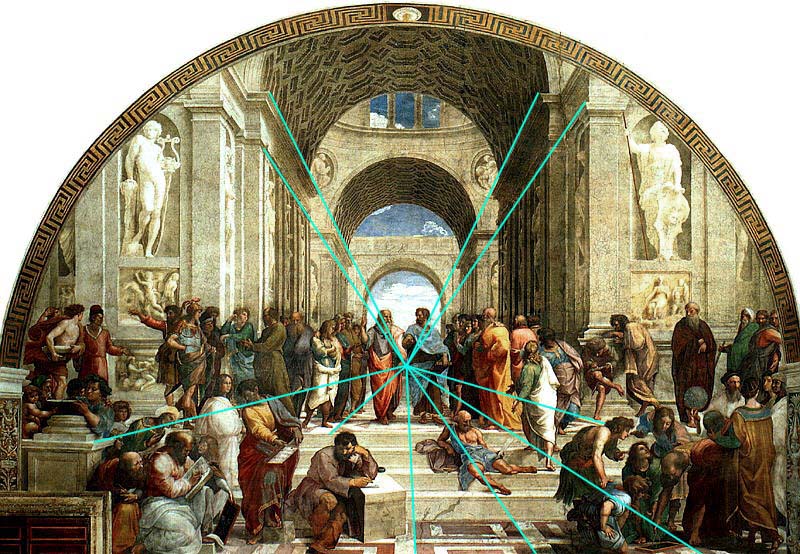
What is the art technique that makes drawing and paintings look more three-dimensional?
realism
vernacular
perspective
holistic

Who painted the Mona Lisa?
Michelangelo
Donatello
Jan Van Eyck
Leonardo da Vinci
What were the two most famous works by Michelangelo?
The Last Supper
David
The Sistine Chapel
The Wedding
Who wrote "The Prince?"
Erasmus
Albrect Durher
Shakespeare
Machiavelli
Select the two most famous artworks by Da Vinci
The Statue of David
The Last Supper
The Sistine Chapel
The Mona Lisa
Who held the most power in Europe?
The emperor
The pope
The king
The people
Select all of the Renaissance artists
Leonardo Da Vinci
Michelangelo
Raphael
Donatello
What was Niccolò Machiavelli's main argument in his work The Prince?
A ruler should do whatever is necessary to maintain power.
A ruler should follow all of the teachings of the Catholic Church.
A ruler should make his subjects as happy as possible.
A ruler should strive to maintain equality and fairness.
Who was the painter of the Sistine Chapel?
da Vinci
Raphael
Machiavelli
Michelangelo
"It is better for a ruler to be feared than loved" and "The ends justifies the means"
The above statements are expressed in the book:
Utopia
In Praise of Folly
Twilight
The Prince
What society did the people of the Renaissance look to for inspiration?
The Greeks and Romans
The Middle Ages
The Japanese
The Muslims

Title of Painting:
The School of Athens
The Last Supper
Greek and Romans
The Da Vinci Code

Name of artist
Michelangelo
Rafael
Donatello
Da Vinci
Which two groups may have founded Russia?
Russians
Vikings
Slavic Tribes
Byzantiums
Who is credited for converting the Russian people to Christianity?
Peter the Great
Vladimir
Lenin
Ivan III
The Mongols played a significant role in Russian history by
ending the reign of Kiev Rus
supporting the rule of Ivan the Terrible
supporting Czar Ivan III during the Russian Revolution
isolating Russia from Western Europe
What event may have set Ivan the terrible down the "Dark path of the force"?
Creation of the estates General
The death of his wife
The lost of the Battle Duma
The lost of his pet cow.
How did Ivan the Terrible centralize his power?
Abdicating the Throne.
stripping the Boyars of their power
expelling the mongols
Invading Sweden

Christianity in early Russia came from...
the Byzantine empire
China
Western Europe
Lithuania

Who insisted that Orthodox Chritanity become the official religion of Russia?
Princess Olga
Peter/Peter the Great
Prince Vladimir
Mikhail Romanov

Who was the first czar of a unified Russia?
Prrice Vladimir
Peter the Great
Mikhail
Ivan the Great
What is the capital of the Western Roman Empire?
Damascus
Rome
Constantinople
Byzantium
What is the capital of the Eastern Roman Empire?
Damascus
Jerusalem
Rome
Constantinople
What is the language used in the Roman Catholic Church?
Latin
Greek
English
Spanish
What is the language used in the Eastern Orthodox Church?
Latin
English
Spanish
Greek
What is the name of the church in the Byzantine Empire?
Hagia Sophia
Orthodox Church
St. Augustine
Roman Catholic
What is the name given to the division of the churches?
The Great Divide
Excommunication
The Great Schism
The Great Split

In the Late Middle Ages, there was a struggle in power in Europe between: (choose all that apply):
Popes
Lords
Monks
Kings
This person was a devoted priest and Catholic who spoke out against abuses by clergy. They wrote The Praise of Folly, a satire that made fun of corrupt church leaders.
John Wycliffe
Jan Hus
Catherine of Siena
Erasmus

Who were the two popes elected in 1377, one ruling from Rome and the other from Avignon?
Pope Boniface VIII
Pope Gregory XI
Pope Clement V
Pope Urban VI
Pope Clement VII
How did Holy Roman Emperors come into power?
They were elected by the knights and peasants.
They were elected by the empire’s nobles.
They were appointed directly by the pope.
The split in the Church that lasted 69 years on known as the _______________________________.
War of the Roses
War of the Rings
Great Schism
Great Catastrophe
The move to Avignon from Rome _______________ the Church.
strengthened
weakened
destroyed
created
Which of these events ended the Great Schism and established a single pope?
the excommunication of JanHus
Hundred Years’ War
Battle of Crecy
Council of Constance
Feudalism developed as a way for medieval societies to
Rebuild cities
Build an empire
Protect themselves
Increase trade
How did feudalism and the manor economy emerge and shape medieval life?
The manor was center of the feudal economy, it provided fiefs for the King and granted protection for peasants
Peasants provided protection in exchange for fiefs, peasants’ rights were tied to mutual obligations to the lord.
The manor was the center of the feudal economy, it was self-sufficient—producing everything the people needed.
Fiefs were granted to the lords and the vassal claimed the manor to their home.
If the ownership of a manor was granted to a new lord, the serfs
remained on the land to serve the new lord.
moved with their old lord to his new property.
were freed from service to the manor
were sold to the new lord.
How did the popes try to control monarchs?
by asking nicely
through controlling manors
by starting new churches
through excommunication
Where was the Reconquista fought?
Holy Land
England
Iberian Peninsula
Germany
Italy
What two religious groups fought for control during the Reconquista?
Jews and Christians
Muslims and Jews
Protestants and Catholics
Pagans and Christians
Christians and Muslims
Where were the Moors from?
Northern Africa
Germany
Scandinavia
Greece
Mongolia
What year did the Reconquista end?
711
718
933
1215
1492
Who were the Spanish monarchs that finally defeated the Moors and ended the Reconquista?
Matilda and Henry
Mary and Louis
Isabella and Ferdinand
Eleanor and Richard
Margaret and Edward
What famous explorer did Ferdinand and Isabella authorize an expedition for in 1492?
Christopher Columbus
Marco Polo
Hernan Cortes
Ferdinand Magellan
Vasco de Gama
In 1547 one of the most recognized rulers of Russia took the position, he was famous for solidifying the territory of the country and being brutal with dissidents
Piotr I
Rurik
Ivan the Terrible

What was the class of landowning nobles in Russia called?
principalites
boyars
serfs
czars

Russian peasants who were forced to work the land are called
Boyars
Slavs
Serfs
Slaves

