
 Worksheets
Quiz #4
Total questions: 110
Worksheet time: 1hrs 18mins
TT an example of a....
Genotype
Phenotype
Tt an example of a....
Genotype
Phenotype
tt an example of a....
Genotype
Phenotype
A flower's red color an example of a....
Genotype
Phenotype
A dog's soft fur an example of a....
Genotype
Phenotype
A cat's calico fur an example of a....
Genotype
Phenotype
The genotype TT is considered to be....
Homozygous dominant
Heterozygous
Homozygous recessive
The genotype Tt is considered to be....
Homozygous dominant
Heterozygous
Homozygous recessive
The genotype tt is considered to be....
Homozygous dominant
Heterozygous
Homozygous recessive
The genotype GG is considered to be....
Homozygous dominant
Heterozygous
Homozygous recessive
The genotype Gg is considered to be....
Homozygous dominant
Heterozygous
Homozygous recessive
The genotype gg is considered to be....
Homozygous dominant
Heterozygous
Homozygous recessive
If red color is dominant in flowers, what would a homozygous dominant flower's genotype look like?
RR
Rr
rr
If red color is dominant in flowers, what would a heterozygous flower's genotype look like?
RR
Rr
rr
If white color is recessive in flowers, what would a homozygous recessive flower's genotype look like?
RR
Rr
rr
Hh
Homozygous Dominant
Homozygous Recessive
Heterozygous
Select all combinations that will create a dominant trait?
Aa
aa
AA
Pp
bb
A dominant allele is showed by what?
A capital letter like A, B, G, or M
A lower-case letter like a, b, g, or m
Recessive alleles are shown using what?
Capital letters like A, B, G, or M
Lower-case letters like a, b, g, or m.
Dominant alleles mask recessive alleles, meaning that a genotype that has both alleles will always show the dominant trait. Which of the following will show the dominant trait?
AA
Aa
bb
Gg
rr
The recessive allele is weak. The only way a recessive trait will show is when the organism has TWO copies of the recessive allele. Which of the following will result in the recessive trait?
aa
Dd
PP
mm
Ff
Which of these has a dominant allele?
dd
Gg
RR
mm
Nn
Which of these genotypes has recessive alleles?
rr
Tt
HH
MM
Which of these has a dominant allele?
MM
Hh
gg
Rr
tt
Which of these genotypes will allow the organism to show the recessive trait?
Tt
MM
Ll
Rr
dd
Which of these genotypes has a recessive allele in it?
Tt
hh
RR
MM
Nn
Which of these genotypes will show a dominant trait?
Tt
HH
Mm
nn
Rr
Dominant alleles are written with:
Upper case letters
Lower case letters
Recessive alleles are written with:
Upper case letters
Lower case letters
Dd would show the __________ phenotype.
Dominant
Recessive
Both
None
TT and Tt will both result in the __________ phenotype showing.
Dominant
Recessive
Both
None
If White phenotype is Recessive then its genotype will be
aa
AA
Aa
None of the above
Select the recessive genotype
TT
Tt
tt
None
Select the recessive genotype
AA
Aa
aa
Pick the dominant genotypes:
AA
aa
Aa
Gg
HH

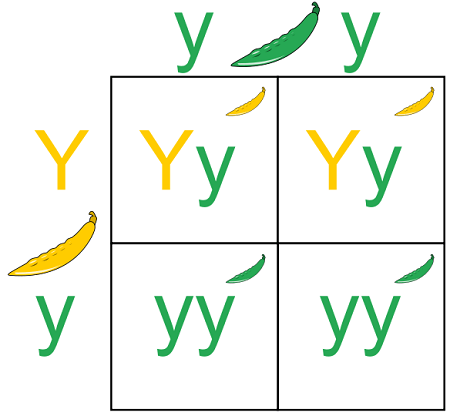
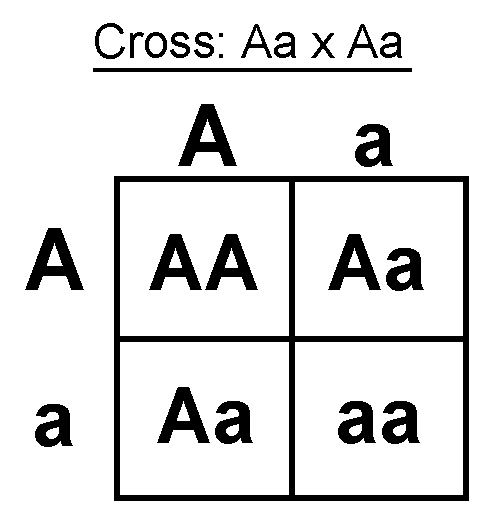
In the punnett square below, what belongs in the missing square


This trait is hidden whenever the dominant allele is present
dominant allele
codominance
recessive allele
Punnett Square
This trait always shows up in an organism when the allele is present
dominant allele
codominance
probability
recessive allele

A chart that shows all the possible combinations of alleles that can result from a genetic cross
dominant allele
codominance
probability
Punnett Square

An organism's physical appearance or visible traits. (what it looks like)
phenotype
genotype

An organism's genetic makeup, or allele combination. The letters we use to show the allele combination.
phenotype
genotype

B = brown fur b = white fur
In the Punnett square, what is the probability for white fur?
0%
25%
50%
75%
What is a genotype?
What is a phenotype?
What is are alleles?
What does dominant mean?
What does recessive mean?
An organism's ______ is determined by its ______.
genotype; phenotype
dominant; recessive
recessive; dominant
phenotype; genotype
Each genotype has two (a)
The (a) allele will always be expressed when it is present.

This model represents ______ reproduction
sexual
asexual

This model represents ______ reproduction
sexual
asexual
How many parents are needed for asexual reproduction?
1 parent
2 parents
How many parents are needed for sexual reproduction?
1 parent
2 parents
True or False: During asexual reproduction, the offspring is identical to the parent.
True
False
During sexual reproduction the offspring is _______ to the parent.
Identical
Genetically different

What shape is DNA?
a circle
a triangle
a double helix

What is a gene?
A bundle (like a hot dog bun) that the DNA is packed into
something inside the nucleus
a section/piece of DNA
all of your DNA
DNA contains
Protein producing ribosomes
the genetic code for all life forms
Cytoplasm in the cell
Which organelle is DNA usually found in?
cell membrane
vacuole
chloroplast
nucleus

What is the name of this structure found in our nucleus?
chromosome
gene
ribosome
DNA
Both a rose bush and a muskrat have 25 chromosomes but they look very different. Which of the following best explains why they do not look the same?
They belong to different kingdoms
They have a different number of cells
They have different life cycles
They have different genes
They are different sizes

Where is the genetic information stored in dolphins and sharks?
Only in the skin cells
Only in the reproductive cells
In its environment
In all of its cells
Only in blood cells

If one leaf cell in a tree contains 40 chromosomes, how many chromosomes are there in a root cell from this same tree?
15
20
30
40
80
Twins have the same blood type. Which of the following best explains why this happens?
They are born together
They have the same genes
They are brought up in the same manner
They develop together inside their mother's womb.
They have the same parents
A rancher crossed an angus bull with a Holstein cow to produce a mixed breed. The calf will most likely resemble _______
the father
the mother
Both father an mother
Neither the father or the mother.
the grandparents
Both a cactus and a sloth have 21 chromosomes but they look very different. Which of the following best explains why they do not look the same?
They belong to different kingdoms
They have a different number of cells
They have different life cycles
They have different genes
They are different sizes
Refers to the two alleles inherited for a particular genes.
genetype
genes
phenotype
recessive

If two alleles are the same for a certain trait they are considered
Homozygous
Twins
Heterozygous
Common

Physical traits that are expressed are known as ____________
Mutation
Personality
Genotype
Phenotype

Traits that are passed from parents to offspring are always
Recessive
Inherited
Dominant
Heterozygous

The passage of genetic instructions from one generation to the next is known as
Alleles
Ancestry
Heredity
Variation

The genetic difference between individuals in the same species is
Interesting
Harmful
Variation
Genetics

The genes of an organism that are written with capital or lowercase letters
Pant size
Deoxyribonucleic acid
Genotype
Gretchentype

If a gene is always expressed or always shown with a capital letter it is
Bossy
Recessive
Yelling
Dominant

Different versions of the same gene are called
Jeans
Editions
Varieties
Alleles

This variation of a gene can only be expressed if it is received from both parents
Shy
Heterozygous
Variation
Recessive