Wayground logo

Free Printable Worksheets

Font size

S
M
L
XL
Worksheets

Potential / Kinetic Energy Quiz

Total questions: 23

Worksheet time: 13mins

Name
Class
Date
1.

At what point does the roller coaster have the most Kinetic energy?

a)

A

b)

B

c)

C

d)

D

2.

At what point does the roller coaster have the most Potential energy?

a)

A

b)

B

c)

C

d)

D

3.
As a pendulum swings from its highest to lowest position, what happens to its kinetic and potential energy? 
a)
Both the potential energy and kinetic energy decrease
b)
The potential energy decreases while the kinetic energy increases 
c)
The kinetic energy decreases while the potential energy increases 
d)
Both the potential energy and kinetic energy increase 
4.

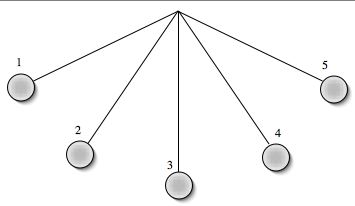
When a pendulum swings, at which point is kinetic energy greatest?

a)

1

b)

2

c)

3

d)

4

5.

A roller coaster on top of a hill (not moving) is an example of _____________ energy.

a)

potential

b)

kinetic

6.

The energy stored in an object is ______________energy.

a)

mechanical

b)

kinetic

c)

distance

d)

potential

7.

______________ is the ability to do work.

a)

weight

b)

transfer

c)

energy

d)

collide

8.

Potential energy that is stored in stretched or compressed material.

a)

energy

b)

kinetic energy

c)

gravitational potential energy

d)

elastic potential energy

9.

Energy due to the position of an object above Earth's surface.

a)

gravitational potential energy

b)

potential energy

c)

energy

d)

kinetic energy

10.
The faster an object moves, the ________ kinetic energy it has. 
a)
more
b)
less
c)
none of the above
d)
all of the above 
11.
Gravitational potential energy depends on the ________ and ________ of the object. 
a)
Height and mass
b)
Friction and movement
c)
Mass and Movement
d)
Height and Friction 
12.

What tool measures mass?

a)

Triple beam balance

b)

Measuring spoons

c)

beaker

d)

graduated cylinder

13.

The information you collect while doing your experiment is called

a)

conclusions

b)

data

c)

hypotheses

d)

procedures

14.

What is an dependent variable?

a)

What a scientist changes in an experiment to test their hypothesis

b)

What scientist measure to see if it responded to a change

c)

What happens when you do an experiment

d)

What you keep the same throughout all experimental groups

15.

What is an independent variable?

a)

What a scientist changes in an experiment to test their hypothesis

b)

What scientist measure to see if it responded to a change

c)

What happens when you do an experiment

d)

What you keep the same throughout all experimental groups

16.
A testable explanation to a problem that has not yet been tested. 
a)
data
b)
theory
c)
hypothesis
d)
fact
17.

The sun provides ____________ and ____________ energy that can be harnessed and used for solar power.

a)

chemical, sound

b)

mechanical, light

c)

sound, light

d)

light, thermal

18.
Light is a form of __________ energy. 
a)
Sound 
b)
Electromagnetic
c)
Fun
d)
Thermal 
19.
___________ energy can move through empty space.  
a)
Sound 
b)
Nuclear 
c)
Electromagnetic 
d)
Chemical 
20.
This is the energy that moves objects. 
a)
cool 
b)
nuclear 
c)
chemical 
d)
mechanical 
21.
This is the energy of vibrating molecules that move through matter. 
a)
sound 
b)
thermal 
c)
mechanical 
d)
electrical 
22.
The is the energy due to the splitting of atoms. 
a)
nuclear 
b)
chemical 
c)
mechanical 
d)
sound 
23.
This is the energy that can be released by breaking the bonds between compounds. 
a)
electromagnetic
b)
nuclear 
c)
kinetic 
d)
chemical