
 Worksheets
chooic3 boad
Total questions: 37
Worksheet time: 23mins

What elements generally make an ionic bond ?
Metal and nonmetal
2 or more nonmetals
2 or more metals
2 elements

An ionic bond is formed when
Valence electrons are shared.
Valence electrons surround the cations.
Valence electrons are transferred between atoms.
Valence electrons are completely transferred between two metals.
What is a valence electron?
an electron that is found in the outermost shell of an atom
an electron found in the innermost shell of an atom
an electron found in the middle shell
an electon found in the nucleus

What is the number of valence electrons of Oxygen?
1
2
6
8
What is the number of valence electrons of Neon?
6
7
8
9

What type of diagram is this?
Alkali Diagram
Bohr Model
Chemical Diagram
Electron Dot Diagram

How many valence electrons in this structure ?
4
5
6
7
The three dots in the Lewis dot diagram for boron indicate that it
Can bond with three other atoms
Can only form triple covalent bonds
Has three valence electrons
scores a 3 on Pauling's electonegativity scale

Predict the bond formed between Be and F
Covalent-bond
Ionic-bond
Metallic-bond
Hydrogen-bond
ข้อใดคือชื่อที่ถูกต้องของสารประกอบ N2O
nitrogen dioxide
dinitrogen oxide
mononitrogen dioxide
dinitrogen monoxide

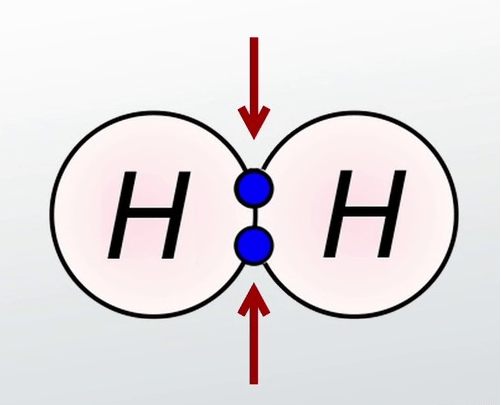

How many VALENCE ELECTRONS does Chlorine have?
2
7
8
10
17

Ionic bonds are formed when electrons get
Shared between two atoms
Removed from both atoms
Transferred from one atom to another
Added to both atoms
How many VALENCE ELECTRONS does Chlorine have?
2
7
8
10
17
Ionic bonds are formed when electrons get
Shared between two atoms
Removed from both atoms
Transferred from one atom to another
Added to both atoms

Ionic bonds typically form between
A metal and a nonmetal
Two nonmetals
Two metals
A metalloid and a metal

What is the correct formula for Sodium Chloride?
SCl
NaCl
SC
NaCl2

Name this ionic compound: Al2O3
Dialuminum oxide
Aluminum oxygen
Oxygen Aluminide
Aluminum oxide
If you were to draw the lewis dot structure for Germanium (Ge), how many dots would you put around it?
2
4
6
8

Cations _______ electrons, becoming _______ charged.
Gain; positively (+)
Gain; negatively (-)
Lose; positively (+)
Lose; negatively (-)

Anions ____ electrons, becoming _____ charged.
Gain; positively (+)
Gain; negatively (-)
Lose; positively (+)
Lose; negatively (-)

Write the chemical formula for K and Br (potassium bromide).
KBr
K2Br
KBr3
KBr2

Write the chemical formula for Na and S (sodium sulfide).
NaS
S2S2
Na2S
NaS2

Metals (like Na) typically _____ electrons in the formation of ionic bonds.
Gain
Lose
Keep the same

Nonmetals (like Cl) typically ____ electrons when they form ionic bonds.
Gain
Lose
Keep the same

Using the model for the formation of Scandium Fluoride (an ionic compound), write the chemical formula.
Sc3F
Sc3F3
Sc+3F-1
ScF3
Lead Chloride is an ionic compound, made up from Pb2+ ions and Cl- ions. Which is the correct formula for this compound?
PbCl3
PbCl
PbCl4
PbCl2
Magnesium Hydroxide is an ionic compound made up from Mg2+ and OH- ions. Which is its correct formula?
MgOH
MgOH2
Mg(OH)2
MgO
The correct name for Cu(CN)2 is __.
copper (I) cyanide
carbon cyanide
carbon carbonate
copper (II) cyanide
copper (I) nitride
The name of the compound (NH4)3PO4 is:
tetrammonium phosphate
ammonium phosphate
nitrogen hydrogen phosphate
ammonia phosphide
triammonium phosphate
What is the correct formula for aluminum hydroxide?
AlOH
Al2(OH)3
Al3(OH)2
Al(OH)3
Al(OH)2
In the compound CoSO4, what is the charge on cobalt?
+4
+2
-2
-1
What is the correct name for Ni2(SO4)3
Nickel (I) sulfide
Nickel (II) sulfate
Nickel (III) sulfate
Nickel (III) sulfite

