wayground logo

Free Printable Worksheets

Font size

S
M
L
XL
Worksheets

American Revolution CUA Review

Total questions: 59

Worksheet time: 1hrs 6mins

Name
Class
Date
1.
Which of the following was NOT an issue that caused colonial governments to be unhappy with the British Parliament?
a)
The British imposed the Stamp Act on the colonist without their consent.
b)
The colonist were unhappy with the British laws about slavery.
c)
The British imposed the Sugar Act on the colonists without their consent. 
2.
What does "No Taxation without Representation" mean?
a)
that colonists could not tax the British because Parliament was in England
b)
that Britain should not be able to tax the colonists since the colonists did not have a voice in British Parliament
c)
that coloists needed to receive a bill before they would pay their taxes
3.
What caused the Boston Tea Party?
a)
Proclamation of 1763
b)
Tax on Paper
c)
Tax on Tea
4.
 The ________ Act was a tax on all paper documents.
a)
Townshend
b)
Stamp
c)
Tea
5.
What is a colony?
a)
a free land
b)
a land ruled by another country
c)
a place with British soldiers 
6.
The American Revolution was a conflict between the colonists and _____________.
a)
the French
b)
the Spainish
c)
the British 
7.
What caused the French and Indian War?
a)
The Indians wanted the French to leave Louisiana.
b)
The French and Indians wanted to move into the thirteen colonies.
c)
The French and British settlers both wanted to claim the Ohio River Valley.
8.
What was the main reason Britain began taxing the colonists?
a)
to pay for the debt from the French and Indian War
b)
to build new roads through the Ohio River Valley
c)
to support the development of new towns in Vermont
9.
An effective way for the colonist to protest was to stop buying British goods.  What was this form of protest called?
a)
Boycott
b)
Massacre
c)
Tea Party
d)
Proclamation
10.
What group was formed that protested British laws and policies?
a)
Boston Tea Party
b)
Continental Congress
c)
Sons of Liberty
d)
English Parliament
11.

The French and Indian War happened AFTER the Stamp Act.

a)

True

b)

False

12.

England repealed (canceled) of the Stamp Act in 1766 because of Colonist protesting and rioting.

a)

True

b)

False

13.

The French and Indian War cost King George and Great Britain a lot of money. To help pay for the war, the British colonies were ordered to

a)

give up their food

b)

work for free

c)

become a part of the Army

d)

pay taxes

14.
Great Britain was responsible for making the laws for the colonists, similar to our Congress. What was this group called? 
a)
Senate
b)
House of Representatives
c)
Congress
d)
Parliament
15.

The tax on all items in the colonies made of paper material was called the

a)

Stamp Act

b)

Sugar Act

c)

Townshend Act

d)

Boston tea Party

16.
Why were the colonists angry about "taxation without representation?"
a)
The colonists wanted to pay taxes on stamps and tea
b)
The colonists had no representation in Parliament
c)
The colonists fought to write the Declaration of Independence
d)
The colonists were loyal to the British and wanted to keep them happy
17.
What 2 countries were fighting in the French and Indian War?
a)
America and France
b)
France and Britain
c)
Britain and Germany
d)
France and Spain
18.
  What was the purpose of the Treaty of Paris in 1763?
a)
The purpose of the Treaty of Paris in 1763 was to end the Revolutionary War. 
b)
The purpose of the Treaty of Paris in 1763 was to create an agreement between Chief Pontiac and the British colonists. 
c)
The purpose of the Treaty of Paris in 1763 was to end the French and Indian War.   
d)
The purpose of the Treaty of Paris in 1763 was to recognize America as a free and independent nation.
19.
During the French and Indian War, the British and French were fighting over control of which area?
a)
Mississippi River Valley
b)
Ohio River Valley
c)
Connecticut River Valley
d)
Pennsylvania River Valley
20.

Why do you suppose the Indians and the French were allies?

a)

The French forced them to fight because the Indians were enslaved by them.

b)

The British attacked the Indians first, and the French decided to help the Indians.

c)

The French and Indians helped one another. They traded furs and goods.

d)

The French were fighting the Indians in the war.... The Indians didn't help the French at all.

21.

Which country lost the most territory in the French and Indian War?

a)

France

b)

Britian

c)

America

d)

Germany

22.

Why did the British think they should have control of the Ohio River Valley?​

a)

They felt that they needed the land of the Ohio River Valley. They had many settlers who wanted to farm the rich soil there.​

b)

They had been trapping animals and trading furs with Native Americans for many years and felt they had rights to the Ohio River Valley.

23.

Why did the French think they should have control of the Ohio River Valley?

a)

They had been trapping animal and trading furs with Native Americans for many years and felt they had rights to the Ohio River Valley.

b)

They felt that they needed the land of the Ohio River Valley. They had many settlers who wanted to farm the rich soil there.​

24.
Who was the King of England during this time?
a)
King Ferdinand and Queen Isabella
b)
King Henry VIII
c)
Queen Elizabeth
d)
King George III
25.

What was an advantage of the French?

a)

The answered to one government

b)

They spoke French

c)

They grew their own food

d)

They had the support of King George III

26.

What was one advantage of the British?

a)

They had one government

b)

They had an alliance with Native Americans for years.

c)

They had a large army

d)

They had a small army

27.
The king of Great Britain who thought taxing the colonists would be the best way to pay for the French and Indian War. 
a)
Patrick Henry
b)
George Washington
c)
King George III
28.
The commander in chief during the American Revolution. 
a)
John Adams
b)
Benjamin Franklin
c)
George Washington
29.
An inventor, publisher, scientist, and political leader. He was on the committee to write the Declaration of Independence. 
a)
George Washington
b)
Benjamin Franklin
c)
James Madison
30.
The main author of the Declaration of Independence. He was a lawyer, inventor, and skilled writer. He was the 3rd president of the United States. 
a)
Thomas Jefferson
b)
Benedict Arnold
c)
George Washington
31.
A patriot commander in the Continental Army who turned against Americans and joined the British Army. 
a)
Thomas Jefferson
b)
Benedict Arnold
c)
James Madison
32.
One of the most famous 'traitors' in American history.
a)
John Adams
b)
King George III
c)
Benedict Arnold
33.
He spoke out strongly against the stamp act and the intolerable act. He encouraged colonists to fight for independence against Great Britain.
a)
John Adams
b)
Benedict Arnold
c)
Patrick Henry
34.
He helped inspire the American Revolution with the words "give me liberty or give me death".
a)
John Adams
b)
James Madison
c)
Patrick Henry
35.
He convinced other delegates to sign the Declaration of Independence. He was the 2nd president of the U.S. 
a)
John Adams
b)
Patrick Henry 
c)
Benedict Arnold
36.
The first shots of the American Revolution were shot at __________________________
a)
Saratoga 
b)
Valley Forge 
c)
Lexington and Concord 
d)
Yorktown
37.
The first shots of the American Revolution were shot at __________________________
a)
Saratoga 
b)
Valley Forge 
c)
Lexington and Concord 
d)
Yorktown
38.
The French began to support the Americans after this battle
a)
Lexington and Concord
b)
Yorktown
c)
Saratoga
d)
Treaty of French 
39.
Which battle is considered the Turning Point of the American Revolution?
a)
Battle of Trenton
b)
Battle of Saratoga
c)
Lexington & Concord
d)
Battle of Bunker Hill
40.
The "shot heard 'round the world" was which battle?
a)
Battle of Bunker Hill
b)
Battle of Saratoga
c)
Battle of Trenton
d)
Battle of Lexington & Concord
41.
Which battle ended the American revolution?
a)
Battle of Lexington and Concord
b)
Battle of Saratoga
c)
Battle of Yorktown
d)
Battle of Trenton
42.
Which battle persuades France to help aid the American revolution?
a)
Battle of Saratoga
b)
Battle of Yorktown
c)
Battle of Lexington and Concord
d)
Battle of Trenton
43.
At the Battle of ___________________, the colonists learned many things, such as the fact that they would need allies to supply ammunition. 
a)
Yorktown
b)
Bunker Hill
c)
Lexington
d)
Saratoga
44.
The British were able to gain control of southern colonies and a major port during the Battle of __________________________. 
a)
Lexington
b)
Concord
c)
Charleston
d)
Saratoga
45.
What battle was important to South Carolina because it showed cooperation between the Continental Army and the militia? 
Hint: Where are we going on a field trip? 
a)
Battle of Charleston
b)
Battle of Trenton
c)
Battle of Saratoga
d)
Battle of Cowpens
46.
Even thought the colonists lost this battle, it showed their power of fighting behind rocks and trees. They also excelled at using glass and rocks as ammunition. What battle am I? 
a)
Battle of Bunker Hill
b)
Battle of Charleston
c)
Battle of Yorktown
d)
Battle of Concord
47.
After which battle was George Washington chosen to be the commander in chief of the Continental Army? 
a)
Battle of Yorktown
b)
Battle of Lexington and Concord
c)
Battle of Saratoga
d)
Battle of Cowpens
48.

Which physical feature is located along the East coast.

a)

The Continental Divide

b)

Atlantic Ocean

c)

Atlantic Coastal Plain

d)

Appalachian Mountain

49.
This body of water is located between Mexico and Florida.
a)
Erie Canal
b)
Continental Divide
c)
Gulf of Mexico
d)
St. Lawrence River
50.
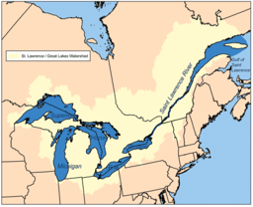
This river flows through northeastern Canada to the Great Lakes.
a)
Lake Lanier
b)
St. Lawrence River
c)
Atlantic Ocean
d)
Erie Canal
51.
The high peaks(mountain tops) of the Rocky Mountains form an imaginary line in the United States known as 
a)
Death Valley
b)
Continental Divide
c)
Rocky Mountains
d)
Great Plains
52.

This physical feature has very few trees and lots of grassland

a)

Great Plains

b)

Continental Divide

c)

Great Basin

d)

Death Valley

53.
These bodies of water are connected to each other and contain fresh water
a)
Great Lakes
b)
St. Lawrence River
c)
Gulf of Mexico
d)
Atlantic Ocean
54.

What large mountain range is pictured here?

a)

Appalachians

b)

Coastal Range

c)

Rockies

d)

St. Lawrence

55.
What large mountain range is pictured here?
a)
Catskill Moutains
b)
Rocky Moutanins
c)
Appalachian Mountains
56.

Located in central New York; connects Lake Erie to the Hudson River.

a)

Boston

b)

New York City

c)

St. Lawrence River

d)

Erie Canal

57.

One of the largest cities in the United States, known as the world's center for business and trade.

a)

New York City, NY

b)

Washington, DC

c)

Philadelphia, PA

d)

Boston, MA

58.

City that is located on a harbor; capital of Massachusetts.

a)

DC

b)

Boston

c)

New York

d)

Philadelphia

59.

Known as the birthplace of our nation; the Declaration of Independence and Constitution were written there.

a)

Philadelphia, PA

b)

Washington, D.C.

c)

New York, NY

d)

Gettysburg, PA