
 Worksheets
Biology Unit 1 Study
Total questions: 45
Worksheet time: 32mins
How many sentences should a claim be?
1
2
3
It doesn't matter
Which of these statements is NOT a claim?
Global temperatures are increasing due to carbon dioxide.
Missing assignments do not affect your grades.
I like blue Jolly Ranchers.
What should NOT be included in your evidence?
Observations from an investigation.
Numbers from your data table.
Opinions about the scientific data.

What is the best claim based on the data in this graph?
When the weight of particles increase, the length decreases
When the weight of particles increase, the length also increases
The length of particles is not related to weight of particles.

What is the best claim based on the data in this graph?
More cars are being made every year
Electric cars are better than gas cars
The number of electric cars worldwide is increasing
Electric cars stopped being sold in 2019
What is a claim?
Answers a question or problem
long and detailed paragraph
Explains why something happened
What is an example of evidence?
Football players are 33% more likely to get injured than baseball players.
Football is more dangerous than baseball.
Baseball is a fun sport.
What does CER stand for?
Create Evaluate Respond
Consider Evidence Relevant
Claim Evidence Reasoning
Cause Examine Real-life
The information you collect while doing your experiment is called
conclusions
data
hypotheses
procedures
The variable that is being measured or observed is called the _______________. Hint: this is the variable that is the result or effect
independent variable
dependent variable
control variable
The independent variable is
The variable that you change in an investigation
The variable that you measure in an investigation
A variable that you keep the same in an investigation
Data gathered using the senses are referred to ___________.
quantitative data
logical data
measured data
qualitative data


Susan said, “If I fertilize my geranium plants, then they will have more flowers.”
recognize a problem
test the hypothesis with an experiment
form a hypothesis
draw conclusions
This part of the experiment serves as a basis of comparison:
control group
Independent variable
dependent variable
data
This variable in an experiment is the one being deliberately changed by the scientist.
dependent variable
independent variable
data
control group
All hypothesis are accepted.
True
False
Homeostasis
allows for a wildly fluctuating internal environment
is impossible in vertebrates
is the maintenance of a relatively stable internal environment and often incorporates a form of feedback regulation
When you are cold, you shiver and your blood vessels contract, which warms you up. When you are hot, you sweat and your blood vessels expand, which cools you down.
False
True
Which body system controls the body to maintain homeostasis?
excretory
nervous
circulatory
skeletal
the brain only
the muscles
When the product of a reaction leads to an INCREASE in that reaction
Positive
Negative
Occurs when the product of a reaction leads to a DECREASE in that reaction. Counteracts what is happening.
Positive
Negative
Body temp is 98.6 --> body temp decreases --> shivering occurs --> body
Positive
Negative
Get a cut and start bleeding --> Platelets come to site and clump together & send signals for more platelets to come --> More platelets come & release more signals
Positive
Negative
What is a cell?
Groups of similar types of cells that work together to carry out a specific task
Groups of different tissues working together to perform a particular job
Groups of different organs working together to complete a series of tasks
The smallest unit of life
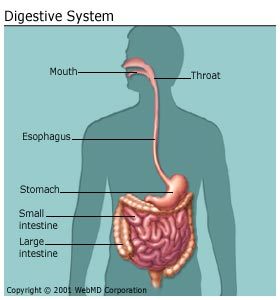
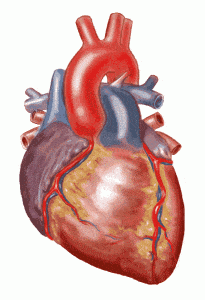
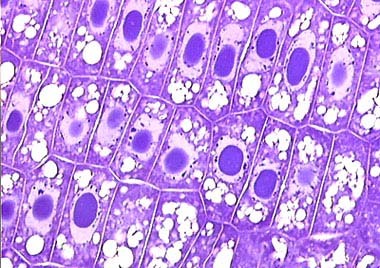

What are organs made out of?
cells
organisms
tissues
organ systems
individual member
of a species or
population
population
community
organism
ecosystem
multiple populations
of different species
living together
community
population
ecosystem
biodiversity
community PLUS all
of the abiotic factors
in the environment
organism
population
community
ecosystem
the zone
of life on Earth,
encompassing all of
Earth’s ecosystems
biosphere
biome
ecosystem
community

What is an individual?
One individual member of a species
a group of individuals of a species
all the different populations of a species that live in an area together
a community of organisms and their physical environment

What is a community?
One individual of a species
a group of individuals living together in an area
all the different populations living together in an area
different communities and their physical environment

