wayground logo

Free Printable Worksheets

NEW

Font size

S
M
L
XL
Worksheets

2.1 and 2.2 Biology

Total questions: 34

Worksheet time: 22mins

Name
Class
Date
1.

Smallest part of an element that still retains the properties of that element

a)

compound

b)

element

c)

proton

d)

atom

2.

Subatomic particle with no charge

a)

proton

b)

neutron

c)

electron

d)

atom

3.

Subatomic particle with a positive charge

a)

proton

b)

neutron

c)

electron

d)

atom

4.

Subatomic particle that has a negative charge

a)

proton

b)

neutron

c)

electron

d)

atom

5.

The type of bond formed when electrons are transferred from one atom to another

a)

chemical

b)

covalent

c)

ionic

d)

atomic

6.

The type of bond formed when electrons are shared between two atoms

a)

ionic

b)

chemical

c)

atomic

d)

covalent

7.

Which electrons are involved in bonding?

a)

Those closest to the nucleus

b)

Those in the nucleus

c)

The valence electrons

d)

The positive electrons

8.

Atoms are neutral because they have the same number of

a)

protons and electrons

b)

protons and neutrons

c)

neutrons and electrons

d)

valence electrons

9.

Two or more different atoms combined in a definite whole number ratio form a ________________.

a)

compound

b)

acid

c)

base

d)

ion

10.

An atom that loses an electron has a _________ charge.

a)

negative

b)

neutral

c)

ionic

d)

positive

11.

An atom that gains an electron has a ___________ charge.

a)

positive

b)

negative

c)

passive

d)

neutral

12.
Which is considered neutral?
a)
pH of 4
b)
pH of 9
c)
pH of 14
d)
pH of 7
13.
Tomato juice has a pH of 4. Determine if it's an acid, base, or neutral. 
a)
acid
b)
base
c)
neutral 
14.
Household bleach has a pH of 12. Determine if it's an acid, base, or neutral.
a)
acid
b)
base
c)
neutral 
15.
Which particles are found in an atom's nucleus?
a)
protons, neutrons and electrons
b)
protons and neutrons
c)
protons and electrons
d)
electrons and neutrons
16.
What word describes when water is attracted to other substances?
a)
cohesion
b)
adhesion
c)
capillary action
d)
surface tension
17.
Attractions between the negative Oxygen atom of one water molecule and the positive Hydrogen atom of another water molecule are called
a)
Covalent bonds
b)
Ionic bonds
c)
Polar bonds
d)
Hydrogen bonds
18.
Which end of the water molecule has a slightly positive charge?
a)
the oxygen end
b)
the hydrogen end
c)
both ends are slightly positive
d)
neither end is positive
19.
Water is a universal solvent because it...
a)
It can be found anywhere
b)
It freezes when it gets cold
c)
floats when frozen
d)
Dissolves most substances
20.
Large bodies of water, such as lakes and oceans, do not quickly fluctuate in temperature. What is the reason for this phenomenon?
a)
Water is an acid.
b)
Water is a versatile solvent.
c)
Water has a high heat capacity.
d)
 Water acts as a buffer.
21.
 Small insects can walk across the surface of calm water. Their feet push the surface of the water down slightly, somewhat like a person walking across a trampoline, but they do not break the surface. What is the best explanation for why this happens?
a)
The insects are light enough so that they do not break the hydrogen bonds holding the water molecules together
b)
The insects actually use their wings to hover slightly above the water's surface and they only skim it with their feet
c)
The insects' feet are non-polar, so they are repelled by the polar water molecules and are pushed away from the water's surface
d)
The insects are small enough to see the individual water molecules, so they are able to step carefully from one molecule to the next
22.
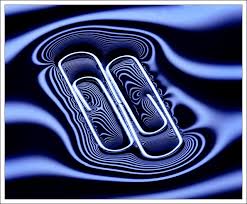
The tightness across the surface of water that enables paper clips to float is ____________.
a)
adhesion
b)
capillary action
c)
surface tension
d)
polarity
23.
Which statement explains why water molecules stick together?
a)
both sides are negative
b)
one side has a positive charge and the other side has a negative charge
c)
one side has a negative charge adn the other side has a neutral charge
d)
both sides are positive
24.
When a molecule has an opposite electrical charge on each end, it is known as what?
a)
cohesion
b)
polar molecule
c)
hydrogen bond
d)
solution
25.

Attraction between water molecules and other substances is called

a)

cohesion

b)

adhesion

c)

heat capacity

d)

solvent

26.
What is water?
a)
An atom
b)
A molecule composed of 2 parts Oxygen and one part Hydrogen
c)
A molecular compound composed of 2 parts Hydrogen and one part Oxygen
d)
A pure substance composed of 2 parts Hydrogen and one part Oxygen
27.
What is the chemical formula for water?
a)
H20
b)
h2o
c)
H2O2
d)
H2O
28.
What is adhesion?
a)
Water's ability to stick to itself
b)
Water's ability to stick to other substances
c)
The strength of the cohesion of all the water molecules combined
d)
Tape, glue and other adhesives
29.
What is cohesion?
a)
Water's ability to stick to itself
b)
Water's ability to stick to other substances
c)
The strength of the cohesion of all the water molecules combined
d)
Tape, glue and other adhesives
30.
Which is NOT a unique property of water?
a)
Frozen water floats on liquid water.
b)
Water covers most of the Earth’s surface and retains a large amount of heat.
c)
Water molecules stick to each other through hydrogen bonds.
d)
Water cools very rapidly.
31.
Which term refers to water having partial positive and a partial negative charge?
a)
cohesion
b)
surface tension
c)
polarity
d)
adhesion
32.

Capillary Action

a)

The property of water that allows ice to float on the surface of liquid water

b)

The property of water that allows it to dissolve polar substances

c)

When water molecules stick to other surfaces

d)

The property of water that allows water to move up a thin tube (or the stem of a plant) by itself

33.
Which of the following is LEAST likely to dissolve in water?
a)
nonpolar fats and oils
b)
polar sugar molecules
c)
salt made of a positive sodium ion and a negative chloride ion
d)
all of the substances will dissolve easily in water
34.

Which of the following elements are the basis of organic, living organisms?

a)

Iron

b)

Nitrogen

c)

Carbon

d)

Hydrogen