
 Worksheets
EVALUACION DE ENLACE IONICO
Total questions: 15
Worksheet time: 22mins
Señale las proposiciones que no se cumplen en la formación del enlace químico.
I. Hay liberación de energía.
II. Los electrones de la capa de valencia participan en la formación del enlace.
III. Los átomos al enlazarse adquieren mayor estabilidad.
IV. Solamente forman enlace químico los átomos que tienen 8 electrones de valencia.
Sólo II
Sólo IV
I y II
III y IV
I, II y III
Indicar verdadero o falso con respecto al enlace iónico:
I. Ocurre ente un átomo metálico y otro no metálico generalmente.
II. El metal se convierte en catión y el no metal en anión.
III.Los iones enlazados son inestables.
VVV
VVF
VFV
FFV
FVF
Why do all bonds form?
to fill the outermost energy level
so an atom can be unstable
so the number of protons and electrons can equal.
so they can gain neutrons.
Valence electrons are found
outermost energy level
innermost energy level
some where in the electron cloud
When an atom loses an electron, it becomes a
positive ion
negative ion
Ionic bonds are between
metals and nonmetals
2 metals
2 nonmetals
Atoms are most stable when their outer shell is full or complete.
true
false
How are ionic bonds formed?
transfer of electrons
sharing of electrons
Salt is an example of what?
ionic compound
covalent compound

What type of bonding does this picture show?
Ionic
Covalent
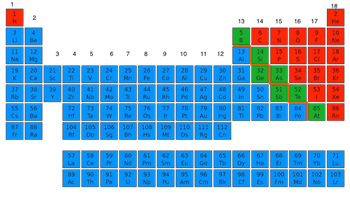
Sodium and Bromine will make a _____ bond.
ionic
covalent
metallic

Which properties are all characteristics of ionic compounds?
solids with high melting and boiling points
soft solids which are highly malleable
when solid, the ions are held in place so the compounds cannot conduct electricity
conduct electricity when dissolved or molten

Why do ionic compounds NOT conduct electricity when they are in their solid state?
Their ions are free to move.
Their ions are held in fixed positions.
Their electrons are free to move
Their electrons are held in a fixed state
What groups form ionic bonds on the periodic table?
Groups 1 and 7, Groups 2 and 6
Groups 1 and 18,
Groups 4 and 4
Groups 1 and 17, groups 2 and 16
groups 3 and 5, groups 4 and 4

