wayground logo

Free Printable Worksheets

NEW

Font size

S
M
L
XL
Worksheets

Biology CA #1 Review

Total questions: 14

Worksheet time: 13mins

Name
Class
Date
1.

Enzymes are an example of

a)

Lipids

b)

Carbohydrate

c)

Protein

d)

Nucleic Acid

2.
Each enzyme only has 1 substrate that will fit its active site.  What is this called?
a)
reusable
b)
catalyst
c)
specific
d)
fragile
3.
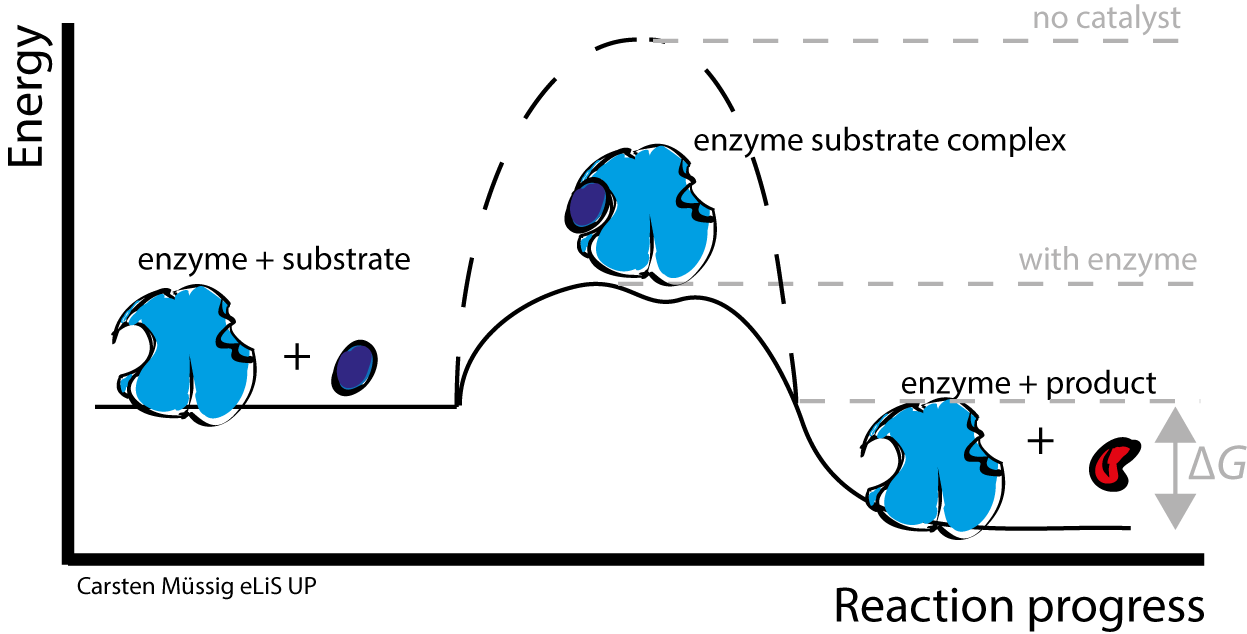
An enzyme speeds up a reaction by
a)
lowering the activation energy.
b)
raising the activation energy.
c)
releasing energy.
d)
absorbing energy.
4.

What happens when enzymes are heated to a high temperature?

a)

The enzymes die.

b)

The shape of the enzyme are changed and it denatures

c)

The enzymes' amino acid sequence changes.

d)

The enzymes remain the same

5.
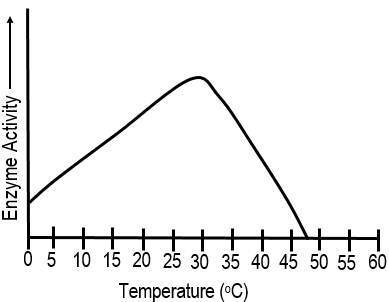
Based on the graph, what temperature does this enzyme work best? 
a)
15 C
b)
40 C
c)
30 C
d)
47 C
6.
Which biomolecule helps form muscles?
a)
Nucleic Acid
b)
Carbohydrate
c)
Protein
d)
Lipids
7.
Which biomolecule is responsible for insulation and energy storage?
a)
Protein
b)
Nucleic Acid
c)
Lipid
d)
Carbohydrate
8.
What is the function of nucleic acids?
a)
Stores energy
b)
Stores genetic information
c)
Movement
d)
Physical structure
9.

Diffusion is a form of __________ transport.

a)

Passive

b)

Active

c)

Easy

d)

Free

10.

Passive Transport uses ____ energy

a)

no

b)

a lot of

c)

a little bit of

d)

some

11.
Osmosis is the movement of _____ across a membrane.
a)
food
b)
energy
c)
oxygen
d)
water
12.

Particle of movement from an area of lower concentration to an area of higher concentration.

a)

Active transport

b)

Passive transport

13.

Which type of solution has the same solute concentration inside of and outside of the cell?

a)

Hypertonic

b)

Hypotonic

c)

Isotonic

14.

The cell expanded in size to the point of lysing (bursting), which means it was placed in a ____ solution.

a)

Isotonic

b)

Hypertonic

c)

Hypotonic