
 Worksheets
LOCM and ECM
Total questions: 29
Worksheet time: 24mins
If 20g of sugar is stirred into a beaker containing 100g of water. What would the mass of the dissolved solution be after the sugar is dissolved fully?
20g
100g
80g
120g
Suppose you have 15g of baking soda and mix it with 15g of vinegar. When they are combined they bubble and fizz a lot. The final solution has a mass of 25g. What happened to the "lost" 5g?
it dissappears
it is still there just not weighted
it is in the gas that is formed
nothing happened
a different way to say Law of Conservation of Matter
Law of Conservation of Volume
Law of Conservation of Energy
Law of Conservation of Mass
Law of Conservation of Environment
two or more atoms joined together (can be from the same element or different elements)
molecule
compound
mixture
solution
a substance that forms in a chemical reaction
coefficient
subscript
reactant
product

Which section represents the reactants?
A
B
C
Based on the Law of Conservation of Matter, describe the relationship between the mass of the reactants and the mass of the products.
The mass of the products is always greater than the mass of the reactants.
The mass of the reactants is less than the mass of the products.
The mass of the reactants equals the mass of the products.
The mass of the reactants is greater than the mass of the products.
What are the starting materials in a reaction?
product
subscript
coefficient
reactants
What happens to atoms in a chemical reaction?
they are destroyed
they are created
they are rearranged
2H2 + O2 --> 2H2O
Example: H2
Al + O2 --> 2Al2O3
2C2H2 + 5O2 --> 4CO2 + 2H2O
Balance the following equation:
___ H2+ ___ O2→___ H2O
1, 1, 3
2, 2, 2
1, 2, 1
2,1, 2
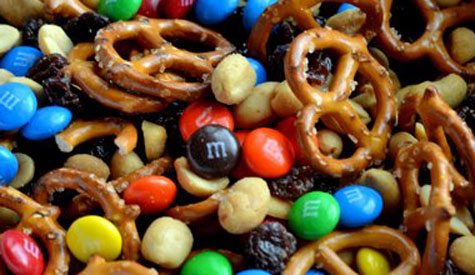
Identify which images are HETEROGENEOUS MIXTURES! (Check all that apply)


Which of the following is classified as a pure substance?
Lemonade
Fruit punch
ketchup
Helium


Which of the following is NOT a mixture?
milk
lemonade
vegetable salad
aluminum


The diagram shows
element
mixture
compound
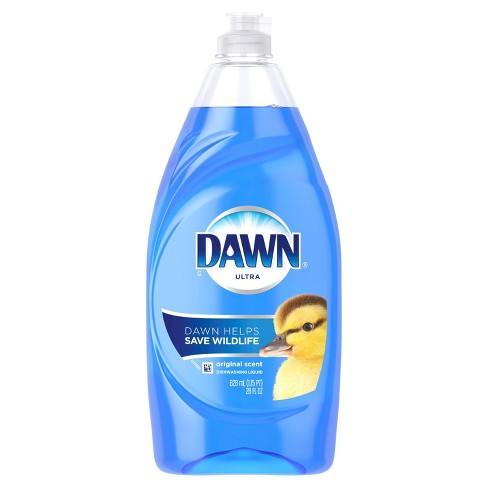
A bottle of dishwashing detergent contains a clear, viscous liquid. The label has a long list of ingredients, including water, sodium lauryl sulfate, fragrance, and Blue dye #5.
What can you infer about the material in the bottle from this label and the appearance of the liquid?
It is a pure substance.
It is a compound.
It is a heterogeneous mixture.
It is a homogeneous mixture.
Provided is a list of five different substances.
NaOH Cu H2O N2 H2
How many of these substances are elements?
2
3
4
5
How many elements are in the compound Fe2O3?
0
1
2
3
A mixture that contains two or more substances uniformly combined
heterogeneous mixture
homogeneous mixture
suspension
colloid


