
 Worksheets
Weathering and Erosion
Total questions: 156
Worksheet time: 2hrs 48mins

What is the process process by which water, ice, wind or gravity picks up and moves weathered rock and soil from one place to another.


Weathering is the process of -
Moving sediment from one place to another
Dropping or leaving sediment in a location
Breaking down rocks into sediment


What is the breakdown of the Earth’s crust into sediment called?
erosion
deposition
weathering
whooshing

What is it called when weathered rock is carried away?
weathering
erosion
deposition
breaking
Which one of the examples below is physical weathering?
lichens growing on rock
acid rain wearing away limestone
oxidation (rusting) of a flag pole
frost wedging splitting a rock apart

Which of these terms describes the process of acid rain wearing out limestone?
deposition
chemical weathering
physical weathering
erosion
Which of these is an example of erosion?
light shining onto a mountain
wind blowing away sediment
rain breaking down rock
all options are correct
What is the process called when a glacier deposits rocks in oceans and lakes?
deposition
chemical weathering
physical weathering
erosion

Which of these examples is deposition?
wind blowing sand
sand that was dropped on the beach by waves
pebbles falling downhill due to gravity
a tree root breaking a rock

What is the movement of weathered material (sediment) from one place to another by wind, water, gravity, or ice?
erosion
deposition
chemical weathering
physical weathering
Which of the following represents weathering of rocks?
the bumping and scraping of rocks in a river
the movement of rocks along the river
the settling of rocks at the bottom of the river
the covering of rocks with sediments
Which of the following represents erosion?
a rock sitting
precipitation on a rock
a rock moving
one rock hitting another
Fast moving water will cause rocks to bump and scrape each other. What will happen to these rocks over time?
they will get larger
they will get smaller
they will get heavier
they will stay the same
Erik put sugar cubes in a glass jar and shook it 50 times. He poured out the sugar cube and compared it to the original size and shape. What process is he studying?
erosion
weathering
segmentation
deposition
Gerardo is working on his backyard. He has a large pile of dirt to help with the landscaping. He covers the dirt with a tarp. Why should the dirt be covered?
to create a level place
to help the dirt settle into a solid mass
to protect the dirt from freezing
to prevent rain from carrying the dirt downhill
Which of the following is NOT an example of erosion?
wind blowing sand
rain falling onto the beach
sand castles becoming smaller
ocean waves moving sand back and forth
What is flood water pounding on a canyon wall and wearing it down an example of?
weathering
erosion
What is rain washing away soil an example of?
weathering
erosion
What is water getting into rocks and freezing breaking apart the rock and example of?
weathering
erosion
What is muddy water being carried away by a fast moving river an example of?
weathering
erosion
The definition of weathering is
When the weather is really bad
When rocks get rained on
When rocks break apart or change colors
When rocks fall off of mountains
Which one of these pictures is the best example of weathering?


What is erosion?
The movement of parts of rocks and soil
The movement of land and rock
Rocks falling apart
Rocks eating other rocks
what happens first?
erosion
weather
landscapes change
weathering
The definition of weathering is
When the weather is really bad
When rocks get rained on
When rocks break apart or change colors
When rocks fall off of mountains
Which one of these pictures is the best example of weathering?
What is erosion?
The movement of parts of rocks and soil
The movement of land and rock
Rocks falling apart
Rocks eating other rocks
what happens first?
erosion
weather
landscapes change
weathering
When liquid water gets into the cracks of rocks and freezes, the rock can _______________ because the water will _______________ when it freezes.
break, expand
move, wind
weathering, moving
When rocks are broken down into small pieces, we call this __________________.
erosion
weathering
________________ and _________________ can both cause weathering and erosion.
glass, wood
wind, water
air, cotton
Erosion is the ______________ of weathered materials from one place to another.
moving
stopping
breaking

What kind of erosion is this?
wind
ice
water

What kind of erosion is this?
wind
ice
water

What kind of erosion is this?
wind
ice
water
Weathering and erosion change what the Earth’s land looks like. For example, it can change what mountains, beaches, cliffs, and canyons look like.
True
False
Weathering and erosion do the same thing to rocks.
True
False
Plants’ roots are strong enough to break rock.
True
False

Rain water washed away the dirt
Weathering
Erosion

Water got into crack of a rock and when the water froze the rock cracked
Weathering
Erosion

The hurricane caused the rock to break into tiny pieces
Weathering
Erosion

The wind is carrying the sand away
Weathering
Erosion
The breakdown of rock into smaller pieces because of wind, water, or ice
Erosion
Weathering
Lava
Landslide
Moving sediment from one place to another
Weathering
Deposition
Erosion
Earthquake
The process that changes the minerals that rocks are made of. This is a type of weathering
Physical Weathering
Erosion
Chemical Weathering
Breaking Rocks
The breaking down of rocks caused by physical force
Chemical Weathering
Physical Weathering
Explosion
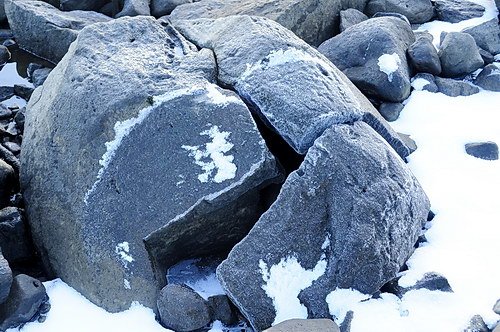
How does freezing water cause the weathering of rocks? The freezing water—
keeps the rocks in place.
makes the rocks last longer.
expands cracks and breaks rocks.
causes rocks to fall in landslides.
Which if the following is NOT a form of weathering?
Plant roots growing through rocks.
Ice grinding on rocks.
Water moving particles down stream
Rocks rubbing against each other.
Which process change Earth's surface.
Erosion
Deposition
all above

The breakdown of rock into smaller pieces because of wind, water, or ice
Erosion
Weathering
Lava
Landslide
Moving sediment from one place to another
Weathering
Deposition
Erosion
Earthquake
The process that changes the minerals that rocks are made of. This is a type of weathering
Physical Weathering
Erosion
Chemical Weathering
Breaking Rocks
The breaking down of rocks caused by physical force
Chemical Weathering
Physical Weathering
Explosion
How does freezing water cause the weathering of rocks? The freezing water—
keeps the rocks in place.
makes the rocks last longer.
expands cracks and breaks rocks.
causes rocks to fall in landslides.
Which if the following is NOT a form of weathering?
Plant roots growing through rocks.
Ice grinding on rocks.
Water moving particles down stream
Rocks rubbing against each other.
Which process change Earth's surface.
Erosion
Deposition
all above
What is a deposit
A river delta
Layers of sediment in one spot
Rocks that come out of a volcano
Sediment that goes to the bank
True or False: Weathering and Erosion are the same thing
True
False
What is erosion?
Erosion is an earthquake response
Erosion is the destruction of the environment
Erosion is a pokemon
Erosion moves rock or soil by wind, water, and ice
What is weathering?
Process that moves rock and soil by wind, water, or ice
The Statue of Liberty in all her green glory
Wind, water, heat or plants that cause rocks to break apart or change
A deposit in an ocean
What are the three types of weathering?
Black, Purple, pink
Pikachu, Bulbasaur, Charizard
Water, Sand, Sediment
Mechanical, Biological, Chemical
What are the three main causes of erosion?
People, animals, Saturn
Water, wind, ice
Cars, plants, animals
Metamorphic, Igneous, Sedimentary
True or False: Animals, glaciers, plants, and gravity cause erosion
True
False
What is deposition
Sediment that attacks sharks
Sediment that is pink
Sediment that is deposited in another location
Sediment that is also weathering
True or False: Erosion takes a million years
True
False
Are you a science genius?
Absolutely Yes!
Totally Yes!
100% Yes!
Of course I am
The breaking down of rocks is ---
Erosion
Weathering
Animals
Plants
Rocks moved from one place to another is ---
Erosion
Weathering
Draw an example of Weathering

Draw an example of Erosion

What causes sand dunes in the desert?
Rain Fall
Ice
Winds
High Temperatures

Ocean Waves have made this rock smooth. This is called---
Volcano
Erosion
Weathering
Fire

This river is moving rocks everywhere. This is an example of ____.
Water
Erosion
Weathering
Fire
Weathering or Erosion?
Rain breaks rock into pieces.
Erosion
Weathering
Weathering or Erosion?
The ice made a crack in the rock.
Erosion
Weathering
Weathering or Erosion?
Sand is being blown away by the wind.
Erosion
Weathering
Weathering or Erosion?
The river carries stones from one place to another.
Erosion
Weathering

Weathering or Erosion?
Erosion
Weathering

Weathering or Erosion?
Erosion
Weathering
Draw on this hill to help prevent erosion.

A rock broke into smaller pieces. What could have caused this to happen?
Magnet
sand
insects
ice
Erosion is caused by all these things except....
wind
water
plants
ocean waves
Where is the Grand Canyon?
Canada
The western United States
Europe
South Africa
What made the Grand Canyon?
A meteor
Tectonic plates
A river
A glacier
True or False: Rock breaking down into smaller is called weathering.
True
False
Erosion is caused by ____________________.
Gravity, wind, trees, and sand
Gravity, wind, sediment, and snow
Gravity, rain, ice, and hail
Gravity, wind, ice, and water
Which is not an example of erosion caused by gravity?
Landslides
Mudslides
Dust storms
Rock falls
Wind erosion causes problems for _________.
Farmers
Coastal Communities
Glaciers
True or False: Glaciers can move.
True
False
What are glaciers?
Giant dust storms
Mountains of rock
Rivers of ice
Deep valleys
Sandpaper is used to describe ___________.
Glaciers
Sediment
Abrasion
Gravity
How long did it take for the Colorado River to carve the Grand Canyon?
Hundreds of years
Thousands of years
Millions of years
Billions of years
Did you understand the lesson? Choose 1 answer choice.
😃 Yes. I feel like an expert!
🙂 Almost yes. I feel great.
😐 Partly. I feel okay.
😕 Almost no. I feel confused.
☹️ No. I feel very frustrated.
Explanatory Writing: Explain how erosion moves and deposits rocks. Make sure you have checked your work.
Fill in the blank.
____________ is the moving of sediment from one place to another.
erosion
root wedging
weathering
deposition
This type of map shows the elevations for both natural and man-made features.
road map
climatic map
topographic map
Fill in the blank.
___________ happens when rocks break apart, wear away, or dissolve into smaller particles.
erosion
ice wedging
weathering
Fill in the blank.
___________ is the laying down of sediment and rock in a new place.
deposition
erosion
weathering
dropping

The formation and changing of the Grand Canyon is due to weathering and erosion.
true
false
This type of scientist studies the earth through rocks and rock formations
biologist
geologist
paleontologist
radiologist

This picture shows a creek and the land around the creek. The squares in the creek are 30 cm on each side.
Which picture below shows the LEAST amount of soil erosion along the banks of this creek?


This picture shows a creek and the land around the creek. The squares in the creek are 30 cm on each side.
Which picture below shows what the creek would look like after several days of heavy rain?


Explain why you think you can see the roots of the tree in the picture.

We have investigated trees that have been changed by water erosion.
Do you think this tree has also been affected by water erosion? Why or why not?
Fill in the blank.
____________ is the moving of sediment from one place to another.
erosion
root wedging
weathering
deposition
This type of map shows the elevations for both natural and man-made features.
road map
climatic map
topographic map
Fill in the blank.
___________ happens when rocks break apart, wear away, or dissolve into smaller particles.
erosion
ice wedging
weathering
Fill in the blank.
___________ is the laying down of sediment and rock in a new place.
deposition
erosion
weathering
dropping
The formation and changing of the Grand Canyon is due to weathering and erosion.
true
false
This type of scientist studies the earth through rocks and rock formations
biologist
geologist
paleontologist
radiologist
This picture shows a creek and the land around the creek. The squares in the creek are 30 cm on each side.
Which picture below shows the LEAST amount of soil erosion along the banks of this creek?
This picture shows a creek and the land around the creek. The squares in the creek are 30 cm on each side.
Which picture below shows what the creek would look like after several days of heavy rain?
Explain why you think you can see the roots of the tree in the picture.
We have investigated trees that have been changed by water erosion.
Do you think this tree has also been affected by water erosion? Why or why not?

What is the movement of rocks and sediment that have been broken apart through weathering?
Erosion
Weathering
Deposition
Abrasion

What is the process that occurs when plants, animals and other living organisms caused larger rocks broken into smaller pieces?
Mechanical weathering
Chemical weathering
Biological weathering
Weathering

What is Weathering?
It is the process of taking particles somewhere else.
It is the process of decomposing, breaking up, or changing the color of rocks.
It is the process of sediments, soil and rocks, being added to a landform or land masses.
It is the process when rocks and sediment grinding against each other wear away surfaces.

What type of weathering caused by frost, ice, moving water or heat from sun?
Chemical weathering
Biological weathering
Mechanical weathering
Deposition

What type of weathering that causes changes to the minerals inside or on the surface of the rock?
Biological weathering
Mechanical weathering
Abrasion
Chemical weathering
Erosion can take place gradually overtime, but it can also happen quickly.


The process in which sediment settles out (drops to the bottom) of the water or wind that is carrying it
Weathering
Erosion
Sedimentation
Deposition

The process in which wind, water, ice or gravity transport rock fragments from one location to another
Weathering
Sedimentation
Erosion
Deposition

The process by which rocks are broken down
Weathering
Deposition
Erosion
Sedimentation

Fragments of weathered rocks are known as ____.
sediments
deposits
limestones
sandstones


_______________ when wind, water, plants, animals and temperature breaks down rock.
Weathering
Erosion
Deposition
_______________ is the laying down or settling of broken down rock.
Weathering
Erosion
Deposition
_______________ when soil, sand, or rocks are moved from one place to another.
Weathering
Erosion
Deposition
Which of the following can cause weathering?
Animals
Plants
Wind
All of the Above
All of the following can cause erosion EXCEPT _________.
Wind
Water
Animals
Ice
A dog digging a hole into the ground is an example of _________.
Weathering
Erosion
Deposition
Water carrying rocks down a river is an example of _________.
Weathering
Erosion
Deposition
__________ when water from rivers, streams or rain storms break away pieces of land while moving over it.
Wind Erosion
Water Erosion
Chemical Erosion
Deposition
_________ is the force that pulls materials such as rock down when weathering and erosion occur?
Gravity
Weathering
Erosion
Deposition
There is no way to prevent weathering from happening, but erosion can be stopped or slowed down
True
False
Landslides are caused by gravity pulling materials such as rock down when weathering and erosion occur. _____________
True
False
Erosion and weathering are examples of fast land changes. ______________
True
False

