
 Worksheets
oRGANIC CHEMISTRY
Total questions: 193
Worksheet time: 2hrs 9mins
TRUE or FALSE.
Organic Chemistry is the study of chemical compounds found in living organisms alone.
TRUE
FALSE
TRUE or FALSE.
Organic Chemistry is the study of chemical compounds found in living organisms alone.
TRUE
FALSE
TRUE or FALSE.
Organic Chemistry is the study of chemical compounds found in living organisms alone.
TRUE
FALSE
TRUE or FALSE.
All organic compounds are obtained from living organisms or "organic materials" while all inorganic compounds are obtained from earth's mineral constituents or "inorganic materials".
TRUE
FALSE
TRUE or FALSE.
All organic compounds contain the element Carbon.
TRUE
FALSE
TRUE or FALSE.
All organic and inorganic compounds contain the element Carbon.
TRUE
FALSE
Carbon has _____ valence electrons.
2
4
6
8
Which of the two is an Organic Compound?


Meets bonding requirement for CARBON atoms, YES or NO?
A double bond and a triple bond
YES
NO
Meets bonding requirement for CARBON atoms, YES or NO?
Two double bonds and two single bonds
YES
NO
Meets bonding requirement for CARBON atoms, YES or NO?
Two double bonds
YES
NO
Which of the following is a HETEROATOM?


Which of the following is a HYDROCARBON DERIVATIVE?
Which of the following is an UNSATURATED HYDROCARBON?
Which two elements do all organic compounds contain?
Carbon and hydrogen
Carbon and oxygen
Oxygen and hydrogen
Carbon and nitrogen
Organic compounds made only of the elements carbon and hydrogen are called...
Hydrocarbons
Carbohydrogens
Carbohydrates
Hydrocarbonates
Which one of the following characteristics is not correct for all of the members of the same homologous series?
Same general formula
Similar chemical properties, i.e. undergo the same reactions
Varying physical properties, i.e. change in a predictable way
Different functional group
Alkane molecules are made of which elements?
Carbon and hydrogen
Carbon, hydrogen and oxygen
Carbon and oxygen
Carbon, nitrogen and hydrogen
All molecules of the alkane homologous series have which ending in their name?
-ane
-ene
-anol
-anoic acid
The first four alkanes are listed below. In which list are they placed in the correct order, i.e. increasing number of carbon atoms?
methane, ethane, propane, butane
ethane, methane, propane, butane
methane, ethane, butane, propane
methane, propane, ethane, butane
Which is the correct general formula for the alkanes?
CnH2n+2
CnH2n
CnH2n+1OH
CnH2n+1COOH
Which type of bonding is present within organic molecules?
Covalent bond
Ionic bond
Metallic bond
Hydrogen bond
Which list does NOT contain compounds found in the same homologous series?
methane, ethane, propane, butane
Pentane, hexanol, heptane, octane
nonane, decane, undecane, dodecane
tridecane, tetradecane, pentadecane, hexadecane

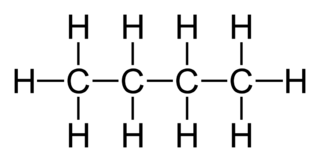
What is the name of the alkane shown here?
Methane
Ethane
Propane
Butane
What is the study of the study of the composition, structure, and properties of matter, the processes that matter undergoes, and the energy changes that accompany these processes
(a)
What is the study of the study of the composition, structure, and properties of matter, the processes that matter undergoes, and the energy changes that accompany these processes
(a)

Robert Boyle discovered what famous idea?
The theory of atomism
Behavior of Gases
The role oxygen plays in combustion
That equal volumes of gases, at the same temperature and pressure, contain equal numbers of molecules

Amedeo Avogadro discovered what famous idea?
The theory of atomism
Behavior of Gases
The role oxygen plays in combustion
That equal volumes of gases, at the same temperature and pressure, contain equal numbers of molecules
6.02 x 10^23
Which branch of chemistry would be most concerned with synthesizing new carbon-containing compounds?
Physical Chemistry
Inorganic Chemistry
Analytical Chemistry
Organic Chemistry
Which is smallest?
Atom
Isotope
Nucleus
Molecule
Which is the smallest?
Electron
Proton
Neutron
Nucleus
How do Carbon-12 and Carbon-14 differ?
Different atomic number
Different atomic mass
Different elements
Different ages
A neutral atom always has the same number of protons and ______.
electrons
neutrons
ions
nuclei
Two atoms of the same element that have different atomic masses are known as ____.
isotopes
ions
radioactive
identical


Hybridization is a mixture of two atomic orbitals to produce a new set of ________.
Hybrid Orbitals
Hybridization
Hybrid Atoms
Hybrid Compounds

This is a result of what type of Hybridization?
(a)

What should be written in the "??????"?
(a)

What type of orbital is needed?
(a)
sp Hybridization occurs when 1s orbital and 1p orbital of an atom mix to form 2 equivalent orbitals. It forms a (a) with an angle of 180°
This type of bond has two orbital lobes. One above and one below the plane of the sigma bond. What type of bond is this?
(a)
________ is a hybrid with a 25% character s and 75% character p.
sp3 Hybridization
sp2 Hybridization
sp Hybridization
sp3d2 Hybridization
sp3 occurs when 1s orbital and 3p orbitals of an atom mix together to form 4 equivalent orbitals. It forms tetrahedral with an angle of ______
120 degrees
109.5 degrees
90 degrees
x=2a−b±2b2−4ac
Which of the following is not a type of Hybridization?
sp
sp2
sp3
sp4
This model predicts geometries that are strikingly similar to those observed in real molecules.
VSEPB
VSELR
VSEPR
VSERR
Type of hybridization in which the carbon atom has 2 pure orbitals
sp4
sp3
sp2
sp
Type of hybridization in which the carbon atom has 3 hybrid orbitals
sp4
sp3
sp2
sp
Type of hybridization in which the carbon atom has 4 hybrid orbitals
sp4
sp3
sp2
sp
Type of hybridization in which the carbon atom has 2 hybrid orbitals
sp4
sp3
sp2
sp
Type of hybridization in which the carbon atom has 1 pure orbitals
sp4
sp3
sp2
sp
Type of hybridization in which the carbon atom has 0 pure orbitals
sp4
sp3
sp2
sp
Geometry of the carbon atom with sp hybridization
tetrahedral
trigonal
linear
pyramidal
Geometry of the carbon atom with sp2 hybridization
tetrahedral
trigonal
linear
pyramidal
Geometry of the carbon atom with sp3 hybridization
tetrahedral
trigonal
linear
pyramidal
Which is the angle between orbitals for a C atom with sp hybridization?
90°
120°
109.5°
180°
Which is the angle between orbitals for a C atom with sp2 hybridization?
90°
120°
109.5°
180°
Which is the angle between orbitals for a C atom with sp3 hybridization?
90°
120°
109.5°
180°

Geometry of C number 1
linear
tetrahedral
trigonal
eicosahedral
Geometry of C number 2
linear
tetrahedral
trigonal
eicosahedral
Geometry of C number 3
linear
tetrahedral
trigonal
eicosahedral
Angle between orbitals in C number 1
90°
180°
120°
109.5°
Angle between orbitals in C number 2
90°
180°
120°
109.5°
Angle between orbitals in C number 3
90°
180°
120°
109.5°

Type of hybridization in C number 1
sp4
sp3
sp2
sp
Type of hybridization in C number 2
sp4
sp3
sp2
sp
Type of hybridization in C number 2
sp4
sp3
sp2
sp

What chemical is this? (C5H10)
Pentene
Pentane
Hexane
Heptene
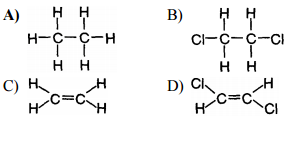
Which of the following shows the structure of ethene?


What is the name of this hydrocarbon?
1 - butane
1 - butene
2 - butane
2 - butene
Which of the following is a saturated hydrocarbon?
ethene
heptane
propyne
methanol
Which of the following is 1-bromopropane?


What is the name of this haloalkane?
1-chlorobutane
2-chlorobutane
1-chloropropane
2-chloropropane

What is the name of this haloalkane?
1-chloroethane
2-chloroethane
3-chloroethane
2-chloropropane
Which is 3-chloro-2,2-dimethylbutane?


Name this haloalkane:
1,1-difluoropropane
1-difluoropropane
1-fluorobutane
difluorobutane

Name this alkane:
2-ethyl-2,3-dimethyl pentane
3,3,4-trimethyl hexane
octance
3,4,4-trimethyl octane
Which is 1-chloro-3-methylbutane?


What colour does bromine water turn in the presence of an alkene
orange
blue
green
colorless

Reaction between this compound and two mole of H2 in the presence of Ni catalyst will produce
3-methylbutene
3-methylbutane
2-methylbutane
2-methylbutene
n-butane
If an alkene reacts with a halogen (such as bromine), it is known as what type of reaction?
Addition
Condensation
Polymerisation
Hydrogenation

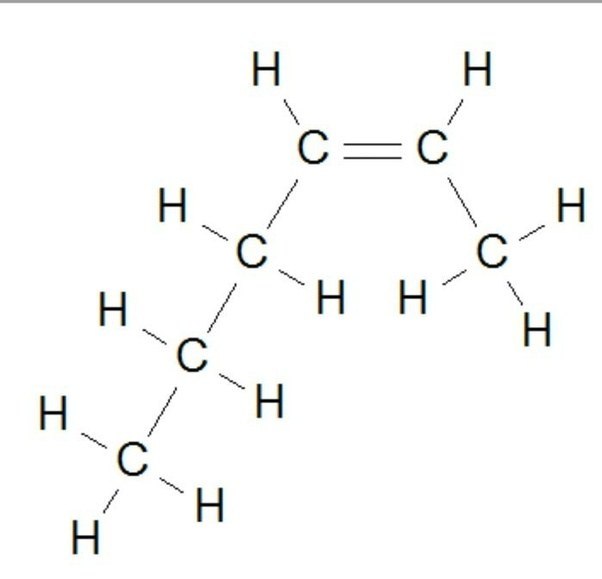
Name the following hydrocarbon
butane
hexane
heptane
hexene

The name for this compound is ....
2-ethylpropane
1,1-dimethylpropane
2-methylbutane
3-methylbutane


Alkane to halogenoalkane
excess oxygen and heat
halogen at room temperature
halogen and UV light
hydrogen halide at room temperature
Alkane to carbon dioxide and water
excess oxygen and heat
limited oxygen and heat
halogen and UV light
water, warm mixture
alkane to carbon monoxide (and/or carbon) and water
halogen and UV light
excess oxygen and heat
limited oxygen and heat
water, warm mixture
The products of incomplete combustion of a hydrocarbon are
carbon dioxide and water
water only
carbon monoxide
carbon monoxide and water
The type of mechanism for alkanes reacting with a halogen is
electrophilic addition
electrophilic substitution
elimination
free radical substitution
A series of compounds with the same functional group is called
homologous series
structural isomers
alkanes
functional group
Alkanes are
unsaturated hydrocarbons
saturated hydrocarbons
polymers
monomers
Which statement is correct about thermal cracking?
A pressure between 100 and 200kPa is used
Aromatic hydrocarbons are the major products
C-C bonds are broken
Zeolite catalysts are used
Thermal cracking is when
a slight pressure and high temperature with a zeolite catalyst produces aromatic hydrocarbons and motor fuels
a high pressure and high temperature produce a high percentage of alkenes
initiation, propogation and termination occur.
polymers are made
Which catalyst is used in the catalytic cracking of alkanes?
concentrated phosphoric acid
iron
nickel
zeolite


Classify the compound based on the functional group present.
aldehyde
ketone
alcohol
carboxylic acid

Identify the functional groups present in this compound.
amine
amide
ether
ester
hydroxyl group


carboxyl group


Large molecules made up of small monomers are called
polymers
monomer
allotrope
functional group
Small molecules that make up larger molecules
polymer
monomer
allotrope
functional group

-COO is the functional group for...
alcohols
esters
carboxylic acids
amides
An alcohol can be __________________ to form a carboxylic acid
oxidised
reduced
polymerised
broken down

Name this carboxylic acid
ethanoic acid
prpoanoic acid
butyl butanoate
butanoic acid

Name this ester
ethyl ethanoate
propyl ethanoate
methyl ethanoate
ethyl methanoate
alkene + ? --> alcohol
hydrogen
oxygen
water
carbon dioixde
alcohol + ? --> carboxylic acid
hydrogen
oxygen (oxidising agent)
water
carbon dioixde
carboxylic acid + ? --> ester
water
alkene
alcohol
alkane

Name the monomer that forms this polymer
ethane
ethanol
ethene
methene
Which of the following is a free radical substitution reaction?
Hydrolysis of alkanes
Halogenation of alkanes
Hydrogenation of alkanes
Combustion of alkanes
How many steps of mechanism for Free Radical Substitution Reaction of Alkane.
1
2
3
4

State the function of UV light for the above reaction.
To provide energy for heterolytic cleavage to occur in bromine molecule.
To provide energy for homolytic cleavage to occur in bromine molecule.
To provide energy for heterolytic cleavage to occur in propane molecule.

Which step produces two highly reactive chlorine free radicals.
Propagation Step
Termination Step
Initiation Step
Elimination Step
Which equation represents a termination step?





What is the name of step for the mechanism above.
Elimination Step
Initiation step
Termination step
Propagation step

State the type of reaction of the above reaction.
Nucleophilic Addition Reaction
Electrophilic Substitution reaction
Free Radical Substitution reaction
Rearrangement
Which reagent is needed to change a haloalkane to an alcohol?
KOH (aq)
KOH(alc)
H2O/ dilute H2SO4
Cr2O72-/H+
halogenoalkane ------> alcohol - reaction type?
addition
Nucleophilic substitution
elimination
oxidation
what is the name of the process carboxylic acid react with alcohol
esterification
oxidation
dehydration
What is formed when you oxidise a tertiary alcohol
Aldehyde
Ketone
Carboxylic Acid
Nothing
What is formed when you oxidise a primary alcohol
Aldehyde
Ketone
Carboxylic Acid
Nothing

What is the class of the alcohol?
Primary alcohol
Secondary alcohol
Tertiary alcohol
Quaternary alcohol

What is the class of the alcohol?
Primary Alcohol
Secondary Alcohol
Tertiary Alcohol
Phenol

carboxamide

What technique is shown here:
Reflux
Distillation
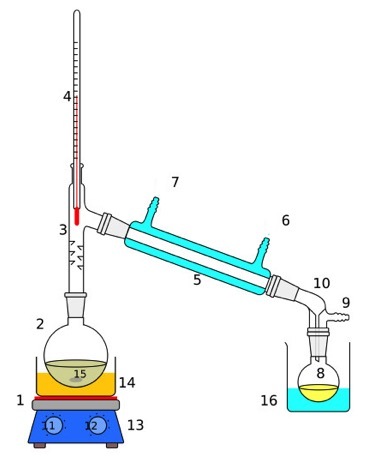
What technique is shown?
Distillation
Reflux
What would the polymer formed from ethene monomers be called?
polyethene
poly(ethene)
poly(propene)
polyene
Which one of these could polymerise to make poly(propene)


What are the key points to remember when writing an equation for polymerisation?
Monomer has a C=C
Repeat Unit has C-C
Brackets (with stalks)
n before monomer and after bracket of repeat unit

What monomer forms this polymer chain?


Polymers are
acids
alcohols
plastics
Bases
Which is not a naturally occuring polymer
DNA
Teflon
Starch
Silk
Name this ester
ethyl ethanoate
propyl ethanoate
methyl ethanoate

Name the molecule pictured here
butyl ethanoate
ethyl butanoate
hexanoate ester
ethyl propanoate

Name this ester
pentyl ethanoate
hexyl ethanoate
ethyl pentanoate
ethyl ethanoate

Aspirin has this structure. What 2 functional groups are present?
hydroxyl and carboxyl
aldehyde and carbonyl
carboxyl and ester
ester and hydroxyl

Which of these is an ester?
A
B
C
D

The following molecule can be made from:
Propanol and methanoic acid
Methanol and propanoic acid
Methanol and ethanoic acid
Ethanol and ethanoic acid
Which of the following is not a chemical properties of alkenes?
combustion
substitution
addition reaction
polymerisation
Ethene reacts with acidified potassium manganate (VII) solution to form a product.
What is the name of this reaction ?
halogenation
hydrogenation
hydration
oxidation
Which of the following can be used to distinguish between alkanes and alkenes?
add a few drops of aqueous bromine
add a few drops of Universal indicator
add a piece of blue litmus paper
add a piece of red litmus paper
Which of the following statement is correct?
Alkenes can turn aqueous bromine from reddish-brown to colourless.
Alkenes can turn aqueous bromine from colourless to reddish-brown.
Alkanes can turn aqueous bromine from reddish-brown to colourless.
Alkanes can turn aqueous bromine from colourless to reddish-brown.
The formula for ethene is
C2H4
C2H6
CH4
C3H6
Which of the following reactions apply to alkenes only
cracking
substitution
addition
combustion
Which substance is only produced in incomplete combustion?
CO
CO2
H2O
NO2
What other reactant and conditions are needed to turn an alkene into an alkane?
steam and high temperature
hydrogen, catalyst and high temperature
bromine, catalyst and heat
steam, high temperature and pressure
What other reactant and conditions are needed to turn an alkene into an alcohol?
steam and high temperature
bromine and high temperature
steam, catalyst, high temperature
hydrogen and high temperature
What happens during bromination when aqueous bromine is added to an alkene?
Effervescence produced.
Solution remained red-brown.
Colourless solution turned red-brown.
Red-brown solution turned colourless.
What chemical is this? (C5H10)
1- Pentene
Pentane
4-pentene
Heptene
Which of the following shows the structure of propene?
Nonane has how many hydrogen atoms?
9
18
20
22
What is the name of this hydrocarbon?
1 - butane
1 - butene
2 - butane
2 - butene

What is the name of this hydrocarbon?
4 ethyl 5,6 dimethyl heptane
2,3 dimethyl 4 ethyl heptane
4 ethyl 2,3 dimethyl heptane
5 propyl hexane
Which of the following is a saturated hydrocarbon?
ethene
heptane
propyne
methanol
Which one of the following contains a triple bond in the structure?
1-butyne
7-propyne
ethene
nonane
Which is the structures with IUPAC nomenclature
2,2,4-trimethylpentane
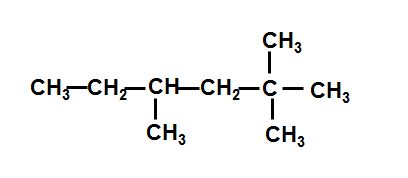
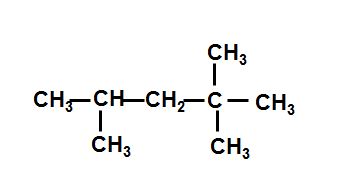
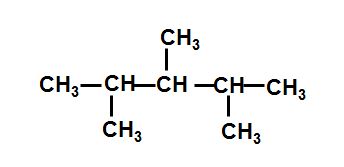
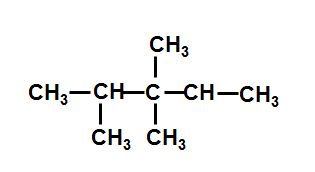

What is the name of this hydrocarbon?
2 methyl 1 ethene
2 methyl 1 propane
3 ethyl 1 butene
3 methyl 1 butene
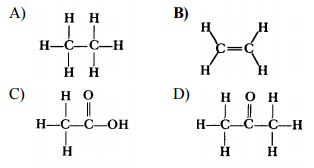

Name this compound
decane
nonane
octane
heptane
propyl is a....
three carbon chain
three carbon side chain
triple bond

What is the correct name for the alkyne shown?
butyne
1-butyne
2-butyne
1-methyl-1-propyne

what is the name of the following compound
Toluene
trihexene
benzene
cyclo tri hex di ene
Which of the following would be named cyclobutane?


Which of the following would be named cycloheptane?
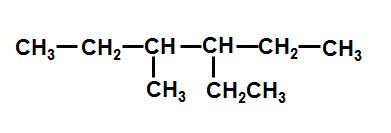
Give the IUPAC name for this compound
3-methyl-4-ethylhexane
3-ethyl-4-methylhexane
3-methyl-4-ethylheptane
3-ethyl-4-methylheptane
