
NEW
Font size
 Worksheets
201 Exam 1 Review
Total questions: 40
Worksheet time: 23mins

Pictured here is a limb with an osteosarcoma. If a "sarcoma" is a form of cancer, what does the term "osteo-" refer to?
Skin
Muscle
Connective Tissue
Bone

Which of the below is an example of a stimulus during Homer's negative feedback loop?
Sweating
Shivering
His brain interpreting the information
Temperature change
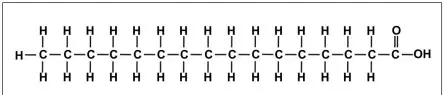
Here we have a picture of a fatty acid. Given it's lack of double bonds between carbons, you can tell it is ___________
Unsaturated
Saturated

Bonds between elements within a single water molecule are:
Polar Covalent bonds
Non-Polar covalent bonds
Which statement best explains why eicosanoids are classified as lipids?
They are made of amino acids
They are derived from fatty acids
They contain nucleotide bases
They dissolve easily in water
Which of these is NOT a property of water critical for living organisms?
Solubility
Malleability
High heat capacity
Lubrication
Reactivity
If a solution is acidic, which ion will be present in higher concentrations?
OH-
H+
Na+
K+
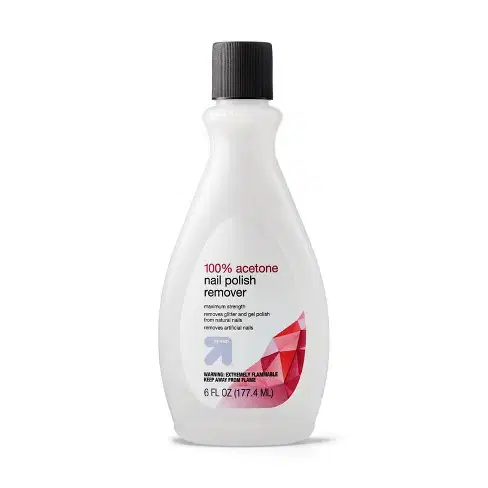
C3H6O6 is the chemical formula for acetone. This means that acetone is:
Organic
Inorganic
Nucleotides are the monomers of which macromolecule?

Identify the macromolecule in the picture.
carbohydrate
lipid
protein
nucleic acid

Which of these describes enzymes?
They can only be used once
Enzymes are lipids
Some enzymes need cofactors
Enzymes are required for a reaction to occur
A type of passive transport that occurs when water passes through a cell membrane from areas of low to high solute concentration.
Diffusion & Facilitated Diffusion are both __________ transport.
Passive
Active
Easy
Free
Sodium has a higher concentration in the _____, unlike potassium which is more concentrated in the intracellular fluid.
Extracellular fluid (ECF)
Intracellular Fluid (ICF)
Equal in both ECF and ICF
Not present anywhere
Which of these cannot undergo simple diffusion through the phospholipid bilayer of the cell membrane?
Oxygen (O2)
Sodium (Na+)
Carbon Dioxide (CO2)
Water (H2O)
A red blood cell is dropped into a hypotonic solution- what happens to it?
The cell would crenate (shrink)
The cell would expand and possibly burst
The cell would remain the same
The cell would dance and do the Nay Nay!

Which cell is in an isotonic environment?
Which type of endocytosis surrounds a particle/another cell to bring them into the cell?
Pinocytosis
Phagocytosis
Receptor mediated Endocytosis
Exocytosis
Which type of endocytosis created a vesicle in response to a molecule that binds with a receptor embedded in the membrane?
Pinocytosis
Phagocytosis
Receptor mediated Endocytosis
Exocytosis
Glucose is broken down into pyruvic acid during which process
The process of cellular respiration is
exergonic
endergonic
Which of the following is a product of cellular respiration?
Radiant Energy (aka light)
Oxygen
Glucose
Water
Glucose and oxygen are the starting molecules for cellular respiration. The end products are ATP, CO2, H2O. What is the final electron acceptor?
CO2
Glucose
ATP
Oxygen
What role do NADH and FADH2 (produced during Glycolysis and Kreb's Cycle) play in cellular respiration
they are energy carriers (hydrogen)that are used to power the ETC
They are waste products and are pushed out of the cell
They are necessary for creating glycogen
They don't play any role in cellular respiration
Which of the following is NOT a stage of cellular respiration?
Glycolysis
Fermentation
Krebs cycle
Electron transport
Lactic acid fermentation occurs in
bread dough
any environment containing oxygen
muscle cells
mitochondria
In the final stage of cellular respiration hydrogen ions travel through __________ to power the process of oxidative phosphorylation.
ATPsynthase
ATPase
Hydrogenase
Trypsin
The sodium potassium pump is critical for maintaining the transmembrane gradient of ions across our cell membranes. It is able to do so because it is:
A form of active transport
A form of diffusion
A form of carrier mediated diffusion
Moving calcium ions against their gradient.
When you are hungry and you see a tasty looking cupcake, your brain sends a signal to your parietal cells in your stomach to secrete gastric acid. What is the rold of the parietal cells?
Receptor
Effector
Integrator
Stimulator
If two covalently bonded atoms are identical, and there is equal sharing of electrons, what sort of bond is holding them together?
ionic bond
polar covalent bond
nonpolar covalent bond
metallic bond
Justin has learned that the brain, spinal cord, and peripheral nerves work together. What do they combine to form?
a cell
organ
tissue
organ system
What combines together to make a protein?
Amino Acid
RNA
Ribosome
DNA
Which ion is the major ECF ion?
potassium
sodium
calcium
phosphorous

