
 Worksheets
Quiz 2-1 Review : Relations, Functions, & Function Notation
Total questions: 61
Worksheet time: 2hrs 10mins
the horizontal axis on a coordinate plane
ordered pair
x-axis
y-axis
discrete graph
none of these
the vertical axis on a coordinate plane
ordered pair
x-axis
y-axis
quadrants
none of these
the four regions into which the x and y-axis separate the coordinate plane
ordered pair
origin
discrete graph
quadrants
none of these
the point at which the x and y-axis intersect; (0,0)
ordered pair
origin
continuous graph
function
none of these
a set of numbers representing a location on a graph written in the form (x,y)
ordered pair
function
continuous graph
relation
none of these
the first value of an ordered pair that represents the horizontal placement of the point
ordered pair
x-coordinate
y-coordinate
relation
none of these
the second value of an ordered pair that represents the vertical placement of the point
ordered pair
x-coordinate
y-coordinate
relation
none of these
a graph that consists of point that are NOT connected
discrete graph
continuous graph
function
relation
none of these
a function graphed with a line or smooth curve
discrete graph
continuous graph
function
relation
none of these
a set of ordered pairs
x-coordinate
y-coordinate
function
relation
none of these
the set of all x-values in a relation or function
x-coordinate
input
function
domain
none of these
the set of all y-values in a relation or function
y-coordinate
output
function
range
none of these
illustrates how each element of the domain is paired with an element of the range
discrete graph
continuous graph
mapping
function notation
none of these
a relation in which each element of the domain is paired with exactly one element of the range
function
relation
ordered pair
mapping
none of these
a way to name a function that is defined by an equation; "y" is replaced with "f(x)"
function
function notation
input
output
none of these
a value substituted for an x-value in a function
x-coordinate
function notation
input
output
none of these
the result of substituting a value into a function
y-coordinate
zeros
input
output
none of these
if any vertical line passes through the graph of a relation more than once, then it is not a function
y-axis
zeros
vertical line test
output
none of these
the x-intercepts of the graph of a function; the points for which f(x)=0
y-axis
zeros
origin
output
none of these
formed by the intersection of two number lines, the horizontal axis and vertical axis
y-axis
coordinate plane
x-axis
quadrants
none of these

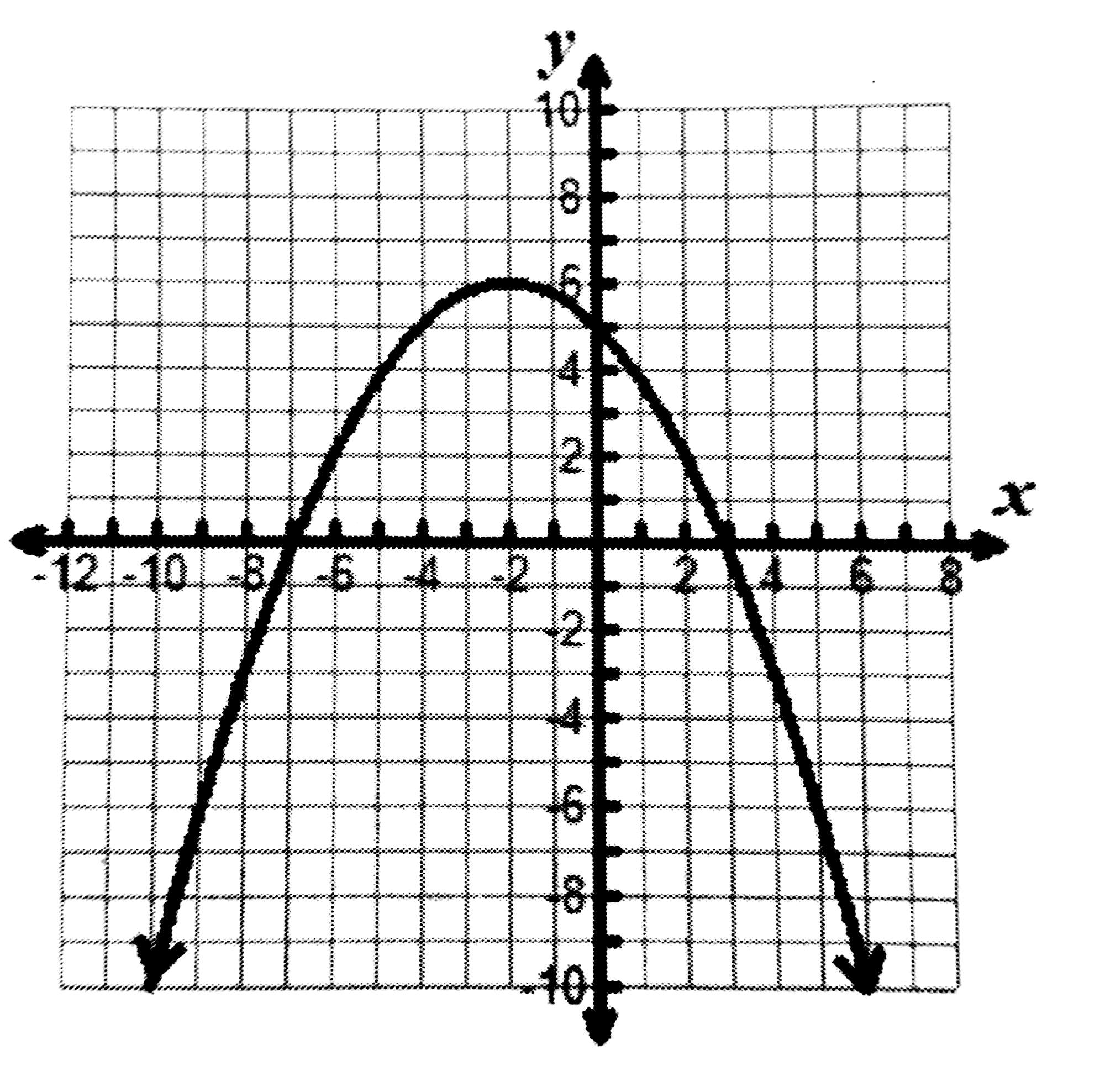
Determine the domain of the following relation.
−4≤x≤1
−2≤x≤3
All Real Numbers
0≤x≤1
Determine the range of the following relation.
−4≤y≤1
−2≤y≤3
All Real Numbers
0≤y≤1

Determine the domain of the following relation.
{−2, −1, 1, 5}
{−2, 0, 4}
{−1, 0, 1, 2}
{1, 2, 3}
Determine the range of the following relation.
{−2, −1, 1, 5}
{−2, 0, 4}
{−1, 0, 1, 2}
{1, 2, 3}

Determine the domain.
x≥0
All Real Numbers
x≤0
x≤1

Determine the relation the mapping depicts.
{(-3,0), (-1,4), (2,4), (4,7)}
{(-3,0), (-1,4), (2,7), (4,4)}
{(0,-3), (4,-1), (7,2), (4,4)}
None of these

Determine the relation the table represents.
{(-4,3), (-2,0), (1,-1), (2,0), (5,-2)}
{(3,-4), (0,-2), (-1,1), (0,2), (-2,5)}
{(-4,-2), (1,2), (3,0), (-1,0), (5,-2)}
none of these
Determine the range.
y≥0
All Real Numbers
y≤0
y≤1


Find the missing OUTPUT (y) value.

Find the missing OUTPUT (y) value.
R: {0, 1, 2, -4}
R:{1, -3, -4}
R:{1, -3, -4}


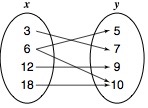


Is this mapping diagram a function or not a function?
Function
Not a Function

Is this table a function or not a function?
Function
Not a Function

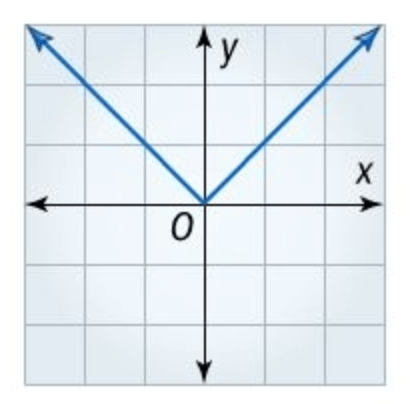
Is this graph a function or not a function?
Function
Not a Function


Is this graph a function or not a function?
Function
Not a Function
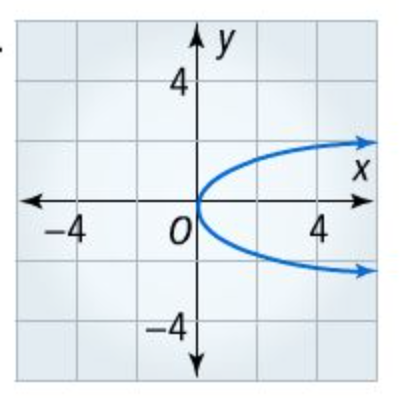
Is this graph a function or not a function?
Function
Not a Function

Is this graph pictured a function?
Yes
No

Is this graph a function or not a function?
Function
Not a Function
How would you write y = 2x - 3 in function notation?
y = 2x-3
f = 2x - 3
f(x) = 2x-3
If a question asks you to find f(2), what does that mean?
Let x = 2
Let y = 2
If f(x) = 2x + 1, what would be your first step to find f(1)?
Plug a 1 in for all the x's
Set the function equal to 1
Only plug a 1 into the left side
Only plug a 1 into the right side
If f(x) = 2x + 1, find f(1).
f(1) = 1
f(1) = 4
f(1) = 0
f(1) = 3
If I know that f(2) = 4, what is another way I can write my answer?
2,4
(2, 4)
That is the only way to write it.
2x2 + 5x - 17, find f(-1).


If f(x) = -x + 4, find f(10).
(a)
If f(x) = -3x - 8, find f(-3).
(a)
If f(x)=x2+2 , find f(−4).
(a)
If f(x) = 3 - 2x2, find f(-5).
(a)

