
 Worksheets
Ionic or Covalent?
Total questions: 27
Worksheet time: 16mins

What type of bonding does this picture show?
Ionic
Covalent

What type of bonding does this picture show?
Ionic
Covalent
Valence electrons are shared
Ionic bonds
Covalent bonds
Valence electrons are transferred
Ionic bonds
Covalent bonds
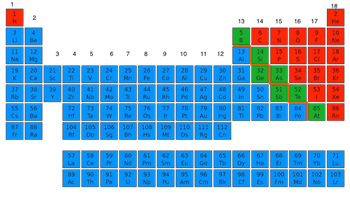
The chemical bond between a non-metal and another non-metal will be a ________ bond.
metal
ionic
covalent
polar
When two nonmetals do not share electrons evenly, the resulting covalent bond will be
nonpolar
polar
ionic
metallic
Which category of elements usually form negative ions?
metals
nonmetals
metalloids
noble gases
What is a valence electron?
an electron that is found in the outermost shell of an atom.
an electron found in the innermost shell of an atom.
an electron found in the middle shell.

The positive ions tend to _____________ electrons.
lose
gain
The negative ions tend to _____________ electrons.
lose
gain
When an atom loses an electron, it becomes a
positive ion
negative ion
neutral ion
neutral atom
Why do all bonds form?
so the number of protons equals the number of electrons
so an atom can become unstable
to fill the outermost energy level
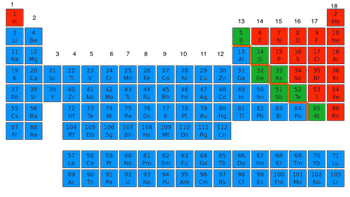

What type of elements form cations?
metals
nonmetals
metalloids?
How does calcium become a calcium ion?
it loses 2 electrons
it gains 2 electrons
Cations
Gain electrons, has an overall positive charge
Lose electrons, has an overall positive charge
Lose electrons, has an overall negative charge
Gain electrons, has an overall negative charge
How does oxygen become an oxide ion?
it loses 2 electrons
it gains 2 electrons
How many Aluminum atoms are in Al2O3?
3
5
2
1
In an ionic bond, the ions are held together because...
the positive nucleus of each ion attracts the other ion's negatively charged electrons
the ions have opposite charges
as the electron moved from one atom to another it pulled the atom along with it
electrons are being shared

