
 Worksheets
Knife Cuts & Taste Summative
Total questions: 32
Worksheet time: 18mins
In order to secure your cutting board you should...
Place is on a flat countertop
Put a wet paper towel under the cutting board.
Make sure to square off your food items.
Use a sharp knife.
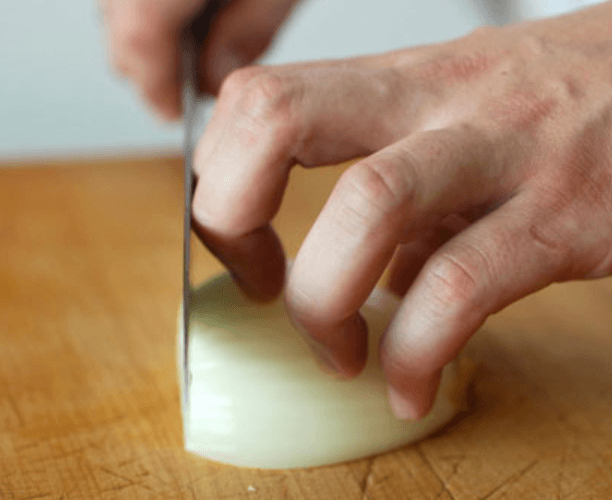
use the _________ technique to protect fingers while cutting foods.
Claw grip
flat fingers
Nuckle grip
Palm grip
Cutting boards must be cleaned and sanitized after each use to avoid cross-contamination?
True
False
Why is the hand-claw technique important when cutting?
Keeps fingers from cramping
Prevents strain on wrist
Keeps food sanitary
Guides food and prevents cuts
Why is it important to cut foods into uniform shapes?
Improves flavors
Conserves nutrients
Ensure that the foods are safe to eat
Helps cooks food evenly
The shape and size of cut foods is important for:
the feel in your mouth as you eat
the correct amount of cooking time
the final presentation of the dish
all of the above

Which of the following is correct?
Each taste bud responds to all five primary tastes.
There are about 10 000 taste receptor cells on each taste bud.
Taste is a sensation that we need to learn.
Newborn babies cannot distinguish different tastes.

Several senses are involved in our perception of
flavour; the two senses most involved are:
taste and vision
touch and taste
taste and smell
vision and smell

Which of the following can affect our perception
of flavour?
the appearance of the food
our prior experience of food
our genetic makeup
all answers are correct

Apart from taste, name two other senses that influence perception of flavour.
Smell contributes ___% of what we perceive as flavor?
20%
50%
80%
100%

A super taster has a high sensitivity to what compound in food?
sour
bitter
salty

Use a serrated knife on this
garnishes
raw meat
breads
vegetables
Do this after cutting lettuce after cutting raw meat
Dip the knife in sanitizer
Run the knife through the dishwasher
Wash and sanitize the knife separately
Wash the knife with other dishes
Why should you NOT use a dull knife
Accidental cuts are less likely
Accidental cuts are more likely
Requires less pressure to slice vegetables
Uses less time for sharpening
Why is the hand-claw technique important when cutting?
Keeps fingers from cramping
Prevents strain on wrist
Keeps food sanitary
Guides food and prevents cuts
This cut resembles a matchstick
Julienne
Chiffonade
Diagonal
Mince
This cut is used to finely slice leafy vegetables or herbs
Torunee
Rondelle
Shirred
Chiffonade
Why is it important to cut foods into uniform shapes?
Improves flavors
Conserves nutrients
Ensure that the foods are safe to eat
Helps cooks food evenly
What size is a minced food?
Large, irregular sized pieces
Medium, irregular sized pieces
Small, irregular sized pieces

Finely sliced or shredded leafy veggies or herbs, especially basil, is commonly made using what type of cutting technique?
Mincing
Slicing
Chiffonade
Julienne


Which is the correct way to hold a knife?
#1
#2
#3
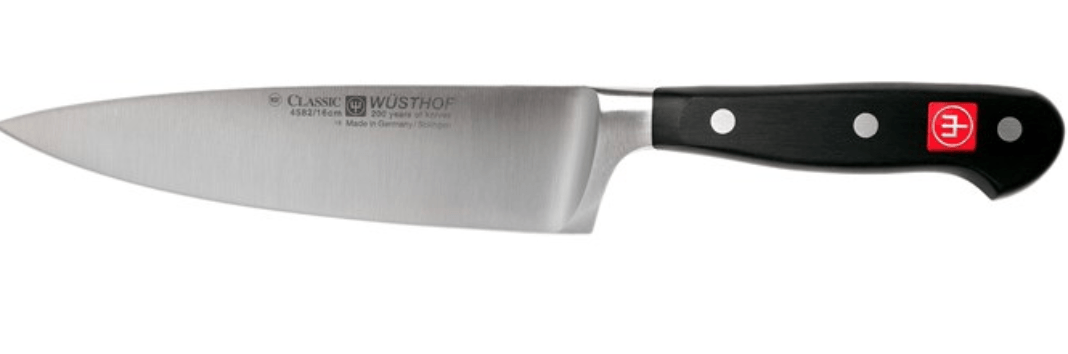
Chef's Knives are mostly used for..
slicing tomatoes and soft foods
Chopping, Dicing, and mincing
Small items like fruits and vegetables
removing bones from fish
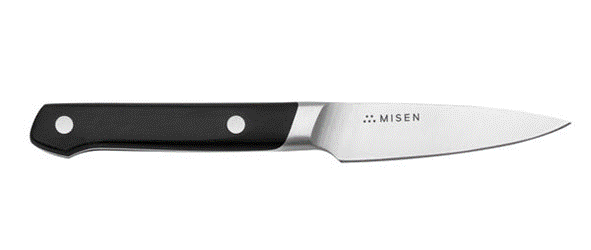
Which knife is pictured here?
Santoku Knife
Paring Knife
Serrated Knife
Chef's knife
If a knife falls....
ALWAYS try and catch it
Catch it if it seems safe
Step out of the way and let it fall to the floor
What is the tip of the knife blade?
Working part of the knife
Used for rocking motion, scoring food item and delicate cutting
Junction between the handle and the knife blade
The top of the knife blade
How should you pass a knife to another person?
Put knife on counter with handle away from you
Put knife on counter with blade away from you
Near edge of counter

