
 Worksheets
Sensors & Transducers new
Total questions: 50
Worksheet time: 25mins
Course Code of Sensors and Transducers?
3082
3083
3084
3086
The transducer that converts the input signal into the output signal, which is a discrete function of time is known as ______ transducer.
(A) Active
(B) Analog
(C) Digital
(D) Pulse
Which transducer is known as ‘self-generating transducer’?
(A) Active transducer
(B) Passive transducer
(C) Secondary transducer
(D) Analog transducer
The transducers which require an external power and their output is a measure of some variation such as resistance, inductance, capacitance etc., are called as
(A) Active transducer
(B) Primary sensor
(C) Passive transducer
(D) Self generating transducer
RTD stands for:
Resistance Temperature Detector
Resistance Time Damper
Resistive Temperature Diode
Resistance Temperature Damper
A device that transforms one form of energy to another:
Transducer
Transistor
Transformer
Transmitter
Resistance offered by a metal is independent of the length and the area of the conductor
True
False
Mechanical transducers cause ________
Power loss
Hysteresis loss
Eddy current loss
Frictional loss
How many terminals does a Potentiometer have?
2
3
4
5
Potentiometer transducers are used for the measurement of
Temperature
Displacement
Humidity
Velocity
The temperature coefficient of an RTD is…
Positive
Negative
Zero
Neutral

Find the potential difference across the 50 ohm resistance?
10 V
5 V
2.5 V
2 V
1 V
Resistance is
directly proportional to length and cross sectional area
directly proportional to length and indirectly proportional to area
independent of length and cross sectional area
directly proportional to area and inversely proportional to length
The SI unit for resistance is the______.
COULOMBS
VOLTS
OHM
AMPERE
How to you calculate the total resistance in a series circuit?
R1 + R2+ R3
R1 - R2 - R3
1/R1 + 1/R2 + 1/R3
R1 = R2 = R3
How do you calculate total resistance in a parallel circuit?
R1 + R2 + R3
R1 - R2 - R3
1/R1 +1/R2 + 1/R3 = 1/RT
R1 = R2 = R3
As the length of a wire increases, the resistance of the wire will
increase
decrease
stay the same
As the diameter of a wire increases, the resistance of the wire will
increase
decrease
stay the same
potentiometer is................ transducer
passive
active
passive and resistive
active and resistive
resistivity depends on
length of conductor
cross sectional area of conductor
material of conductor
temperature
..................... is an example of secondary transducer
Bourdon tube
LVDT
Both of these
None of these
Potentiometric wire is made up of (a) alloy
(a) Sensors are nanoscale devices that measure physical quantities and convert to signals that can be detected
(a) sensor is another name for intelligent sensor
Standard electrical transmission signal
0 to 10 A
4-20mA
0 -20 mA
4-20 A
Standard pressure transmitting signal
0 - 20 bar
3 -15 psi
0 -15 psi
3 -15 bar
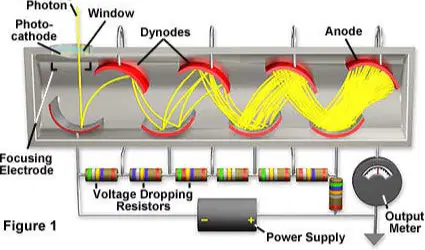
This is the figure of (a)
Photovoltaic cell is also known as (a) cell
Resistance of LDR
increases with intensity of light
decreases with intensity of light
remains unchanged
will be zero at night
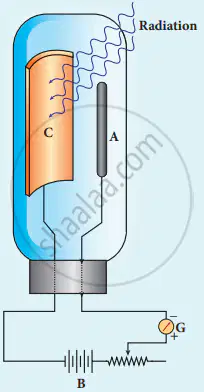
this is the figure of (a) cell.
One of the main application of ultrasonic transducer is
Level measurement
temperature measurement
force measurement
displacement measurement
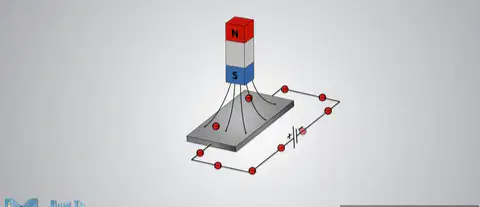
working of what type of transducer is shown here?
(a)

Application of which transducer is this?
Piezoelectric
RTD
Strain Gauge
LVDT
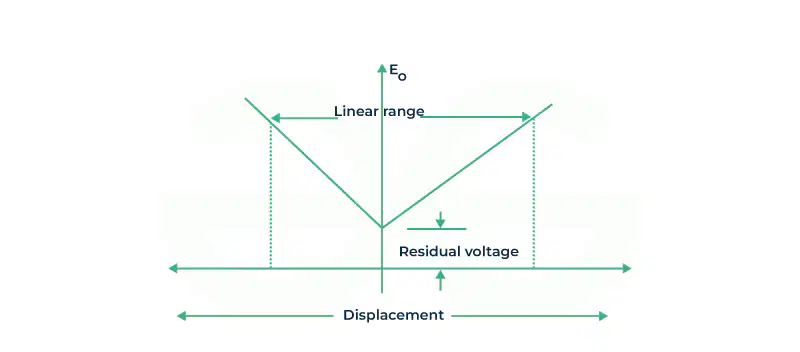
This is the characteristics of which transducer?
RTD
LDR
LVDT
Thermistor
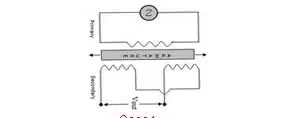
Here the output voltage of LVDT is
zero
positive
negative
undefined
LVDT output is positive
core at null position
never will be positive
core moved to right of null position
core moved to left of null position
Rotating current is also known as (a) current
equation for mutual inductance
M= K. L1. L2
M= L1-L2
M=K sqrt( L1. L2)
M= K (L1 - L2)
Resistance in electrical circuit is similar to (a) in magnetic circuit
combination of strain gauges is known as
(a)
Potentiometer converts (a) to change in resistance
RTD converts (a) to change in resistance
thermistor converts (a) to change in resistance
LDR converts (a) to change in resistance
LVDT converts (a) to change in inductance
solar cell converts sunlight to (a)
LVDT is a passive transducer
Piezoelectric transducer is active
True
False
Thermistor is active
True
False
Solar cell is active
True
False

