wayground logo

Free Printable Worksheets

NEW

Font size

S
M
L
XL
Worksheets

Seasons Practice

Total questions: 32

Worksheet time: 37mins

Name
Class
Date
1.
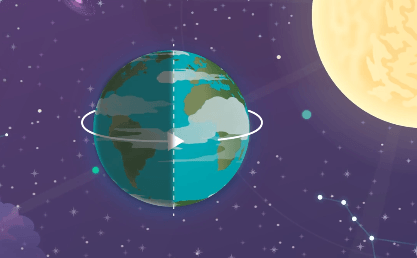
What does ROTATION mean?
a)
To SPIN
b)
To ORBIT or GO AROUND
2.

What does Revolution mean?

a)

To SPIN

b)

To ORBIT or GO AROUND

3.
How long does it take the Earth to make one REVOLUTION around the Sun?
a)
12 hours
b)
24 hours
c)
365 days
d)
29.5 days
4.
The Earth is rotating on its axis, creating _____
a)
the 12 months
b)
the years
c)
the seasons
d)
day and night
5.
How long does it take for Earth to rotate on its axis one time?
a)
24 hours
b)
24.25 hours
c)
365 days
d)
365.25 days
6.
Which season is taking place in the Southern Hemisphere in Position 1?
a)
Winter
b)
Spring
c)
Summer
d)
Fall
7.
Which season is taking place in the Northern Hemisphere in Position 1?
a)
Winter
b)
Spring
c)
Summer
d)
Fall
8.
Which season is taking place in the Northern Hemisphere in Position 3?
a)
Winter
b)
Spring
c)
Summer
d)
Fall
9.
Which season is taking place in the Northern Hemisphere in Position 4?
a)
Winter
b)
Spring
c)
Summer
d)
Fall
10.
What are the reasons for the season?
a)
Earth's tilt & rotation
b)
Earth's tilt & revolution
c)
Earth's rotation & rovolution
d)
Earth's tilt & resolution
11.
Why does the area around the equator stay the same temperature all year?
a)
The equator rotates slower than the poles 
b)
The equator remains the same distance from the sun.
c)
The equator always receives direct sunlight.
d)
The equator has 18 hour days.
12.
The hemisphere where you live 
a)
equator
b)
southern
c)
northern
d)
eastern
13.
What causes more heat,  indirect sunlight or direct sunlight?
a)
indirect
b)
direct
14.
The term equinox means....
a)
equal amount of day light and equal amount of night
b)
Equal amount of winter and summer
c)
Equal amounts of hot dogs for everyone
d)
The longest day of the year
15.
Why is the Equator warmest?
a)
Because it is closest to the sun.
b)
Because it receives the most direct sunlight
c)
Because no clouds form here.
d)
Because it is far from the sun
16.
Day and night is caused by the _____________ of earth on its axis.
a)
revolution
b)
orbit
c)
rotation
17.
The earth orbits around...
a)
the sun.
b)
the moon
c)
other planets
d)
the Milky Way
18.

In what position will it be winter in the southern hemisphere

a)

1

b)

2

c)

3

d)

4

19.

At what position will it be summer in the Southern hemisphere.

a)

1

b)

2

c)

3

d)

4

20.

This word describes how the earth spins.

a)

rotation

b)

revolution

c)

orbit

d)

hemisphere

21.

This word describes how the earths travels around the sun.

a)

solstice

b)

axis

c)

rotation

d)

revolution

22.

In the northern and southern hemispheres.....

a)

seasons are always the same....

b)

Seasons are always opposite

23.

During the fall and spring equinox.......

a)

we get 16 hours of daylight and 8 hours of dark

b)

we get 8 hours of daylight and 16 hours of dark

c)

we get 12 hours of daylight and 12 hours of dark

d)

we get 10 hours of daylight and 8 hours of dark

24.
What happens when the area in which you live tilts away from the sun?
a)
It is summer.
b)
It is spring.
c)
It is winter.
d)
It is fall.
25.

Which hemisphere will experience shorter days based on the diagram?

a)

Northern Hemisphere

b)

Southern Hemisphere

26.

When the Northern Hemisphere of Earth is Leaning away from the Sun, What season is the Southern Hemisphere experiencing?

a)

Summer

b)

Winter

27.

What season will come next in the Southern Hemisphere?

a)

Summer

b)

Fall

c)

Winter

d)

Spring

28.

At which point is the northern hemisphere experiencing spring?

a)
1
b)
2
c)
3
d)
4
29.

Which of the above diagrams shows summer in Argentina?

Hint: Argentina is in the Southern Hemisphere.

a)

A

b)

B

c)

C

d)

D

30.

Choose the correct order of the seasons.

a)

Winter, summer, spring, fall

b)

Summer, spring, fall, winter

c)

Winter, spring, summer, fall

d)

Fall, summer, winter, spring

31.
If its ____ in the Northern hemisphere, then its fall in the Southern hemisphere. 
a)
spring
b)
summer
c)
fall
d)
winter
32.

In winter in the Northern hemisphere, the Earth's axis is pointed _____________ the sun.

a)
towards
b)

above

c)

below

d)

away from