
 Worksheets
Water Cycle and Clouds
Total questions: 29
Worksheet time: 16mins
As a part of the water cycle, water from Earth's surface enters the clouds and finally falls back to the ground in the form of rain. What is the correct sequence of processes water undergoes?
Evaporation, Condensation, Precipitation
Precipitation, Condensation, Evaporation
Condensation, Evaporation, Precipitation
Evaporation, Precipitation, Condensation

The image shows various stages in the water cycle. During which stage does water flow back towards the sea as runoff?
W
X
Y
Z
What is precipitation?
Sweat from our bodies on hot days
Warm rain but not cold snow or sleet
Gas that we use in furnaces or ovens
Any form of water that falls from the sky

What step of the water cycle does this picture show?
Condensation
Runoff
Precipitation
Evaporation
Water running off the land surface
Evaporation
Sublimation
Transpiration
Run-off

What are formed when water vapor condenses and come together?
Clouds
Mountains
Transpiration
Valleys
What is the energy source for the water cycle?
sun
wind
rain
oceans
What are clouds made of?
dry air
water
Which of the following is an example of precipitation?
sleet
hail
snow
all of the above
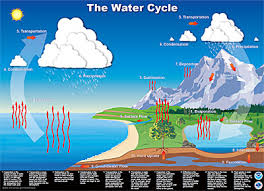
During evaporation water changes from ...
water vapor (gas) to liquid
liquid to water vapor (gas)
water vapor (gas) to solid ice
During condensation water changes from ....
solid ice to liquid water
liquid water to water vapor (gas)
water vapor (gas) to liquid water drops

These clouds are very common and are thin, white, whispy and form high in the sky.
Cumulus
Alto
Stratus
Cirrus

These clouds are flat sheets of Gray and they cover the lower sky. They often bring rain and can be puffy at times. Fog is another type of these clouds.
Cumulus
Alto
Cirrus
Stratus

These clouds are very dramatic looking and look like big puffs of cotton that are flat on the bottom and fluffy on top. They usually predict nice weather but if they grow tall in the sky and the fluffy top flattens out they will become thunderstorm clouds.
Stratus
Alto
Cumulus
Cirrus
Which best explains why it is important for people to be able to identify cumulonimbus clouds?
Cumulonimbus clouds can cause mild showers
Cumulonimbus clouds can cause severe thunderstorms
Cumulonimbus clouds can form near the Earth's surface, causing fog
Cumulonimbus clouds form when the temperature is below freezing.
Which type of clouds produces hail?
cirrus
cumulus
stratus
cumulonimbus
Which type of cloud is most often visible during fair weather?
nimbostratus
cirrus
cumulonimbus
stratus
Which type of cloud is most often associated with days of light, continual rain?
cirrus
stratus
cumulus
cumulonimbus

Identify the type of cloud shown in the picture:
Cumulus
Stratus
Cirrus
Nimbus

Identify the type of cloud shown in the picture:
Cirrus
Cumulus
Nimbus
Stratus

Identify the type of cloud shown in the picture:
Cumulus
Nimbus
Stratus
Cirrus

Identify the two types of cloud that you can find in this picture:
Cumulus
Cirrus
Stratus
Nimbus

Identify the type of cloud shown in the picture:
Cumulus
Cirrus
Nimbustratus
Altocumulus

Identify the type of cloud shown in the picture:
Cirrus
stratus
Cumulonimbus
cumulus

