wayground logo

Free Printable Worksheets

Font size

S
M
L
XL
Worksheets

Circular Motion

Total questions: 20

Worksheet time: 55mins
Name
Class
Date
1.
Centripetal acceleration always points
a)
in the direction of the object's motion
b)
in the opposite direction of the object's motion
c)
towards the center of the circle
d)
towards the outside of the circle
2.
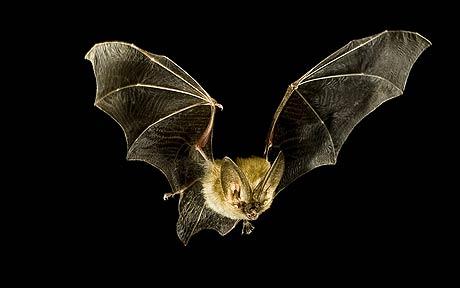
Bruno the bat flies at a speed of 0.5 m/s in circle of radius 1 m. What is his acceleration?
a)
0.25 ms-2
b)
0.5 ms-2
c)
1 ms-2
d)
2 ms-2
3.
The velocity is always _____ to the line of a circle. 
a)
outwards
b)
towards the center
c)
tangent
d)
faster
4.
Calculate the velocity of an object moved around a circle with a radius of 1.65 m and an acceleration of 3.5 m/s2.
a)
2.4 m/s
b)
3.6 m/s
c)
3.9 m/s
d)
4.2 m/s
5.

A 10kg car travels at a constant speed of 20.0 m/s around a horizontal circular track. Which diagram correctly represent the direction of the car's velocity (v) and the direction of the centripetal force (Fc) acting on the car at a particular moment?

a)
b)
c)
d)
6.
Find the magnitude of the torque produced by a 5.0 N force applied to a door at a perpendicular distance of 65 cm from the hinge.
a)
75 Nm
b)
3.25 Nm
c)
6.3 Nm
d)
8.75 Nm
7.

A uniform horizontal beam, pivoted at its right-hand end, is in equilibrium. A force of 60N acts vertically upwards on the beam as shown.

What is the weight of the beam?

a)

36N

b)

40N

c)

90N

d)

100N

8.

A beam of length 40cm is pivoted at one end. The weight of the beam is 4.0N and acts at a point 20cm from the pivot. A 2.0N weight hangs 10cm from the pivot.

An upward force U is needed to keep the beam horizontal.

What is the size of U?

a)

0.5N

b)

1.5N

c)

2.5N

d)

6.0N

9.
A quantity that is has magnitude and  direction is referred to as a
a)
vector quantity
b)
scalar quantity
10.
A car is traveling at 21.0 m/s. It slows to a stop at a constant rate over 5.00 s. How far does the car travel during those 5.00 seconds before it stops? 
a)
4.20 m
b)
52.5 m
c)
105 m
d)
158 m
11.
An object with an initial velocity of 3.50 m/s moves east along a straight and level path. The object then undergoes a constant acceleration of 1.80 m/s2 east for a period of 5.00 s. How far does the object move while it is accelerating?
a)
6.30 m
b)
17.5 m
c)
27.2 m
d)
40.0 m
12.
A force of 250 N is applied to an object that accelerates at a rate of 5 m/sec2.  What is the mass of the object?
a)
100kg 
b)
1,250kg
c)
50kg
d)
5kg
13.
A 20 kg bike accelerates at 10 m/s2.  what was the force?
a)
25 Newtons
b)
20 Newtons
c)
200 Newtons
d)
10 Newtons
14.
A ball is thrown horizontally at a height of 2.2 meters at a velocity of 65 m/s. Assume no air resistance. How long until the ball reaches the ground?
a)
0.45 s
b)
0.67 s
c)
0.22 s
d)
0.47 s
15.
A cannonball is fired at a 45.0° angle and an initial velocity of 625 m/s. Assume no air resistance. How long until the cannonball hits the ground?
a)
75.4 s
b)
45.2 s
c)
62.3 s
d)
90.2 s
16.

A force of 400 N is applied to stretch a spring which has a spring constant, k=100 N/m. How much does the spring stretch past its free length?

a)

0.4 m

b)

2.34 m

c)

4 m

d)

5.17 m

17.
Which of the following is a true statement regarding springs?
a)
The higher the value of the spring constant, the stiffer the spring.  
b)
In Hooke's law, the force exerted by the spring acts in the same direction as displacement.  
c)
Springs are designed to provide unpredictable variations in force.  
d)
The force exerted by a spring has a quadratic relationship with the displacement form equilibrium.  
18.

If the marble had a mass of 0.3kg and the hill was 2.3 m tall, how much potential energy did it have at the top of the ramp? (assume g=9.8ms^-2)

a)

2.3 J

b)

0.23 J

c)

6.8 J

d)

5.2 J

19.

A 5 Kg body is having a Kinetic energy of 250 J. What is the velocity (or speed) of the body?

a)

10 m/s

b)

15 m/s

c)

20 m/s

d)

40 m/s

20.

Alice kicks a soccer ball with a mass of 2.1 kg. The ball leaves the ground moving 30 meters per second. What is the kinetic energy of the soccer ball? (KE = 1/2mv2)

a)

567 J

b)

900 J

c)

945 J

d)

30 J