wayground logo

Free Printable Worksheets

NEW

Font size

S
M
L
XL
Worksheets

Quarter 1 Review

Total questions: 80

Worksheet time: 46mins

Name
Class
Date
1.

What is the place of worship for Jews?

a)

Mosque

b)

Synagogue

c)

Church

d)

Monastery

2.
__________ is the belief in one god.
a)
Polytheism
b)
Monotheism
3.
A form of the Hebrew name for God; it was to sacred for the Jews to speak out loud
a)
Yahweh
b)
Judaism
c)
Torrah
d)
Monotheism
4.

Who was the founder of Christianity?

a)

Abraham

b)

Jesus

c)

Siddhartha Gautama

d)

Muhammad

5.

Christian holy book

a)

Qur'an

b)

Bible

c)

Old Testament

6.

What is monotheism

a)

Belief in many gods

b)

Belief in one god

7.

What are the monotheistic religions we discussed

a)

Hinduism, Buddhism, Daoism

b)

Islam, Christianity, Buddhism

c)

Judaism, Christianity, Confucianism

d)

Judaism, Islam, Christianity

8.

What is the holy book for Islam

a)

Qu'ran

b)

Hegira

c)

Torah

d)

5 Baskets of Wisdom

9.

Founder of Islam

a)

Confucius

b)

Muhammad

c)

Jesus

d)

Yahweh

10.

A monotheistic religion. Believers believe in the teachings of Jesus and the Bible.

a)

Christianity

b)

Judaism

c)

Hinduism

d)

Buddhism

11.

Judaism's holy book or text

a)

Bible

b)

Qur'an

c)

Torah

d)

Vedas

12.

What is the place of worship for Jews?

a)

Mosque

b)

Synagogue

c)

Church

d)

Monastery

13.
What is monotheism?
a)
The belief in 100 gods.
b)
The belief in many gods.
c)
The belief in one god.
d)
The belief that there is no god.
14.
This religion has two major sects -- Sunni and Shiite.
a)
Islam
b)
Judaism
c)
Christianity
d)
Buddhism
15.
Which of these religions is oldest?
a)
Islam
b)
Judaism
c)
Christianity
16.

The ______ is the Jewish holy book.

a)

Torah

b)

Synagogue

c)

Monotheism

17.

All of the following were controversies between the Church of Rome and the Byzantine Church EXCEPT —

a)

the language of the Church

b)

the role of women in the Church

c)

the role of the Pope

d)

the religious icons

18.

The major cause of the split between the Roman Catholic Church and the Greek Orthodox Church was the —

a)

belief in the doctrine of the New Testament

b)

use of the Ten Commandments to guide behavior

c)

use of religious icons in church services

d)

belief in one God versus many gods

19.

The split of the Christian church into two churches was known as the —

a)

Crusades

b)

Eastern Split

c)

Roman Crusade

d)

Great Schism

20.

Which of the following best describes Justinian?

a)

Ruler of the Western Roman empire who reunited Rome

b)

Emperor of the Byzantium empire of Rome who reunited Rome

c)

The war general general who controlled the riots of the Byzantine empire

d)

None of the above

21.

Which of the following were NOT causes of the weakening Byzantine Empire?

a)

Overpopulation

b)

Invasions

c)

Rioting

d)

Disease - Bubonic Plague

22.
Who invaded the Byzantine Empire that led to its collapse?
a)
Seljuk Turks
b)
Ottoman Turks
c)
Arabs
d)
None of the above
23.
Who invaded the Byzantine Empire that led to its collapse?
a)
Seljuk Turks
b)
Ottoman Turks
c)
Arabs
d)
None of the above
24.
The Roman Empire fell for all of the following reasons EXCEPT...
a)
barbarian invasions
b)
strong leadership
c)
inflation
d)
political corruption
25.
What event do many historians consider the end of the Western Roman Empire?
a)
Constantine dividing the empire
b)
a barbarian general overthrowing the emperor and naming himself king
c)
a Roman general overthrowing the emperor and naming himself king
d)
Justinian moving the capital to the east
26.
Simply put which outside groups caused Rome to fall?
a)
Christians
b)
slaves
c)
barbarians
d)
Mongols
27.

_____ was the first of the great trading states to emerge in the area south of the Sahara in West Africa.

a)

Ghana

b)

Axum

c)

Nubia

d)

Sierra Leone

28.
What river helped the traders in Mali transport their goods?
a)
Nile River
b)
Yangtze River
c)
River Thames
d)
Niger River
29.
This Muslim leader in Mali started to spread Islam through west Africa:
a)
Sundiata
b)
Mansa Musa
c)
Askia the Great
d)
Muhammad Ture
30.
Which of the following factors is the main reason that Ghana became a powerful empire in West Africa?
a)
It had extremely productive agriculture
b)
It controlled the gold and salt trade in that region
c)
It traded extensively with European countries
d)
It was the first African empire to industrialize
31.
The trade of which two products shaped the early history of North and West Africa?
a)
ivory and salt
b)
salt and gold
c)
silk and gold
d)
spices and ivory
32.
The kingdoms of Ghana, Mali, & Songhai prospered primarily due to their 
a)
exchanges with Indian ports
b)
direct access to the Arabian Sea
c)
control of trade routes
d)
abundance of diamonds
33.
Which statement illustrates the order of the West African kingdoms?
a)
Ghana, Mali, Songhai
b)
Sahara, Mali, Ghana
c)
Timbuktu, Mali, Songhai
d)
Songhai, Mali, Ghana
34.
What animal helped merchants cross the Sahara Desert?
a)
Horses
b)
Camels
c)
Mules
d)
Elephants
35.

Although they were located in Africa, the Songhai and Mali Empires both adopted the main religion of the Middle East at the time, which was:

a)

Judaism

b)

Christianty

c)

Buddhism

d)

Islam

36.

Which correctly describes silent bartering?

a)

Trading through sign language

b)

Trading gold and salt for money

c)

Trading without speaking

d)

Trading on the edge of town

37.

What would Sundiata and Mansa Musa have in common?

a)

Both ruled over the Mali Empire in Africa.

b)

Both ruled over the Songhai Empire in Africa.

c)

Both ruled over the Ghana Empire in Africa.

d)

Both didn't rule over any Empire in Africa.

38.

There are _____ pillars of Islam.

a)

5

b)

4

c)

3

39.
Early African kingdoms such as Ghana (800s-1000CE) and Mali (1200-1450CE) made most of their wealth by
a)
selling slaves to the Portuguese.
b)
trading gold across the Sahara Desert.
c)
trading salt for silk across the Indian Ocean.
d)
raiding European ships sailing in the Atlantic.
40.
The Ghana Empire (800s-1000s CE) grew rich from trading gold and salt in which trading network?
a)
Silk Roads
b)
Trans-Saharan
c)
Trans-Atlantic
d)
Mediterranean Route
41.
This country seized power from Ghana around 1200. 
a)
Mali
b)
Songhai
c)
Zimbabwe
d)
Axum
42.
Around 1464 this country seized power of the region from Mali. 
a)
Songhai
b)
Ghana
c)
Axum
d)
Zimbabwe
43.
This became a major city of trade and learning in all the western kingdoms. 
a)
Timbuktu
b)
Bantu
c)
Berin
d)
Egypt
44.

What is a West African story teller called?

a)

Almoravid

b)

Griot

c)

Arquebus

d)

Rift

45.
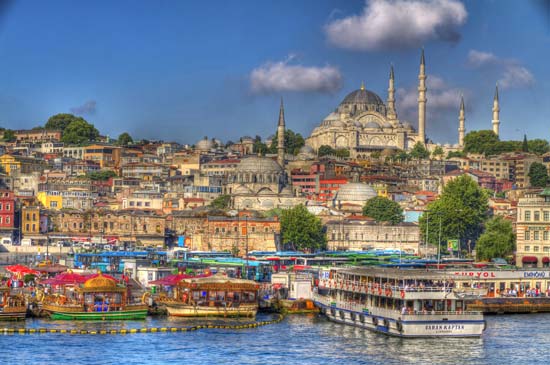
For entertainment, MOST of the people of Constantinople:
a)
Went to the Hippodrome
b)
Bought expensive things
c)
Went swimming
d)
Watched movies
46.
What was a key feature of Constantinople?
a)
Orphanages
b)
Running Water/Sewer Systems
c)
Hospitals 
d)
All of these featuers
47.
Who moved the capital of Rome to Byzantium and renamed it "New Rome" (later Constantinople)?
a)
Justinian
b)
Constantine 
c)
Charlemagne
d)
Leo III
48.
After the riots of 532, what emperor was responsible for the rebuilding of Constantinople?
a)
Leo III
b)
Charlemagne
c)
Constantine
d)
Justinian
49.
Which of the following is NOT an example of a public works project?
a)
Walmart
b)
Public library
c)
Public schools
d)
Roads
50.
Who was the leader of the church in the Byzantine empire?
a)
The pope
b)
The patriarch
c)
The emperor
d)
The people
51.
What is iconoclasm?
a)
Icon worship
b)
Icon making
c)
Icon smashing
d)
Icon selling
52.
Why were the Byzantines offended when the pope crowned Charlemagne as Holy Roman Emperor?
a)
Charlemagne was not a Christian.
b)
They felt the Byzantines were the rightful Roman Empire.
c)
The people did not listen to him.
d)
Charlemagne did not speak their language. 
53.
In 1054, the Eastern Orthodox Church and the Roman Catholic Church formally split. This is a:
a)
Liturgy
b)
Patriarch
c)
Icon
d)
Schism
54.
The Byzantine Empire was the eastern half of what remained of what ancient empire? 
a)
The Ottoman Empire
b)
The Roman Empire
c)
The Holy Roman Empire
d)
The Mongolian Empire
55.
Why was Constantinople a great site for a capital?
a)
The site was easy to defend as a peninsula. 
b)
It was a crossroads of east and west trade routes. 
c)
It was a walled city. 
d)
All of the above. 
56.
What emperor had the law code re-written and organized?
a)
Charlemagne
b)
Justinian
c)
Theodora
d)
Constantine
57.
What was one of the greatest public works projects during the Byzantine Empire?
a)
The Scriptorium 
b)
The Colosseum 
c)
The Pantheon
d)
The Hagia Sophia 
58.
Who was the famous lady that influenced her husband to increase some legal rights of women?
a)
Irene
b)
Theodora
c)
Joan of Arc 
d)
Eleanor of Aquitaine 
59.
Why is Justinian's Code of laws so important today?
a)
It established all rules regarding. taxation.
b)
It established codes regarding the Eastern Orthodox Church.
c)
It established the basis for legal codes in Western World.
d)
It established what entertainment acts were at Hippodrome.
60.
Why were icons, murals, and mosaics painted?
a)
They felt that sacred pictures brought them closer to God.
b)
So artists could sell them and make a good living.
c)
They were part of the sacraments.
d)
None of the above
61.
Byzantine Emperor Leo III established iconoclasm because:
a)
He wanted to have more paintings of Jesus in churches.
b)
He believed people needed pictures to help them pray.
c)
He thought people were worshipping pictures rather than God.
d)
He did not like the style of the religious paintings.
62.
Constantinople was wealthy due to trade and all of the people shared in that wealth.
a)
True
b)
False
63.
Who conquered the Byzantines in 1453?
a)
The Franks
b)
The Ottoman Turks
c)
The Holy Roman Empire
d)
The Mongols
64.
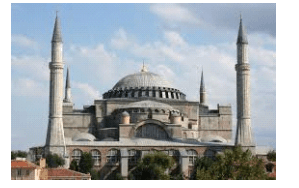
What is another name for the Church of Holy Wisdom?
a)
Hagia Sophia
b)
Great Cathedral 
c)
St. Peter's Cathedral 
d)
None of these
65.
What was the name of the code that unifed Byzantine and western Roman empire?
a)
Hammurabi's Code
b)
Justinian's Code
c)
Theodora's Code
d)
Byzantine's Code
66.
What was the primary language of the Byzantine Empire?
a)
Greek 
b)
Roman
c)
Latin
d)
Turkish
67.
Constantinople served as a center for what two cultures?
a)
Greece and Rome
b)
Persia and Rome
c)
Phoenicia and Rome
d)
Greece and Hebrew
68.
Why was Constantinople such a prosperous city?
a)
Trade hub for Europe, Asia, and Africa
b)
Great architecture 
c)
Autocratic rulers 
d)
The pope lives there
69.
Identify this Byzantine Church that was commissioned by Justinian.
a)
Hagia Sophia
b)
National Cathedral
c)
Notre Dame
d)
Taj Mahal
70.

Which of the following issues divided the Western and Eastern Churches?

a)

practices of animal sacrifices

b)

practices such as scalping

c)

authority of the pope

d)

belief in Jesus

71.

What church was found in the Byzantine Empire?

a)

Eastern Orthodox

b)

Roman Catholic

c)

Lutheran

d)

Methodist

72.
Who was the famous lady that influenced her husband to increase some legal rights of women?
a)
Irene
b)
Theodora
c)
Joan of Arc 
d)
Eleanor of Aquitaine 
73.
Why is Justinian's Code of laws so important today?
a)
It established all rules regarding. taxation.
b)
It established codes regarding the Eastern Orthodox Church.
c)
It established the basis for legal codes in Western World.
d)
It established what entertainment acts were at Hippodrome.
74.
Who split (divided) the Roman Empire in 2?
a)
Constantine
b)
Diocletian 
c)
Justinian
d)
Augustus
75.
Which groups had the most influence on the government, culture and beliefs of the Byzantine Empire? 
a)
Arians, Huns and Vandals 
b)
Muslims and Persians 
c)
Jews and Visigoths 
d)
Romans, Greeks and Christians 
76.
Which groups had the most influence on the government, culture and beliefs of the Byzantine Empire? 
a)
Arians, Huns and Vandals 
b)
Muslims and Persians 
c)
Jews and Visigoths 
d)
Romans, Greeks and Christians 
77.
What was the capital city of the Byzantine Empire? 
a)
Rome 
b)
Athens 
c)
Constantinople 
d)
Italy 
78.

One economic advantage of naming Constantinople as the capital of the Eastern Roman Empire was that it __________

a)

was surrounded by protective walls.

b)

was a center of religious power.

c)

had shrunk in size.

d)

was located near trade routes between Europe and Asia.

79.

Which group conquered Constantinople?

a)

Persians

b)

Huns

c)

Ottoman Turks

d)

Carthage

80.

True or False: Islam is monotheistic. (Belief in one god)

a)

True

b)

False