wayground logo

Free Printable Worksheets

Font size

S
M
L
XL
Worksheets

AP Bio Energy

Total questions: 18

Worksheet time: 11mins

Name
Class
Date
1.

The break down of larger molecules into small one.

a)

metabolism

b)

catabolism

c)

anabolism

d)

oxidation

2.
What is the function of ATP in living things?
a)
provides energy for cells
b)
stores genetic information
c)
provides structure in the nucleus
3.
Which structures shown in the Figure make up the ADP molecule?
a)
A and B
b)
A, B and C
c)
A, B, C, and D
d)
C and D
4.
Enzymes are usually....
a)
Proteins
b)
Lipids
c)
Carbohydrates
d)
None of the Above
5.
What does the "TP" in ATP stand for?
a)
2 phosphates
b)
tri (3) phosphates
c)
Two proteins
d)
tri (3) proteins
6.

The second law of Thermodynamics define

a)

Entropy

b)

Energy

c)

Enthalpy

d)

Heat

7.

How is ADP converted back to ATP?

a)

Phosphate group is removed.

b)

Phosphate group is added.

8.
Energy is created by....
a)
running
b)
boiling ice
c)
touching slime
d)
none of them
9.
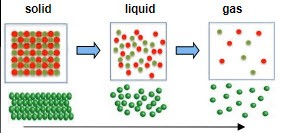
Entropy increases from solid, liquid to gas. Why?
a)
Molecular disorder increases
b)
Molecular randomness decreases
c)
Molecules are more energetic
d)
Molecules are more reactive
10.

What does ATP synthase most likely do?

a)

Create ATP.

b)

Break down ATP.

c)

Break down Glucose. 

d)

Create Glucose.

11.
The total amount of energy in a system is ALWAYS ________.
a)
increasing
b)
decreasing
c)
conserved 
d)
changing
12.
Which bond of the ATP molecule is broken in order to release energy?
a)
A
b)
B
c)
C
d)
D
13.

Energy

a)

the capacity for doing work

b)

the heat coming from the sun

c)

the vitamins we get from food

d)

a unit for thermodynamics

14.

Try it: "Photo" =___ and "synthesis"=____

a)

light

picture

b)

make

light

c)

image

create

d)

light

make

15.

Try it: Which of the following are true about enzymes

a)

Enzymes are proteins

b)

Enzymes are made in the nucleus

c)

Enzyme names usually end in "-ase"

d)

Enzymes can catalyze a reaction

16.

Try it: What is the purpose of cellular respiration

a)

To synthesize lipids

b)

To synthesize carbohydrates

c)

To synthesize ATP

d)

To provide oxygen to working tissues

17.

Try it: Fermentation occurs

a)

as a primary source of ATP in animals

b)

in the absence of oxygen

c)

in the presence of oxygen

d)

in bacterial cells only

18.

Try it: Which of the following conduct cellular respiration

a)

plants only

b)

animals only

c)

plants and animals

d)

anaerobic organisms only