
 Worksheets
Thermal Energy Review
Total questions: 64
Worksheet time: 38mins
Heat will always transfer from the ___________ object to the ________ object.
The hottest object to the coolest object.
The coolest object to the hottest object.
The solid object to the liquid object.
The liquid object to the solid object.


Thermal Energy
The total kinetic and potential energy of all the particles in an object.
Energy that is transferred from a warmer object to a cooler object.
A measure of the average kinetic energy of the particles in a substance.
The heating of a substance that causes its particles to move more quickly.

Temperature
The total kinetic and potential energy of all the particles in an object.
Energy that is transferred from a warmer object to a cooler object.
A measure of the average kinetic energy of the particles in a substance.
The heating of a substance that causes its particles to move more quickly.

Heat
The total kinetic and potential energy of all the particles in an object.
Energy that is transferred from a warmer object to a cooler object.
A measure of the average kinetic energy of the particles in a substance.
The heating of a substance that causes its particles to move more quickly.
When there is a rise in temperature and atoms/molecules move faster and collide, --- is produced.
thermal energy
electrical energy
static energy
gravitational energy
A pan containing water is placed on the stove. The stove is turned on and begins to heat the water. What is happening to the water molecules as they warm up?
The particles are staying at the same motion as before being heated
The particles are moving faster
The particles are moving in square-shaped patterns
The particles are slowing down
Which of the following is not an example of convection?
an overhead fan pushing cooler air particles down in a room
ice melting in a cup of sweet tea
the sun heating the Earth
warm water boiling on a stove
--- refers to heat that is transferred through empty space.
radiation
gravity
conduction
convection
The transfer of heat by the movement of currents of liquid or gas refers to ---
conduction
convection
gravity
radiation

A teacher puts one test tube of 50 degree C liquid and one test tube of 10 degree C liquid into a 20 degree C water bath, as shown in the diagram below. Which of the following diagrams best represents the directions that heat will move when the test tubes are placed into the water bath?


The more particles a substance has at a given temperature,
The higher its temperature
The more thermal energy it has
The more degrees it has
The more kelvin it has
Heat transfer occurs
In many directions
Both from warm objects to colder ones and from cold objects to warmer ones
Only from warm objects to colder ones
Only from cold objects to warmer ones
The transfer of energy by electromagnetic waves is called
Conduction
Convection
Radiation
Insulation
Which of these is a good conductor?
Wood
Paper
Silver
Air
Because a bath has more molecules, it has more __________ than a teacup at the same temperature.
Heat
Thermal energy
Potential energy
Degrees
The handle of a spoon in a bowl of soup becomes warm due to heat transfer by the process of
Conduction
Convection
Radiation
Insulation
On the Celsius scale, water freezes at
32
100
273
0
Thermal energy (heat) always moves from a (1)_______ substance to a (2)_______ substance.
(1) hot
(2) cold
(1) cold
(2) hot
(1) red
(2) blue
(1) blue
(2) red
Water currents that flow from the equator to the poles move heat from warmer climates to colder ones are an example of which transfer of heat?
Conduction
Convection
Radiation
When a volcano erupts, hot molten rock can come to Earth’s surface. This lava burns or melts most things it touches. The lava is so hot it can set a tree on fire even if the tree is several feet away from it. This phenomenon is caused by the process of...
Conduction
Convection
Radiation
__________ is a type of heat transfer that occurs through the movement of fluids, which can be solid liquid or gas.
Conduction
Convection
Radiation
________ is the transfer of energy from one particle of matter to another within an object or between two objects in direct contact
Conduction
Convection
Radiation


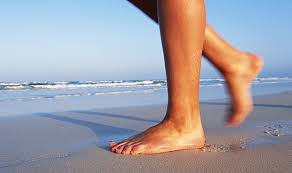
Walking on the warm sand with your bare feet demonstrates this type of heat transfer.
conduction
convection
radiation


What type of heat transfer happens when the sun is heating your body?
Conduction
Radiation
Convection
Density


If Ms. Klepper goes camping and puts her cans of Coke, which are 75°F, in the river, which is 55°F, what will eventually happen to her Cokes?
Her cans of Coke will stay the same temperature (75°F).
Her cans of Coke will get warmer, because it's so hot outside.
He cans of Coke will freeze because the water is so cold.
Her cans of Coke will eventually become the same temperature as the water (55°F).

Which of the images shows the molecules in a solid?
A
B
C

What feature of cup is specifically helping keep the coffee cold?
It is plastic.
It is clear.
It is double-walled.
Temperature=Total Kinetic Energy
Temperature=Average Kinetic Energy

Four steel blocks were heated to different temperatures and stacked together as shown in the diagram below. Heat energy will move in all of the following directions EXCEPT –
From #4 to #1
From #3 to #2
From #2 to #4
From #2 to #3

Four insulating containers were filled with warm water. Twenty minutes later the temperature was recorded again. Which container is the best insulator?
Container S
Container R
Container Q
Container P
A chef leaves a copper spoon, a wooden spoon, and a steel spoon in a pot of boiling soup for several minutes. Which spoon should the chef grab with his bare hand to stir the soup?
The copper spoon
The steel spoon
The wooden spoon
The three spoons will be equally hot
The total energy of all the particles in a substance is called
Temperature
Thermal energy
Degrees
Mass
The more particles a substance has at a given temperature,
The higher its temperature
The more thermal energy it has
The more degrees it has
The more kelvin it has
If two objects have different temperatures, heat will flow from the warmer object to the cooler one UNTIL ____________
one reaches a temperature of zero
they both have an equal temperature
one runs out of energy

If a door was left open between the bedroom (74 degrees) and the living room (68 degrees), what would likely happen to the temperatures after several hours?
nothing, they would not change
both rooms would become hotter
both room would become colder
the bedroom temp. would lower and the living room temp. would rise

Which color would be better at keeping a cup cold?
Black
White
Clear
Which of the following means heat energy?
Kinetic
Thermal
Potential
Does a lid affect how well a cup maintains the temperature of the liquid inside?
Yes
No
Which type of matter has the fewest particle collisions?
Solid
Liquid
Gas
If I put two bags of ice cubes in a bathtub with hot water the ice cubes will melt. What is happening?
Magic
The heat from the water gives its energy to the ice making it hot and making the water colder as well.
The heat from the water is taken by the ice then it will melt and the water will stay the same.
What would light energy do to iced water?
Heat it up
Cool it down
Nothing

