
 Worksheets
Changing Nations
Total questions: 34
Worksheet time: 39mins
Why do people live longer today than 200 years ago?
better health care
better restaurants
better hairstyles
better clothing
In order for population to grow
death rate must be higher than birth rate
heart rate must be lower than death rate
birth rate must equal death rate
birth rate must be higher than death rate

What is population growth?
An increase in the amount of people in one area.
Population divided by the total area.
The number of people in a geographic area.
The pattern where people live.

The approximate population of the world today is..
4 Million
5 Billion
6 Million
8 Billion
Factor that affecting growth population are
Education and rate natural increase
Birth rate and death rate
Population density and distribution
Level of technology and climate

Most of the world's population lives in...
North America
Europe
Africa
Asia
Why would an area be sparsely populated?
lack of natural resources
land is covered with ice
land cannot be developed
all of the above
People leaving for better job is _______ factor.
an economic
a social
Money sent back from abroad is called ____________.
remuneration
remittances
What is an asylum?
A place offering job and security
A place offering protection and safety
Most people never migrate and those who do migrate, usually move to nearby countries.
True
False
Which of the following is the world's fastest growing country?
India
China
U.S.
Mexico
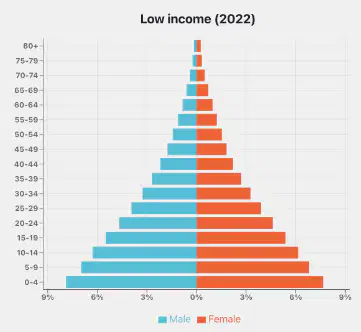
This population pyramid shows...
...the population distribution for low income countries in 2022.
men and women in 2022.
Australia's population distribution in 2022.

This population pyramid shows...
Rapid growth
Slow growth
Negative growth

This population pyramid shows...
Rapid growth
Slow growth
Negative growth
Select a country that has a negative growth rate (with a declining population):
China
Kenya
Japan
India
Match the following
Population
number of people in a single area
Sparse
thinly dispersed or scattered
Dense
many people living in a small area
Immigrant
chose to move to a different country
Refugee
forced to leave home country
What are the steps to describing a graph or map?
What does the graph/map/table show? (Use the title)
What patterns or trends do you notice?
Why is this the case?
Add the descriptors to the example images
Gradual
Decrease
Increase
Changes
Select which phrase/s are FORMAL (appropriate style for the essay):
I can see on the graph...
In my opinion...
This graph shows big changes
It is clear from the graph that...
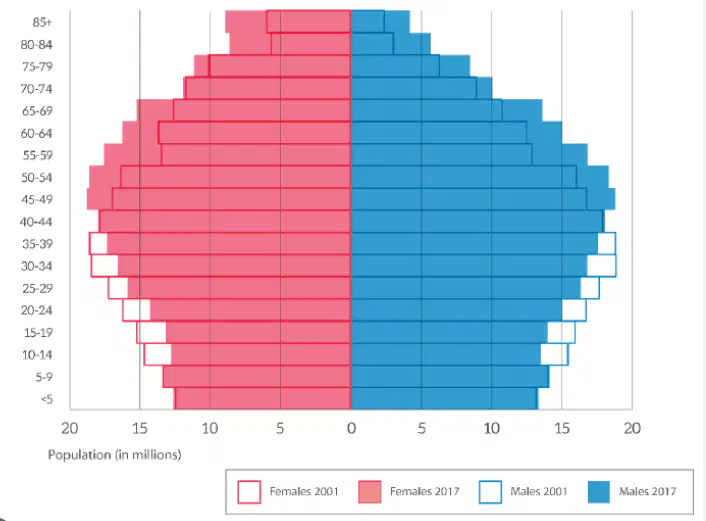
This population pyramid is a great example of...
the Expanding stage of the demographic transition model
the Stationary stage of the demographic transition model
the Contracting stage of the demographic transition model
Select which of the below are barriers to immigration:
Costs
Having the "right" skills
Age
Boats
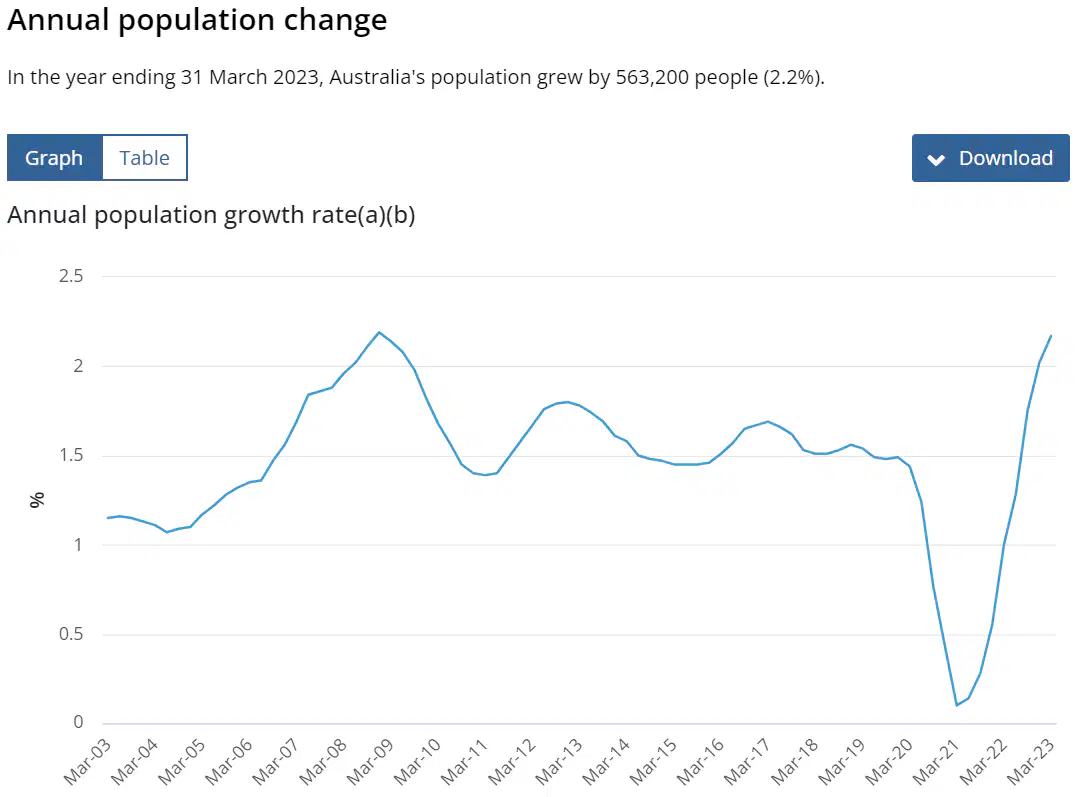
This graph shows Australia's... (a)
The rapid decrease seen between March 2020 and March 2023... (a) .
Australia's annual population growth rate has... (a)
Australia's annual population growth rate before covid... (a)
This graph demonstrates how government (a)
Which are push and which are pull factors?
War
Healthcare
Freedom
Job opportunities
Cities
Crime
Cold Weather
Poverty
Education opportunities
Drought
Natural disasters
Organise the issues related to different populations:
Pensions costs
Cost of vaccines
Cost of schooling
Sick children may die
Overcrowding
Few jobs
Residential care costs
Diseases of the elderly
Loneliness
Adults caring for old people
Match the following according to what you have learnt.
Skilled workers for Australia include
nurses, teachers, doctors.
Illegal immigrants
often arrive by plane.
A pull factor for the NT
Good weather and friendly people
International students
are encouraged to come to Australia
Australia
has a history of migrants coming here
Why would people migrate to the NT?
Job opportunities
Multicultural community
Friendly people
Business opportunities
Education opportunities
Lack of job opportunities
Low income
Poorer country
Poor weather
Visa requirements
Personal skills
Costs of immigration
Financial requirements
Leaving family behind
Leaving friends behind
Language barriers

