
 Worksheets
MIDTERM REVIEW
Total questions: 10
Worksheet time: 3mins
True or False. Prokaryotes contain cytoplasm.
True
False
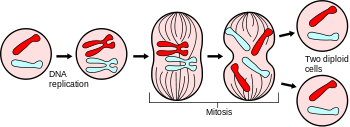
When cells are damaged, new cells are created by cell a process called cell division. How does the cell theory support this fact?
It states that all cells have a nucleus which divides.
It states that all living things are made up of one or more cells.
It states that cells come from previously existing cells.
It states that the basic units of structure and function are cells.
Plants and animal cells have...
Mitochondria and chloroplasts
Nucleus and Lysosome
Cell wall and chloroplast
Mitochondria and cytoplasm

In passive transport, substances move across the cell membrane ________ the concentration gradient
AGAINST
ALONG
ABOUT
BETWEEN
If a cell is placed in an environment with MORE oxygen OUTSIDE the cell than inside, the cell will...
gain oxygen
lose oxygen
gain water
lose water

What macromolecule is embedded into the lipid bilayer and helps to transport polar molecules and ions?
Carbohydrate
Lipid
Protein
Nucleic Acid

Consider the following concentrations of sodium ions inside and outside the cell. What will be the direction of sodium ion movement across the cell membrane?
Outside the cell: 145 millimolar (mM)
Inside the cell: 10 millimolar (mM)
No transport of sodium ions will occur.
More sodium ions will move into the cell.
More sodium ions will move out of the cell.
Sodium ions will have a net movement of zero.

