Worksheets
HYBRIDISATION
Total questions: 20
Worksheet time: 5mins
Why do all bonds form?
so the number of protons equals the number of electrons
so an atom can become unstable
to fill the outermost energy level
A diatomic molecule like O2 is always _____ because electrons are shared _____
nonpolar; unequally
polar; equally
nonpolar; equally
polar; unequally
px - px overlap (perpendicular to internuclear axis) is a _______
σBond
πBond
A π (pi) bond is the result of the
sidewise overlap of two parallel p orbitals
overlap of two s orbitals
sidewise overlap of two s orbitals
overlap of an s orbital and a p orbital
overlap of two p orbitals along their axes
Which is the stronger bond?
σBond
πBond
The purpose of promoting one or more electrons in the process of forming hybrid orbitals is ___________________
to increase the number of unpaired electrons
to increase the number of orbital
to make orbital have same the shape and energy
to use the empty d-orbitals
Two carbon atoms form a linear shaped ethene, C2H4, molecule when bonded with four other hydrogen atoms. Prior to bonding, the carbon atom
does not hybridise
undergoes sp hybridisation
undergoes sp2 hybridisation
undergoes sp3 hybridisation
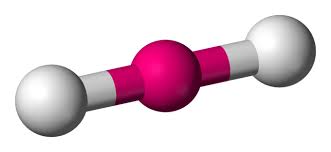
What is the hybridization of a linear molecule?
sp
sp2
sp3
sp3d
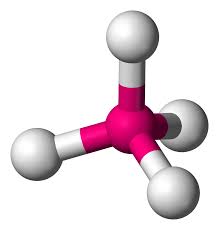
What is the hybridization of this molecule shown.
sp
sp2
sp3
sp4
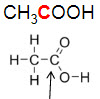
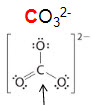
What is the hybridization of the Carbon atom indicated by the arrow?
sp hybridization
sp2 hybridization
sp3 hybridization
dsp3 hybridization
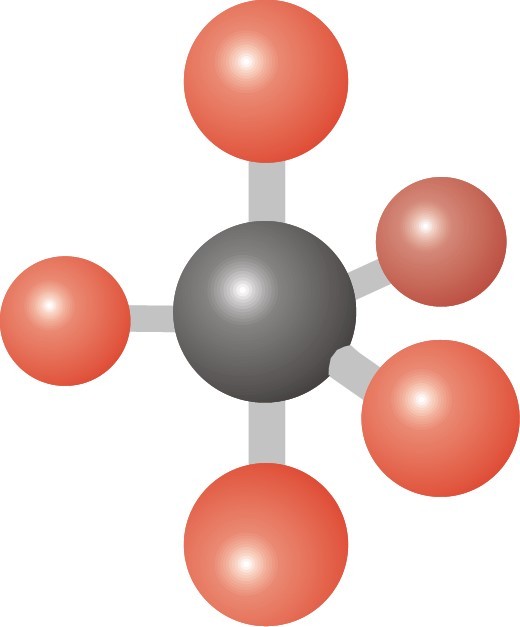
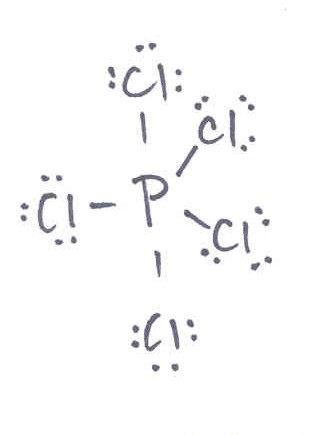
What is the hybridization of PF5?
sp3
sp3d
sp3d2
sp2
Molecule CO2
undergoes sp2 hybridisation
has 2 σ bond and 2 π bond
undergoes sp3d hybridisation
is trigonal planar molecule
What is the hybridisation of carbon atom in hydrogen cyanide, HCN?
sp
sp2
sp3
sp3d