
 Worksheets
Evolution
Total questions: 35
Worksheet time: 20mins
What determines whether two organisms belong to the same species.
The environment they live in
Physical Appearance
Ability to reproduce with one another
Evolutionary relationship to humans
In the phrase "survival of the fittest," ; what is the meaning of the word fittest?
Best-adapted organism
Fastest organism
Largest
organism
Smartest organism
What is a common ancestor?
An animal that has a lot of offspring
An animal that is related to many other species
An animal from which two or more species evolved
An animal that is good at escaping from predators
Species go extinct when
They have survived for longer than 10 million years
They can't adapt to environmental changes
Genetic code changes
Disease kills 75% of a population
What is evolution?
When organisms migrate to warmer climates
When organisms migrate to cooler climates
Ancient rock layers and the fossils they contain
How organisms change across many generations


The forelimbs of mammals have similar anatomy because these groups descended from a recent common ancestor. Their bone structure is an example of a(n) ______________ structure.
vestigial
analogous
homologous

Many different groups of organisms have wings, even though they do not share a recent common ancestor. This is because they evolved in environments with similar selective pressures. Wings are an example of a(n) ______________ structure.
vestigial
analogous
homologous


According to scientists, what is the ultimate cause of mass extinctions?
Overhunting
Evolution of a new species
Major changes in the environment
Asteroid impacts

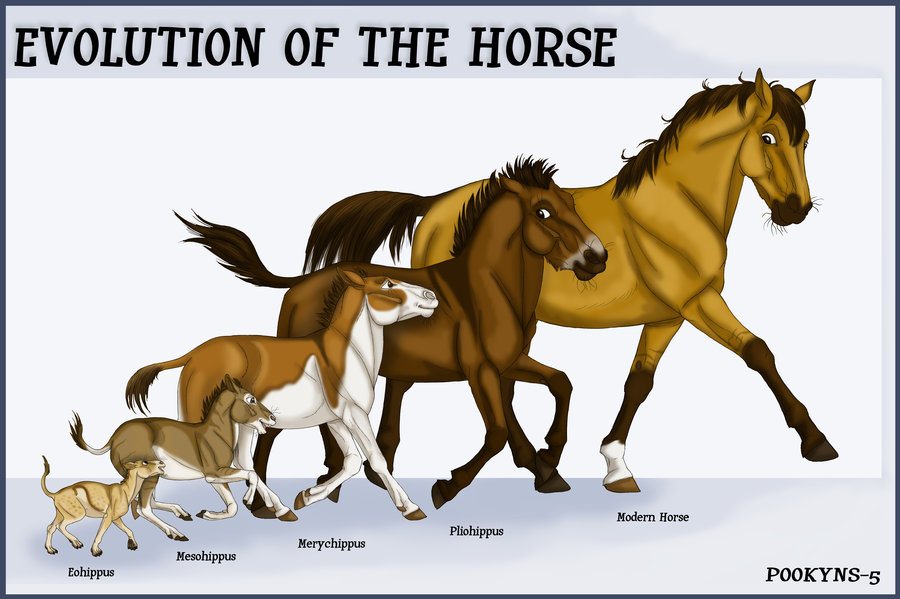
What is a scientific theory?
An explanation that makes a lot of sense
An explanation that is supported by evidence
An explanation that is popular among the public
An explanation that has been proved and is now scientific law
What can humans do to make sure that fish species don't go extinct?
Destroy sharks and other predators in the ocean
Stop the practice of overfishing
Practice strategies related to overfishing
Stay away from oceans
The Bald Eagle almost went extinct when humans began using a pesticide called DDT. What can you conclude from the fact that the Bald Eagle population have since increased.
The Bald Eagle is one of the healthiest birds on Earth.
The pesticide was banned.
The eagles learned to stay away from DDT.
The Bald Eagle quickly evolved to tolerate the pesticide.
According to most scientists, what is the ultimate cause of most mass extinctions.
Overhuntin
Overfishing
Evolution of a new species to replace an old species
Major changes in the environment
Two organisms have homologous structures. Which can most likely be concluded about the two organisms?
They are unrelated.
They are the same organisms.
They share a common ancestor.
They evolved in a similar environment.
What can be inferred from observed characteristics of land animals and aquatic animals.
They are classified as the same species.
They have the same dietary habits.
They evolved from humans.
They share a common ancestor.
Scientist believe that dolphins and whales may have evolved from a common ancestor. What evidence supports this hypothesis?
They swim the same way.
They have the same dietary habits.
They live in similar environments.
They have similar anatomy.
What can scientists most likely conclude from fossil records?
Extinction is rare.
Extinction is common.
Extinction has occurred at exact intervals throughout geological time.
Extinction has never occurred in plant species, only in animals.
Based on the fossil record, which organisms were most likely to have existed first?
Plants
Bacteria
Jellyfish
Insects

Evolution is best defined as:
the process which organisms die.
the process which organisms change over time.
the process which organisms that are extinct become revived.
the process which non-living things fossilize.


Which scientist is known for his work that he did on the Galapagos Islands to develop his theory of natural selection?
Gregor Mendel
Charles Darwin
Anton Van Leewenhoek
Robert Brown
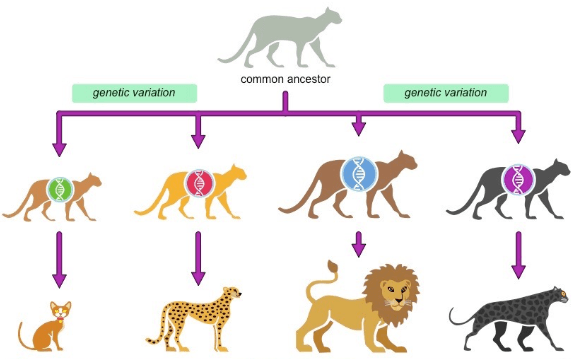
The process by which two populations of the same species become so different that they can no longer interbreed.
natural selection
artificial selection
speciation
fossilization

