
 Worksheets
EUKARYOTIC CELL
Total questions: 34
Worksheet time: 9hrs 30mins
An example of a Eukaryotic Cell is...
Bacteria
Covid-19
Body Cells
E-coli
Eukaryotic Cells can be both Multicellular and Unicellular
Yes
No
The site of protein synthesis
Golgi Apparatus
Ribosome
Endoplasmic Reticulum
Mitochondrion
Phospholipid bilayer that controls what enters + exits the cell
Vacuole
Cell Wall
Cell/Plasma Membrane
Nucleus
Match the following organelles to their function.
Golgi Apparatus
Sorting, storing, modification and export of secretory products
Endoplasmic Reticulum
Transports materials between organelles
Vacuole
Maintains water balance (hydrostatic pressure)
Mitochondria...
are the site of protein synthesis
are the site of aerobic respiration
are the site of photosynthesis
are the site of transcription
Which of the following are in plant cells? Check ALL that apply
Ribosomes
Nucleus
mitochondria
Cell Wall
Chloroplast

Identify the structure labelled 7
(a)

Which number is labelling a chloroplast?
11
13
9
10
Which number(s) are pointing to structure(s) found only in plant cells? Check ALL that apply
10
13
9
12
1

Identify the structures in this animal cell labelled I and II.
I: Plasma Membrane
I: Cell Wall
II: Mitochondrion
II: Chloroplast
What two ways are eukaryotic cells different from prokaryotic cells?
Eukaryotic cells are more complex.
Eukaryotic cells have a nucleus.
DNA floats in eukaryotic cells
Most eukaryotic cells are in single celled organisms
Which of the following statements about living cells is false?
Most are microscopic
They are found in all animals but not in all plants.
They are the smallest basic units that can carry out all of the functions that we normally define as life.
None of the above
______ and ________ are organelles that arose from the endosymbiotic theory
flagellum and chloroplast
mitochondria and chloroplasts
Smooth and Rough ER
mitochrondria and cell wall
The Theory of Endosymbiosis explains:
how bacteria live
the origin of Eukaryotes
Why cells rely on one another
how species develop
Which of the following is evidence to support the endosymbiotic theory?
Mitochondria and chloroplasts have their own DNA, which is similar to prokaryotic DNA.
Fossil evidence shows that the first forms of life were prokaryotic cells.
All eukaryotic cells have a double-layered membrane composed of phosplipids and proteins.
Prokaryotes have the same number and types of enzymes as eukaryotes.
Both eukaryotic and prokaryotic cells have:
ribosomes
cell membranes
false
true
Mitochondria , chloroplast , and bacteria are similar in size.
true
false
Which statement below correctly explains and gives the importance of the endosymbiotic theory?
The endosymbiotic theory states that the inner and outer membrane of the endoplasmic reticulum indicates these were once free living organisms which were taken into an early cell via endocytosis. The theory was further supported by the presence of prokaryotic ribosomes and replication of the endoplasmic reticulum via binary fission.
The endosymbiotic theory states that the inner and outer membrane of the mitochondria indicates these were once free living organisms which were taken into an early cell via endocytosis. The theory was further supported by the presence of prokaryotic ribosomes and replication of mitochondria via binary fission.
The endosymbiotic theory states that through endocytosis, early prokaryotic cells were able to bring in additional nutrients. These additional nutrients provided important energy that drove evolution of these prokaryotic cells into the eukaryotic cells seen today in more advanced organisms.
The endosymbiotic theory states that through endocytosis, early prokaryotic cells were able to bring in early energy rich eukaryotic cells. The energy provided drove evolution of these prokaryotic cells into the eukaryotic cells seen today in more advanced organisms.

The image depicts a shuffled order of the events that led to a eukaryotic cells according to the Endosymbiotic Theory. Put them in order.
B
A
C
E
D

Letter F is which structure of the mitochondria?
inner membrane
outer membrane
cristae
matrix
Letter E is which structure of the mitochondria?
inner membrane
outer membrane
cristae
matrix


Which is false about nucleoplasm?
it is a jelly-like liquid
it is similar to cytoplasm
it holds the contents of the nucleus
it is made of carbohydrates
What is true about the nuclear pores?
they are found inside the nucleus
there are 100's of them on the nucleus
they allow materials to move in and out of nucleus
they are made by ribosomes
Which is true of ribosomes?
The nucleolus manufactures the subunits that make up the ribosomes.
The chromatin manufactures the subunits that make up the ribosomes.
The nucleoplasm manufactures the subunits that make up the ribosomes.
The mitochondria manufactures the subunits that make up the ribosomes.
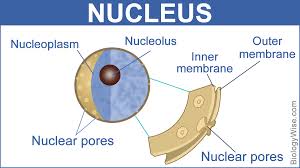
Made up of two layers (an inner and an outer), this acts like a cushiony outer shell of protection.
nucleoplasm
nuclear pores
nuclear membrane
nucleolus
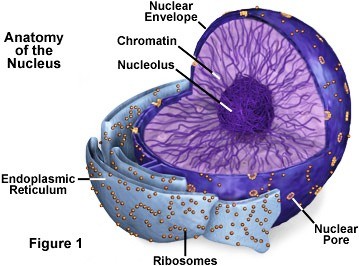
In the middle of each nucleus. Main job is to make ribonucleic acid (RNA), which makes proteins that are essential to life.
nuclear membrane
nuclear pores
nucleoplasm
nucleolus
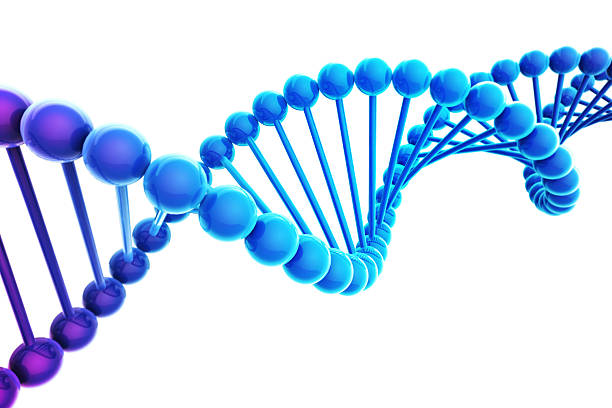
A double stranded helix that holds the code for all the cells in the body.
RNA
DNA
Chromatin
Nucleus
The Plasma membrane mainly consists of
Proteins embedded in carbohydrate-lipid layer
Proteins embedded in a carbohydrate bilayer
Proteins embedded in a phospholipid layer
Proteins embedded in a lipid molecules
The head of a phospholipid is attracted to water, and is referred to as:
Hydroscopic
Hydrogenated
hydrophobic
Hydrophilic

