
 Worksheets
French Revolution + Napoleon
Total questions: 25
Worksheet time: 33mins
The Third Estate was made up of these people.
clergy
nobles
common people
kings and queens
Leader of the committee of Public Safety
who enforces policies of the Reign of
Terror
Louis XVI
Robespierre
Napoleon
Klemens von Metternich
What new method of execution was primarily used during the Reign of Terror?
Hanging
Firing squad
Guillotine
Burned at the stake
The great French empire that Napoleon created eventually fell after the unsuccessful invasion of Russia. Why was the invasion considered a great disaster for Napoleon?
There was a massive air attack by the Russians that wiped out most of Napoleons army
Russia's scorched-earth policy and cold winter wiped out most of Napoleons army
The Battle of the Bulge wiped out most of Napoleons army
The newly formed United States allied with Russia to wipe out most of Napoleons army
Which Austrian diplomat exerted such an influence over European politics that the era of 1815 to 1848 is named after him?
Talleyrand
Castlereagh
Metternich
Bismarck

What event restored monarchies and the balance of power to Europe after the Napoleonic Wars?
Congress of Vienna
Parliament
League of Nations
Estates General
The Estates General was…?
A group of French military leaders
A type of representation
A chamber of French government
A yearly military gala
What were 3 main short-term causes of the French Revolution
Bankruptcy, Great Fear and Estates-General
Bankruptcy, Franco-Prussian War, Great Fear
Louisiana Purchase, Estates-General, Franco-Prussian War.
Great Fear, Peninsular War, Bankruptcy.
What was the Great Fear?
A period of peasants rioting and ransacking noble homes.
A period where religious extremists proclaimed the end of the world.
A company of soldiers which raided villages during the Napoleonic Wars.
A period where nobles publicly executed peasants to scare them out of revolting.
Which intellectual movement had the greatest influence on the goals of the French Revolution?
Romanticism
The Enlightenment
The Renaissance
Futurism
Which of the following was not a goal of the Congress of Vienna
Kings Restored to Power
Balance of Power
A new map of Europe (France weaker)
An alliance of all members against Russia
Which of the following was NOT one of Napoleon's big mistakes?
Invasion of Russia
Peninsular War
Continental System
Louisiana Purchase
The pre-revolution political and social system in France.
Bourgeoisie
Old Regime
Class System
The Great Society
What action did Britain take in response to Napoleon's blockade?
Launched their own blockade, which hurt France's economy
Signed a peace treaty with France
Strengthened their naval forces to invade France
Ignored the blockade and continued trading
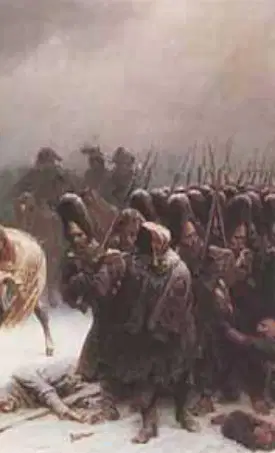
What was the outcome of Napoleon's retreat from Russia in the winter of 1812?
Napoleon successfully conquered Russia
Napoleon's army suffered minimal losses
590,000 of 600,000 French troops starved or froze to death
Napoleon formed an alliance with the Russian czar
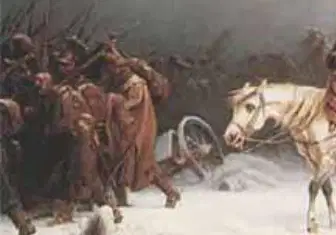
Why did Napoleon decide to retreat from Russia in the winter of 1812?
He received a surrender from the Russian czar
His troops were victorious and no longer needed to fight
The Russian winter and lack of resources forced him to retreat
He wanted to focus on conquering other parts of Europe
What happened to France's territory as a result of the changes made at Vienna?
France gained new territories in Europe.
France was deprived of all territory conquered by Napoleon.
France retained all its conquered territories.
France expanded its influence in the German Confederation.
Which battle marked the final defeat of Napoleon Bonaparte?
Battle of Leipzig
Battle of Trafalgar
Battle of Waterloo
Battle of Austerlitz


