
 Worksheets
Cells Quiz
Total questions: 15
Worksheet time: 9mins

Some students used information they gathered from lab investigations to prepare a table. They entered the table in their lab notebooks. Which of these correctly identifies the two cells described in the table?
Cell 1 is eukaryotic, and Cell 2 is prokaryotic.
Cell 1 is prokaryotic, and Cell 2 is eukaryotic.
Both Cell 1 and Cell 2 are eukaryotic.
Both Cell 1 and Cell 2 are prokaryotic.
The presence of which of the following characteristics differentiates prokaryotic and eukaryotic cells?
DNA
Ribosomes
Nucleus
Cytoplasm

Students use a microscope to look for structures present in four different cells. The students placed an X for each structure that was viewed for each cell on the table shown. Which cell that was viewed is most likely a prokaryote?
Cell W
Cell X
Cell Y
Cell Z
Plant and animal cells are examples of
prokaryotic cells
eukaryotic cells
Which of the following structures is ALWAYS found in both eukaryotic and prokaryotic cells?
nucleus
mitochondria
ribosomes
cell wall
The smallest unit of a living thing are
atoms
cells
DNA
organelles

What is NOT apart of the Cell Theory?
all cells come from existing cells
all cells have a nucleus
all living things are made of cells
cells are basic unit of structure and function in living things
Which invention was the most important thing that helped scientists develop the cell theory?
compound light microscope
petri dish
scanning electron microscope
dissection tools
There are three parts to the cell theory. Which is NOT one of those parts?
All organisms are composed of one or more cells.
The cell is the basic unit of structure and organization in organisms.
Cells spontaneously arise from carbon and nutrients carried in the bloodstream.
All cells come from pre-existing cells.
Which of the following use DNA for genetic information?
All other answer choices are correct
Prokaryotes
Eukaryotes
Viruses

Which type of cell would go where I is?
Prokaryotic
Eukaryotic Plant
Eukaryotic Animal
Viral

Eukaryotes include fungi, plants, animals, and....
bacteria
protists
archaebacteria
eubacteria
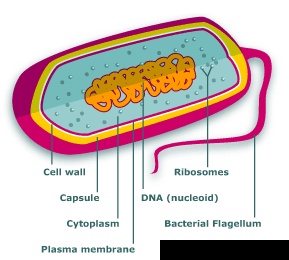
What 4 parts do both Prokaryotic and Eukaryotic cells have?
cytoplasm, DNA, ribosomes, nucleus
cytoplasm, DNA, ribosomes, mitochondria
cytoplasm, DNA, ribosomes, cell/plasma membrane
cytoplasm, DNA, ribosomes, ER

