
 Worksheets
World War II & Cold War
Total questions: 27
Worksheet time: 14mins

What was our policy against communism during the Cold War?
Confinement
Detente
Commandment
Containment

What did Winston Churchill say after the Soviet Union took over Eastern Europe?
A steel curtain had descended over Europe
The Red Menace had taken over Europe
An Iron Curtain had descended over Europe
A communist wave had engulfed Europe

What was the policy that the United States would help any nation that was struggling against communism?
The Roosevelt Corollary
NATO Pledge
The Marshall Plan
The Truman Doctrine

What was the European Recovery Act commonly known as?
The Truman Plan
The Berlin Airlift
The Marshall Plan
The Lend-Lease Act
When did the US enter World War II?
When Germany invaded Poland
When Germany bombed London
When Japan invaded China
When Japan bombed Pearl Harbor
Who were the Axis Powers?
Germany, Italy, and Japan
The US, Germany, and Japan
France, Belgium, and Great Britain
The US, Russia, England
Who were the Allied Powers?
The US, Great Britain, and USSR
Germany, Austria, and Italy
Germany, Japan, and Italy
France, Spain, and Great Britain
What was D-Day?
The Allied invasion of England
The Allied invasion of Russia
The Allied invasion of Europe
The Allied invasion of Japan
Who authorized the use of the Atomic bomb on Hiroshima and Nagasaki?
President Roosevelt
President Bush
President Truman
President Lincoln
Define "Island Hopping"
allied strategy to win the war in the Pacific
allied strategy to win the war in USSR
plan created at the Potsdam convention
plan created at the Tehran convention
What was the Cold War?
the war of the thermostats
a period of geopolitical tension between the United States and the Soviet Union
a period of geopolitical tension between Europe and Asia
a period of geopolitical tension between Germany and France
Hitler's "lightning war," using air supported panzer divisions
sitzkreig
blitzkreig
phony war
trench warfare
Site of the Allies D-Day invasion
Calais
Normandy Beach
Pearl Harbor
Paris

Which government action was a response to the Japanese attack on Pearl Harbor?
drafting all Japanese American men into the United States Army
passing labor laws banning the employment of immigrants
ending all oil sales to Japan
forcing the relocation and internment of Japanese Americans

What effect did the end of World War II have on American women who worked in defense industries during the war?
Their jobs were taken by returning servicemen
They were invited to join labor unions
Their contributions were rewarded by the government
Their wages were increased to match those of male workers

During World War II, the need of the United States for more war materials resulted in the:
reduction in profits for defense industries
easing of government controls on the economy
use of lengthy strikes by labor unions
rationing of some consumer goods

A key purpose of this World War II poster was to:
encourage protests against the war
gain support for the war effort
influence the Axis powers to end the war
illustrate the nature of modern warfare

The Manhattan Project led by Robert Oppenheimer was part of the World War II effort to:
ban the use of chemical and biological warfare
develop the atomic bomb
coordinate troop movements between New York and Europe
supply the Allies with more fighter planes

What date was Pearl Harbor attacked?
November 11, 1918
September 1, 1939
December 7, 1941
June 22, 1941

The main purpose of the World War II coupons shown in this illustration was to:
pay defense contractors for military hardware
choose men for the draft
conserve essential goods for military use
encourage increased production of consumer goods

Which statement most accurately describes the foreign policy change made by the United States between the start of World War II (1939) and the attack on Pearl Harbor (1941)?
The traditional isolationism of the United States was strengthened.
The nation shifted from neutrality to military support for the Allies.
War was declared on Germany but not on Japan.
Financial aid was offered to both the Allied and Axis powers.
Who was the leader of Germany during WWII?
Benito Mussolini
Joseph Stalin
Adolf Hitler
Franklin D. Roosevelt
The genocide of six million Jews committed by the Nazis was called the __________________.
Black Plague
Apartheid
Reign of Terror
Holocaust
Japan and Germany were similar in what ways? (Select all that apply)
Their people revolted and won the right to have democratic elections determine their next leader.
They were expanding their militarys.
They both became members to the League of Nations to help promote world peace.
They were expanding their empires by invading neighboring nations to gain resources.
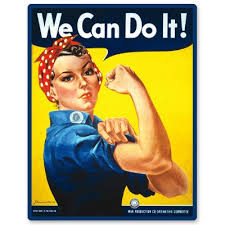
Who is this a image of and what did she a symbol of .....
June the Fighter symbol of women's suffrage
Susan the solider symbol of women working on airplanes
Rosie the Riveter symbol of women working in factories during the war.

What battle is the pacific theater was vital to gain in order the bomb Japan
Okinawa
Iwo Jima
Normandy
Midway

What was President Roosevelt referring to in this speech?
The victory at Normandy and liberation of France.
the Japanese bombing of Pearl Harbor.
The Battle of Britain.

