
Font size
 Worksheets
Heartland A&P Muscular System
Total questions: 25
Worksheet time: 18mins

The contraction of muscle D causes
Elbow extension
Elbow rotation
Elbow flexion
Elbow pronation
Orbicularis and rectus muscles are named by
Location
Shape
Direction of muscle fibers
Size

During inspiration the muscle red moves
Downward to increase thoracic cavity
Downward to decrease thoracic cavity
Upward to increase thoracic cavity
Upward to decrease thoracic cavity
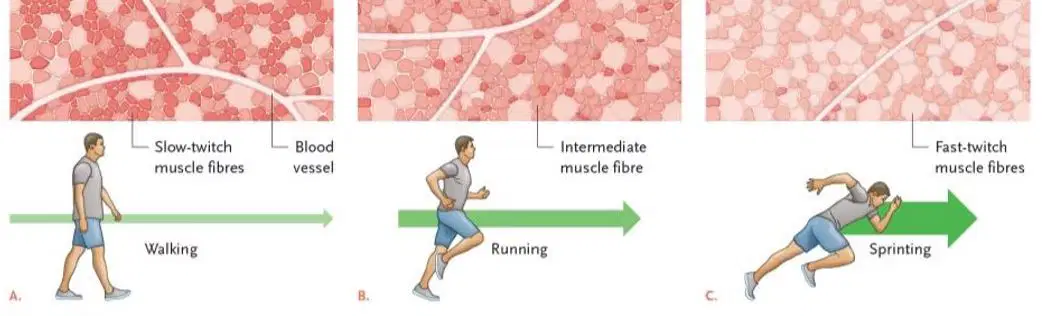
For a marathon runner, which type of muscle fiber
works best?
Fast glycolytic
Fast glycolytic and fast oxidative
Fast oxidative
Slow oxidative

Identify the muscle(s) indicated
buccinator
scalene
zygomaticus
masseter

The contraction of muscle A causes
Plantarflexion
Dorsiflexion
Inversion
Eversion

Agonist or prime mover of hip abduction is the muscle
A
B
C
D

Which muscle is the agonist of shoulder adduction?
A
B
C
D

What muscle is the agonist to flex the knee joint?
A
B
C
D
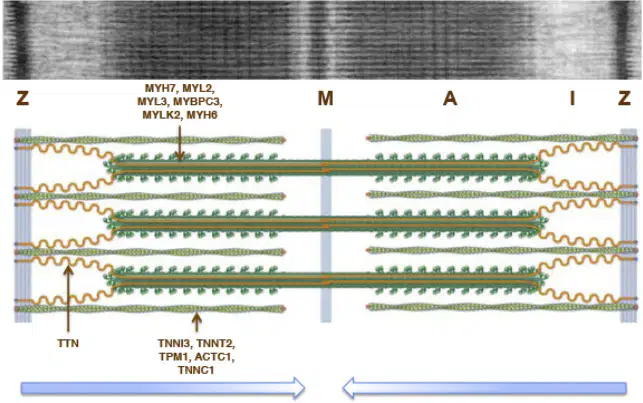
What happens to the structure of the sarcomere
when a muscle contracts?
Select all that apply.
M line disappears
A band shortens
I band shortens
Z to Z shortens
Agonist and antagonist of neck extension?
SCM and Deltoid
Trapezius and SCM
Platysma and Pectoralis
Masseter and Buccinator
One motor unit includes how many motor neurons?
100
2
10
1
various
The area in which one motor neuron meets one muscle cell to transmit AP is called
ECC
Sarcomere
Sarcolemma
NMJ
T tubules
In order to convert electric signals to chemical signals in the synaptic terminals, which ions are needed?
Na+
Cl-
K+
Ca2+
The ATP is needed in the sarcomere to
store calcium ions for muscle relaxation
transport oxygen to muscle fibers
remove waste products from muscle cells
detach myosin from actin for muscle contraction
An optimum range of thick and thin filaments overlapping that will produce the most tension
can be referred to as:
tension-tendon relationship
bone-muscle relationship
length-tension relationship
length-bone
relationship
Ability of muscle to respond to the AP from a motor neuron
contractibility
excitability
elasticity
extensibility

Place the events of ECC to work in order:
A. Sarcomere contraction
B. Ach released to the SR
C. Ach released to the synaptic gap
D. Calcium influx the motor neuron terminal
E. Ach binding to its receptor
F. AP propagating via sarcolemma and T tubules
A, B, C, D, E, F
B, C, D, A, E, F
C, D, A, B, F, E
D, E, F, A, B, C
D, C, E, F, B, A
What is the role of myosin in muscle contraction?
It binds to calcium ions
It forms cross-bridges with actin
It stores energy
It breaks down ATP
What would happen if Ach cannot bind to its receptors on the motor end plate?
Muscle paralysis or weakness occurs.
No effect on muscle function occurs.
Ach binds more effectively to the receptors.
Muscle strength increases significantly.
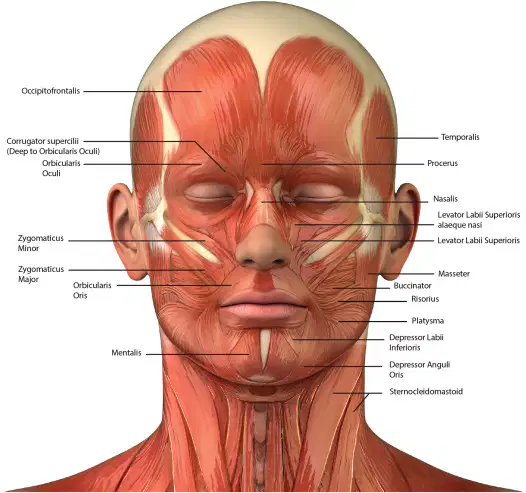
The two muscles for mastication are masseter and
(a)

What is the role of calcium ions in sarcomere contraction?
They provide energy for contraction
They bind to troponin to expose binding sites for myosin
They break down ATP
They transport oxygen to muscles
What is the primary function of the sarcoplasmic reticulum in muscle cells?
Produce ATP
Transport oxygen
Generate action potentials
Store calcium ions

Which ion is primarily responsible for depolarizing the muscle cell membrane during an action potential?
Ca2+
K+
Na+
Cl-
25.
Answer the questions below after watching the video
True or False:
Skeletal muscle displays remarkable regenerative properties,
with muscle-resident stem cells (satellite cells), the source of new myofibers following muscle injury.
Skeletal muscle has no regenerative properties so false.

