
 Worksheets
Isotope and Group 1 elements
Total questions: 14
Worksheet time: 14mins
Name
Class
Date
1.

How many neutrons does the isotope of lithium have?
a)
8
b)
3
c)
4
d)
5
2.
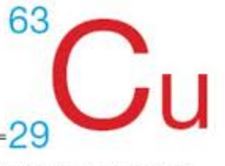
How many electrons does a Copper atom have?
a)
63
b)
29
c)
92
d)
34
3.
Found in the nucleus of the atom
a)
electrons only
b)
protons only
c)
neutrons and protons
d)
neutrons and electrons
4.
Isotopes are atoms of the same element that have the same number of __________ but different number of __________ . Therefore, isotopes of the same element have different masses.
a)
protons, neutrons
b)
protons, electrons
c)
neutrons, protons
d)
electrons, protons
5.
An atom has 12 protons and 13 neutrons in its nucleus. Which is the correct symbol?
a)
b)
c)
d)
6.
An atom is electrically neutral when
a)
protons and neutrons are the same
b)
protons and electrons are the same
c)
neutrons and electrons are the same
d)
neutrons balance the protons and electrons
7.

What is an isotope?
a)
A charged atom
b)
An atom with different amounts of neutrons
c)
An atom with different amounts of protons
d)
A neutral atom
8.
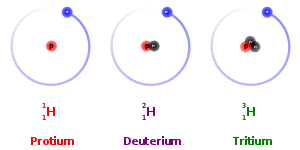
Different isotopes have...
a)
different masses
b)
different atomic numbers
c)
different electrons
d)
different protons
9.
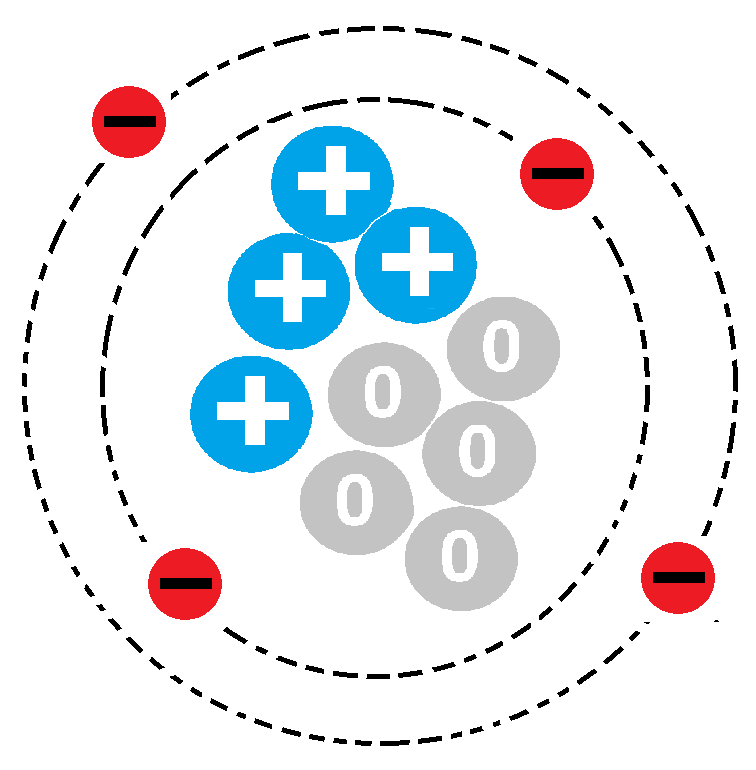
What is the atomic number of this atom?
a)
4
b)
5
c)
9
d)
none of the above
10.
Where are Group 1 elements on the Periodic Table?
a)
Far right
b)
Far left
c)
In the middle
d)
Top, horizontal row
11.
What happens to the density of Group 1 elements as you move down the group?
a)
Increases
b)
Decreases
c)
Stays the same
d)
Increases then decreases
e)
Decreases then increases
12.
Group 1 elements have a high melting point compared to other metals, true or false?
a)
True
b)
False
13.
Potassium is below sodium in Group 1. Will potassium be softer or harder than sodium?
a)
softer
b)
harder
14.
Group 1 elements consist of: lithium, potassium, caesium, rubidium, and francium. Which element have we missed out?
a)
hydrogen
b)
sulfur
c)
manganese
d)
sodium
100 %

