
NEW
Font size
 Worksheets
Atomic Structure/Theory Quiz
Total questions: 19
Worksheet time: 11mins


The name of this particle means indivisible and it is the building block of matter
molecule
compound
atom
isotope
The mass of an atom is
equal to the number of protons
the protons + electrons
the protons + neutrons
the protons + neutrons + electrons
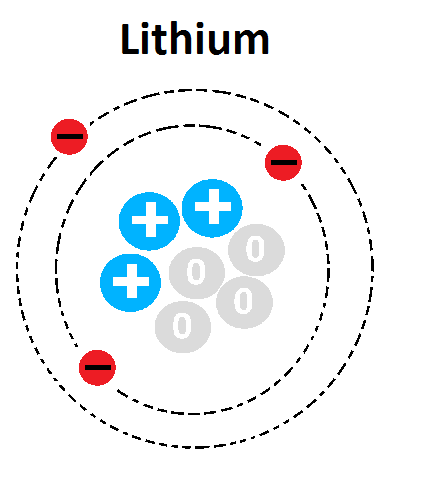
What is the atomic mass of this atom?
1
3
4
7
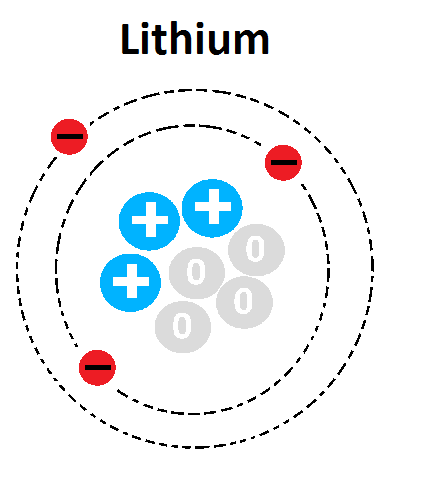
Which scientist is known for his, "Plum Pudding" model of an atom?
JJ Thomson
John Dalton
Ernest Rutherford
Erwin Schrodinger
Rutherford's experiment provided evidence that ___________.
negative and positive charges are spread evenly throughout the atom
Gold is not as dense as previously thought.
Alpha particles have a positive charge.
There is a dense, positively-charged nucleus at the center of the atom.
Which model developed the idea that the atom was "Uncuttable"?
Democritus "Greek Model"
The "Plum Pudding Model"
The "Electron Cloud" Model
The "Simple Sphere" Model
Who believed that the same elements are exactly alike and atoms of different atoms are different?
Bohr
Dalton
Thomson
Rutherford
Who discovered that electrons travel around the nucleus in fixed orbits?
Dalton
Bohr
Schrodinger
Thomson
Which model do we use today?
The Electron Cloud Model
The Plum Pudding Model
The Uncuttable Atom Model
The Gold Foil Model
Which scientist discovered the center of the atom by using the Gold Foil Experiment?
Democritus
Bohr
Schrodinger
Rutherford
Which two scientists models look like spheres (BEFORE the discovery of any subatomic particles)?
Democritus and Dalton
Thomson and Rutherford
Bohr and Schrodinger
SJ and Heft

