
 Worksheets
5.8 (5) Unit 5 Test Major Grade
Total questions: 35
Worksheet time: 1hrs 9mins

What elements generally make an ionic bond ?
Metal and nonmetal
2 or more nonmetals
2 or more metals
2 elements

An ionic bond is formed when
Valence electrons are shared.
Valence electrons surround the cations.
Valence electrons are transferred between atoms.
Valence electrons are completely transferred between two metals.
What is a valence electron?
an electron that is found in the outermost shell of an atom
an electron found in the innermost shell of an atom
an electron found in the middle shell
an electon found in the nucleus

What is the number of valence electrons of Oxygen?
1
2
6
8
What is the number of valence electrons of Neon?
6
7
8
9

Predict the bond that will form between Se and Cl
Ionic-bond
Covalent-bond
Metallic-bond
Hydrogen-bond

Predict the bond formed between Be and F
Covalent-bond
Ionic-bond
Metallic-bond
Hydrogen-bond

Why don't noble gases form bonds?
Noble gases do form bonds
They all have a full octet
They only bond with each other


Name the following ionic compound: BeCl2
beryllium chlorine
beryllium II chloride
beryllium chloride
beryllium dichloride
What is the name of the compound Na2(SO4)?
Sodium sulfate
Sodium sulfide
Sodium sulfite
Sodium sulfuroxide
The name of the compound Ca3(PO4)2
calcium phosphate
tricalcium diphosphate
calcium phosphorus oxide
calcium phosphide
LiBr is called
lithium bromine
lithium (I) bromine
lithium bromide
lithuim (I) bromide

What is the correct name for this compound?
fluorine chlorine
iron chloride
iron(II) chloride
iron(I) chloride

What is the correct name for this formula?
lead(IV) iodide
lead iodide
lead iodine
lead(I) iodide
What is the formula for iron (III) oxide?
FeO
Fe (III) O
Fe2O3
Fe3O2
P₄S₁₀
tetrapotassium decasulfide
phosphorus decasulfide
tetraphosphorus decasulfide
phosphorus (X) sulfide
SO₃
sulfate
sulfur oxide
sulfur trioxide
monosulfur trioxide
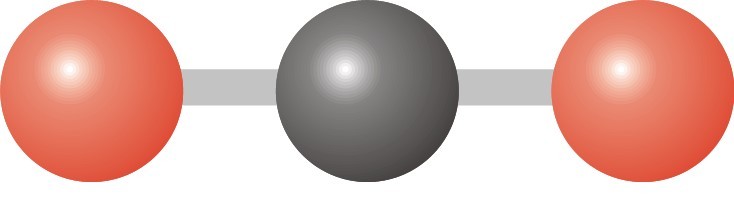
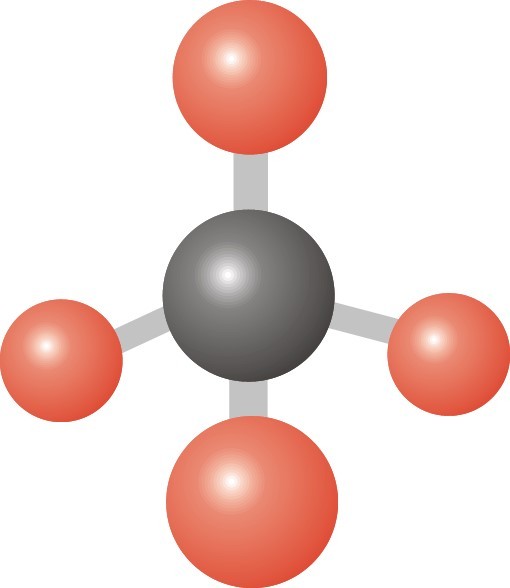
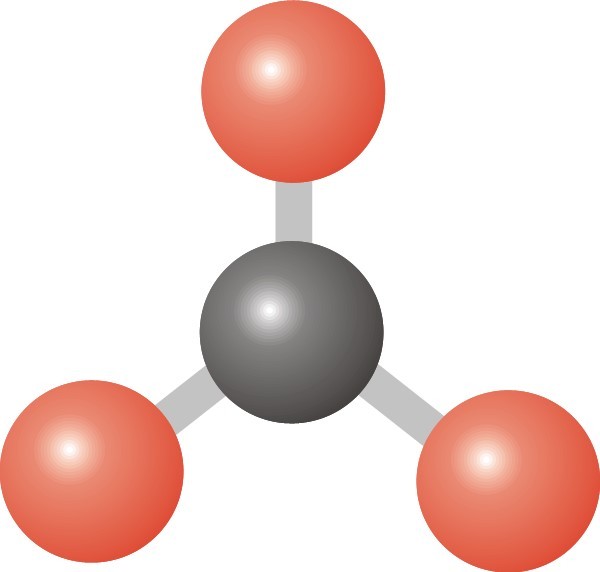

What type of bonding does this picture show?
Ionic
Covalent

What type of bonding does this picture show?
Ionic
Covalent
A metallic bond is a bond between ________.
nonmetals
metals
transition metals
metalloids
Which of the following is NOT a property of metals?
Hard
Can conduct electricity
Very brittle (breaks easily)
Malleable (can bend without breaking)
What do electrons do in a metallic bond?
They stay on the metal atom.
They are transferred from atom to atom.
They form a covalent bond with another atom.
They float around freely.
What is meant by the term "sea of electrons"?
It's what we call all the free floating electrons in a metal.
It's what we call electrons that are floating in a liquid.
It's the total number of electrons in a metal atom.
It's the total number of electrons in the ocean.

