
NEW
Font size
 Worksheets
Ecological relationships - 7th grade
Total questions: 25
Worksheet time: 15mins

What level of organization does this image show?
community
organism
population
biosphere

Which organism is an example of a secondary consumer in this image?
Mouse
Snake
Rabbit
Fox
What kind of consumer breaks down dead plants and animals?
Decomposers
Herbivores
Carnivores
Detritivores
Which of the following is not an example of a limited resource?
Water
Mates
Shelter
Sunlight

Type of relationship: A wolf eating a rabbit.
Predation
Parasitism
Competion
Mutualism
In a predator-prey relationship, when the population of the predator increases, the population of the prey will ____________.
Increase
Remain Stable
Decrease
Change unpredictably


Wasps often lay their eggs just inside the eggs of butterflies. The wasp larva (baby wasps) are able to get lots of nutrients and protection from the butterfly/caterpillar egg while its developing. After the caterpillar is born, the wasps continue lurking in the flesh of the caterpillar, soaking up more nutrients and drinking its blood. The wasp larva must keep its host alive, so it avoids damaging the vital organs.
What type of symbiosis is being described?
Predation
competition
commensalism
parasitism


Birds eating the insects from the back of hippo
Protocooperation

A clownfish uses a sea anenome as a safe place to live. This is an example of what type of relationship?
Inquilinism

When bees land in a flower, they get some pollen on their hairy bodies, and when they land in the next flower, some of the pollen from the first one rubs off, pollinating the plant. This is known as a relationship in which both organisms involved benefit, called:
Protocooperation
Commensalism
Mutualism
Predation

Another word for a plant that makes its own food using energy from sunlight…
photosynthesis
autotroph
heterotroph
carnivore
herbivore
Which term describes this statement: All the populations of all the different species that live together in a particular area
Population
Community
Ecosystem
Predator/Prey
Interspecific relationships happen ( ) species.
between different
within the same

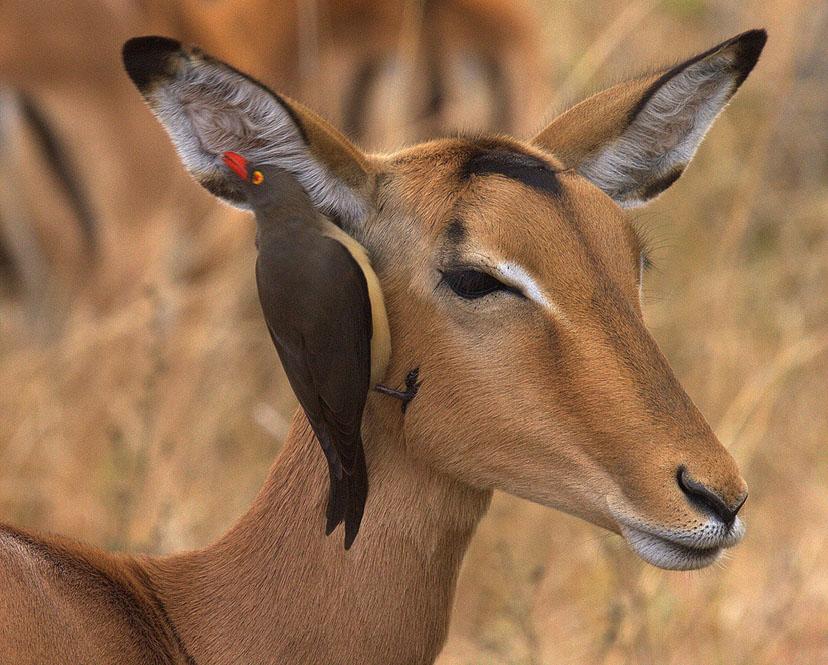
What kind of relationship is shown in this image?
parasitism
commensalism
mutualism

Vines grow on a tree. The vines get light but the tree is not affected. What kind of relationship is this?
Competition
Mutualism
Inquilinism
Protocooperation

The non-living part of the natural environment where an animal, plant or other organism lives…
niche
habitat
community
ecosystem
biosphere
What are the 5 levels of organization from smallest to largest?
biome, organism, community, population, ecosystem
population, biome, ecosystem, organism, community
Organism, population, community, ecosystem, biome
community, population, biome, ecosystem, organism

An alligator is casually suntanning on the edge of a river. A local bird is picking food from between the alligators teeth and cleaning his teeth at the same time. This is an example of...
mutualism
commensalism
protocooperation

Termite colonies have workers, soldiers, and kings and queens with different jobs. What is the ecological relationship?
Societies
![[Practice Test] Skeletal & Muscular Systems](https://cf.quizizz.com/image/image-loader.svg)
