
 Worksheets
Fronts, Air Masses, Pressure Systems
Total questions: 20
Worksheet time: 18mins
A(n) ____ is a large body of air that has the same properties as the Earth's surface over which it develops.
air mass
cloud
tornado
front
What is an air mass?
A large body of air that has a similar wind speed and temperature throughout
A large body of air that has a similar air pressure and temperature throughout
A large body of air that has a similar water content and air pressure throughout
A large body of air that has a similar temperature and water content throughout

What type of front is represented in this picture?
Cold Front
Occluded Front
Stationary Front
Warm Fronts

What front does this symbol represent?
Cold Front
Occluded Front
Stationary Front
Warm Front

What front does this symbol represent?
Cold Front
Occluded Front
Stationary Front
Warm Front

What front does this symbol represent?
Cold Front
Occluded Front
Stationary Front
Warm Front
Which front is likely to produce thunderstorms?
Cold Front
Occluded Front
Stationary Front
Warm Front

What type of front does this symbol indicate?
Warm Front
Cold Front
Stationary Front
Occluded Front
Air masses are characterized by what two factors?
Humidity and Air Pressure
Air Pressure and Temperature
Temperature and Precipitation
Temperature and Humidity
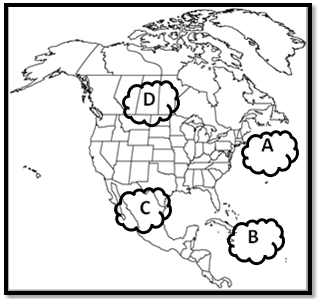
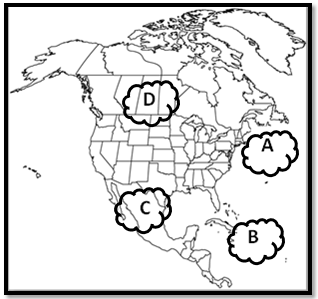
Precipitation and storms occur ____.
in high-pressure systems
in polar zones
in low-pressure systems
at fronts

What are thunderstorms?
a storm with thunder and lighting and typically also heavy rain or hail
a storm with high winds and heavy snowfall.
a mobile, destructive vortex of violently rotating winds having the appearance of a funnel shaped cloud and advancing beneath a large storm system.
a huge storm with strong winds and storm surges
In a tornado the air is in contact with both the surface of the Earth and a
Stratus Cloud
Altostratus cloud
Cumulonimbus cloud
Cirrus cloud
What kind of clouds can form thunderstorms?
Nimbostratus clouds
Altostratus clouds
Stratus clouds
Cumulonimbus clouds

