
NEW
Font size
 Worksheets
Unit 2: States of Matter
Total questions: 33
Worksheet time: 1hrs 2mins
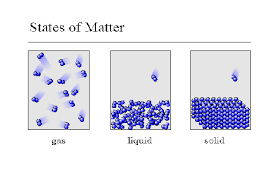
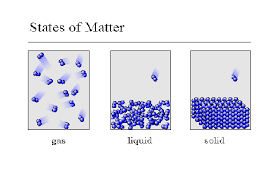
___________ is anything that has mass and takes up space.
Molecules
Matter
Volume
________ is the amount of space an object takes up.
Mass
Matter
Volume
Which state of matter does not have a definite shape but does have a definite volume?
Solid
Liquid
Gas
What is the process called when a gas turns into a liquid?
Condensation
Melting
Freezing
Evaporation
What is the process called when a solid changes to a liquid?
Freezing
Evaporation
Melting
Condensation
What is the process called when a liquid changes into a gas?
Freezing
Evaporation
Melting
Condensation
How many elements are in this chemical formula?
NaOH
1
2
3
4
How many elements are in this formula?
Li2O
1
2
3
4
What is the chemical symbol for Hydrogen
H
He
Hy
Hg
What element has the symbol Al
Argon
Aluminium
Silver
Gold
What is the symbol for Carbon
Ca
C
Co
Cr
What is the symbol for Potassium
P
Po
K
Pt
What is a compound?
A molecule that is formed from two different elements/atoms.
A molecule that is formed from two or more of the same element/atom.
A tiny atom that makes up an atom.
The center of an atom that is formed by neutrons. protons, and electrons.
If a compound has 12 carbon atoms, 22 hydrogen atoms, and 11 oxygen atoms, its chemical formula must be...
12C22H11O
C12H22O11
C11H22O12
2C11H22O12
CaF2- name?
calcium fluorate
calcium fluoride
fluoride calcite
fluorine calciumate
Na2SO4- name?
sulfur sulfate
sodium sulfide
sodium sulfate
sodium oxygenate
HCl- name?
hydrogen chloride
chlorine hydrogen
hydrogen chlorine
hydrogen chlorate
MgO- name?
oxygen magnesium
magnesium oxide
magnesium oxate
magnesium oxygenate
The change of state from a liquid to a gas at a specific temperature
boiling point
thermal conductivity
malleability
melting point
the change of state from a solid to a liquid at a specific temperature
boiling point
thermal conductivity
malleability
melting point

A substance has a melting point of 25 oC and a boiling point of 235 oC. What state is it at 5oC?
Solid
Liquid
Gas

If the temperature is above the melting point of a substance and above the boiling point of a substance what state will it be in?
Solid
Liquid
Gas
The periodic table is arranged in order of...
increasing atomic number
increasing atomic mass
decreasing atomic mass
decreasing atomic number
Groups on the periodic table are arranged...
vertically
horizontally
diagonally
Periods on the periodic table are arranged...
vertically
horizontally
diagonally



