
 Worksheets
SCIENCE-REVIEW SEM1
Total questions: 88
Worksheet time: 2hrs 31mins
Light travels in a
curvy line
zig zag line
straight line
downward motion

Which answer describes what happens to the light beam as it interacts with each object?
1. reflected
2. absorbed
3. refracted
1. refracted
2. absorbed
3. reflected
1. absorbed
2. reflected
3. refracted
1. absorbed
2. reflected
3. scattered
Light passing through a lens and making an object enlarged is called-
reflection
refraction
scattered
absorbed
Light passing through a lens and making an object enlarged is called-
reflection
refraction
scattered
absorbed

Which of the following represents the material that allows light to pass through?
1. Transparent
2. Translucent
3. Opaque
1. Clear
2. Foggy
3. Translucent
1. Translucent
2. Transparent
3. Opaque
1. Opaque
2. Transparent
3. Translucent
Which of these best demonstrates the reflection of light?
Looking through the glass of a large window
Looking at a lightbulb that is glowing
Looking at an image formed on a silver spoon
Looking at a star on a clear night

When light travels through air into a prism, it bends and separates into many colors. Which term describes how the light bends?
The light is absorbed by the prism.
The light is reflected by the prism.
The light is transformed by the prism.
The light is refracted by the prism.
Which of these best demonstrates the refraction of light?
Looking through a telescope at night.
Looking in the mirror.
Seeing yourself on your phone screen.
Watching a laser bounce off of a smooth surface.

Which of the following explains they the swimmer's bodies appear to not line up with their heads?
Light travels in a straight line and is reflected off the surface.
Light travels through one medium into another and is refracted.
Light travels in a straight line and is refracted off the surface.
Light travels through one medium into another and is reflected.
1. When light bounces it is-
2. When light bends it is-
1. Reflection
2. Refraction
1. Refraction
2. Reflection
1. traveling in a curvy path.
2. traveling in a circular path.
1. absorbed
2. scattered
Transparent means...
Almost all light is transmitted through.
Some light is transmitted and some is reflected
No light is transmitted- it is either absorbed or reflected
Translucent means...
Almost all light is transmitted through.
Some light is transmitted and some is reflected
No light is transmitted- it is either absorbed or reflected
Opaque means...
Almost all light is transmitted through.
Some light is transmitted and some is reflected
No light is transmitted- it is either absorbed or reflected
Classify the objects according to what happens when light hits them:
A basketball
Transparent
Opaque
Translucent
Classify the objects according to what happens when light hits them:
Air
Transparent
Opaque
Translucent
Classify the objects according to what happens when light hits them:
Bubble wrap
Transparent
Opaque
Translucent
Classify the objects according to what happens when light hits them:
shallow water
Transparent
Opaque
Translucent
Classify the objects according to what happens when light hits them:
lightweight cotton fabric
Transparent
Opaque
Translucent
Classify the objects according to what happens when light hits them:
block of wood
Transparent
Opaque
Translucent
Luminous means...
Emitting light
Reflecting light
Luminous or not?
the star Betelgeuse
Luminous
Not luminous
Luminous or not?
the Moon
Luminous
Not luminous
Luminous or not?
Lightning
Luminous
Not luminous
Luminous or not?
fireworks
Luminous
Not luminous
Luminous or not?
the planet Venus
Luminous
Not luminous
True or False?
Light is refracted away from the normal when it passes from glass into air.
True
False
True or False?
Light travels at a higher speed through water compared to air.
True
False
True or False?
Light travels at a higher speed through water compared to air.
True
False
True or False?
Plane mirrors reflect images that are laterally inverted.
True
False
True or False?
Reflection is the bending of light.
True
False
True or False?
Refraction is the bending of light.
True
False

True or False:
The angle of incidence and the angle of reflection are the same.
True
False
True or False:
Light travels from the reflected ray.
True
False
True or False:
Light is reflected at the same angle it hits the reflective surface.
True
False

Light travels in...
Electromagnetic waves
Longitudinal Waves
Transverse Waves
Heat Waves
Light travels in...
Electromagnetic waves
Longitudinal Waves
Transverse Waves
Heat Waves

What is happening in this picture?
Reflection
Refraction
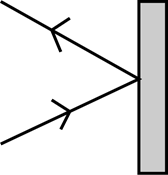
In the illustration, the light ray striking the object is-
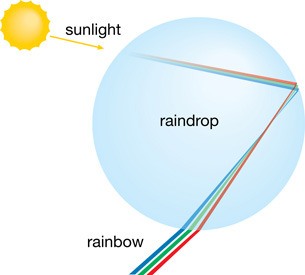

What color is being reflected?
green
blue and yellow
red, orange, yellow, blue, indigo, violet

The bouncing of light off an object
basketball
refraction
reflection
echo

What happens to light passing through a hand lens that makes the image of the penny appear larger? The light is-
Light is a form of
energy
heat
electricity
power
__________________ is when light hits an object and bounces back.
Translucent
Reflection
Refraction
Absorption
Light travels in a _________________ line.
straight
curved
squiggly
dotted
Materials that do not allow light to pass through them are called _________________.
translucent
opaque
transparent
refraction
Materials that allow all of the light to pass through them are called ____________.
transparent
opaque
reflection
translucent
Materials that only allow some of the light to pass through them is called _____________.
opaque
absorption
translucent
transparent

The door is an example of a/an ___________ object.
translucent
opaque
refractive
transparent

The drinking glass is an example of a/an _________ object.
opaque
translucent
reflective
transparent
The Law of Reflection states that the angle of incidence is equal to the ______________.
amount of light emitted from the light source
angle of reflection
angle of refraction
the amount of light that is absorbed by the object


What is being transferred with a wave?
matter
medium
energy
water
Which of the following properties makes a light wave different from a mechanical wave?
A light wave slows down in a vacuum
A light wave is able to transmit energy
A light wave exists as a transverse wave
A light wave can travel without a medium
What causes the refraction of a wave?
the density of the medium can change the speed
the amount of the medium changes the direction
What color do we see when all light is refracted?
red
black
white
rainbow
A reflected light ray makes an angle of 60 degrees with a mirror's surface. What angle did the incoming light ray form with the mirror's surface?
30
60
90
180
Which determines the color of an object?
Absorption
Diffraction
Reflection
Refraction
Which type of wave is light?
Diffusion
Transverse
Longitudinal
Compression
Which object will absorb the most light?
Clear glass
Black paper
Plastic Wrap
Stained Glass
An object that absorbs all the colors in the visible spectrum will appear?
invisible
red
black
white
Light waves cannot travel completely through the following?
Air
rock
water
vacuum
Which of the following can be used to magnify an image?
Concave lens
Convex lens
Convex mirror
concave mirror
Telescopes that use mirrors are called _____.
Diffraction
Reflecting
Refracting
Diffusion
When a light wave is refracted and its moving from liquid to gas, its speed will ____.
increase
decrease


The above lens is a type of ___.
diverging lens
converging lens
divergent lens
convergent lens
Which lens represents the path light takes through a diverging lens?


Which figure represents the path light takes through a converging lens?
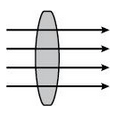
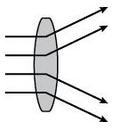
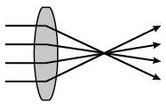
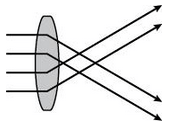
Which optical device bends light inward?
convex lens
concave lens
plane mirror
convex mirror

What type of lens is used in the shown instrument?
concave lens
convex lens
reflection lens
reduction lens

What type of lens creates the image seen in the eyeglasses?
convex
concave
reflection
plane
A lens that is thicker in the middle than on the outside is called ___.
diverging
concave
convex
achromatic
A lens that is thinner in the middle than on the outside is called ___.
diverging
concave
convex
achromatic
What word means to bend light rays toward each other?
Converging light
Diverging light
Virtual Light
Real Light
Which lens is used as a reading mirror? (TYPE JUST THE NAME OF THE LENS)
(a)
what type of lens will it be if it has magnification as +3?
convex mirror
convex lens
concave mirror
concave lens?

