
 Worksheets
WH Unit 7 Quiz Review (Cold War)
Total questions: 21
Worksheet time: 11mins

True or False: The arms race refers to the competition between the US and the USSR for weapon superiority. / Verdadero o Falso: La carrera armamentística se refiere a la competición entre EEUU y la URSS por la superioridad armamentística.
True / Verdadero
False

The Cold War is defined as? / La Guerra Fría se define como?
a period of tension between the US and USSR after WWII / periodo de tensión entre EE.UU. y la URSS tras la Segunda Guerra Mundial
a period of tension between the US and China after the Vietnam War / un periodo de tensión entre EE.UU. y China tras la guerra de Vietnam
a period of tension between Japan and China after WWII / un periodo de tensión entre Japón y China tras la Segunda Guerra Mundial
a period of tension between the Soviet Union and China after the Korean War / un periodo de tensión entre la Unión Soviética y China tras la Guerra de Corea

Communism can be defined as? / El comunismo puede definirse como?
"what is good for one is good for all" / "lo que es bueno para uno es bueno para todos"
property is owned by an private individual who works for their own wealth / la propiedad es de un particular que trabaja para enriquecerse
all property is publicly owned and each person works for the state / toda la propiedad es pública y cada persona trabaja para el estado

Which term describes the idea of deterrent (not attacking one another)? / ¿Qué término describe la idea de disuasión (no atacarse unos a otros)?
Red Guards / Guardias rojos
Mutually Assured Destruction / Destrucción mutua asegurada
Decolonization / Descolonización
Arms Race / Carrera armamentística

These two superpowers in the Cold War were? / Estas dos superpotencias de la Guerra Fría eran?
China & Vietnam / China y Vietnam
USSR & China / URSS y China
USA & China / Estados Unidos y China
USA & USSR / EE.UU. Y URSS

This was the code name for the development of the nuclear bomb during WWII? / ¿Este era el nombre en clave para el desarrollo de la bomba nuclear durante la Segunda Guerra Mundial?
Manhattan project / Proyecto Manhattan
San Francisco Project / Proyecto San Francisco
Red Guards / Guardias rojos
The Bunker Project / El proyecto Bunker

Which statement best describes the two main reasons for the Cold War? ¿Qué afirmación describe mejor las dos razones principales de la Guerra Fría?
the spread of Democracy and the Vietnam War / la expansión de la democracia y la guerra de Vietnam
the spread of Socialism and the space race / la expansión del socialismo y la carrera espacial
the spread of Communism, and the development of a nuclear bomb / la expansión del comunismo y el desarrollo de una bomba nuclear
the death of Mao Zedong and the creation of the North Korean state / la muerte de Mao Zedong y la creación del Estado norcoreano

True or False: Karl Marx was responsible for writing The Communist Manifesto. / Verdadero o Falso: Karl Marx fue el responsable de escribir El Manifiesto Comunista.
True
False

These conferences at the end of WWII helped to determine how to rebuild Europe? / Estas conferencias al final de la Segunda Guerra Mundial ayudaron a determinar cómo reconstruir Europa?
Paris & Berlin / París y Berlín
Yalta & Potsdam / Yalta y Potsdam
Nuremburg & Yalta / Nuremberg y Yalta
Volga & Potsdam / Volga y Potsdam

East Berlin was controlled by the Soviets. Life was ______________ because the Soviets controlled the _________________. / Berlín Este estaba controlado por los soviéticos. La vida era ______________ porque los soviéticos controlaban _________________.
Peaceful, Border / Pacífica, Fronteriza
Difficult, Economy / Difícil, Economía
Easy, Nightlife / Fácil, Vida nocturna

A war that is fought by a 3rd party on behalf of a larger country is called? / Una guerra librada por una tercera parte en nombre de un país más grande se denomina?
Spanish American War / Guerra Hispanoamericana
Proxy War / Guerra de poderes
WWII
WWI

After WWII, Berlin was divided into 2 parts. The Soviets controlled this half? / Tras la Segunda Guerra Mundial, Berlín se dividió en 2 partes. Los soviéticos controlaban esta mitad?
East / Este
West / Oeste
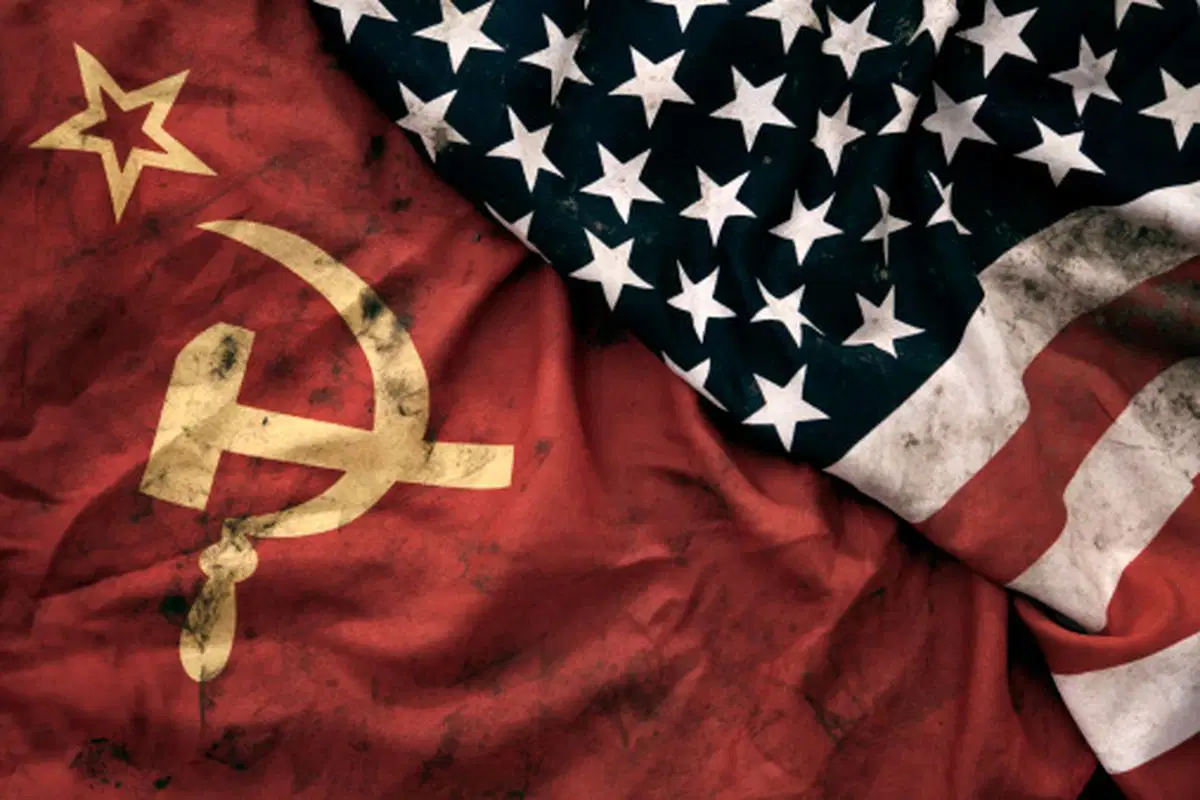
The political balance of power that existed during the Cold War was between which of the following systems? / El equilibrio de poder político que existía durante la Guerra Fría se daba entre ¿cuál de los siguientes sistemas?
Socialism and Fascism / Socialismo y fascismo
Communism and Fascism / Comunismo y fascismo
Communism and Democracy / Comunismo y democracia
Socialism and Totalitarianism / Socialismo y totalitarismo
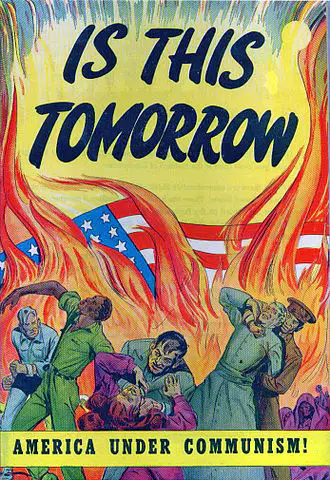
The US policy to prevent the spread of communism abroad is refereed to as... / La política estadounidense para impedir la expansión del comunismo en el extranjero se denomina...
Brinkmanship
Imperialism / Imperialismo
Appeasement / Apaciguamiento
Containment / Contención

This cartoon is trying to convey which topic? / ¿Qué tema intenta transmitir este dibujo animado?
An arms race between the U.S. and Russia is threatening the world. / Una carrera armamentística entre Estados Unidos y Rusia amenaza al mundo.
The world is trying to build more weapons to match the U.S. and Russia. / El mundo intenta construir más armas para igualar a EE.UU. y Rusia
The U.S. and Russia are trying trying to make to the moon first./ Estados Unidos y Rusia intentan llegar primero a la Luna.
The world is being convinced to support the United States. / Se está convenciendo al mundo de que apoye a Estados Unidos.
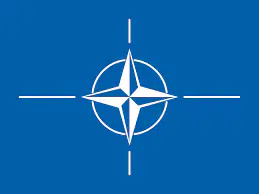
Which term refers to the alliance between the US and Western European countries? / ¿Qué término hace referencia a la alianza entre Estados Unidos y los países de Europa Occidental?
NATO / OTAN
Warsaw Pact / Pacto de Varsovia
United Nations / Naciones Unidas
Satellite Nations / Naciones satélite

Winston Churchill's term used to describe the division in Europe after WWII was called? / El término utilizado por Winston Churchill para describir la división en Europa tras la Segunda Guerra Mundial se llamaba?
Communist Curtain / Telón comunista
Solid Division / División Sólida
Steel Wall / Pared de acero
Iron Curtain / Telón de acero

This economic system is based on competition, profits, and self-interest. / Este sistema económico se basa en la competencia, los beneficios y el interés propio.
Socialism / Socialismo
Communism / Comunismo
Capitalism / Capitalismo
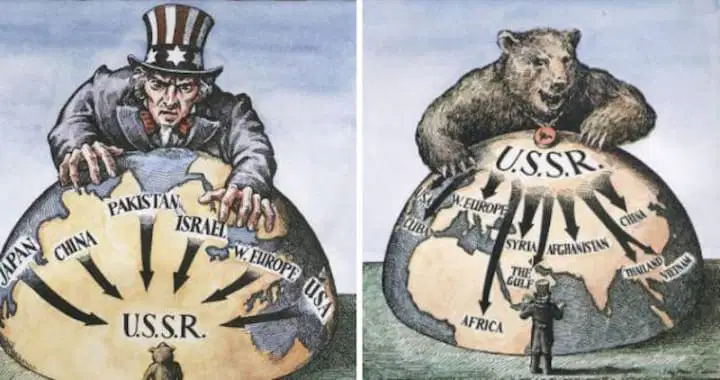
What symbol in this political cartoon represents the Soviet Union? / ¿Qué símbolo de esta viñeta política representa a la Unión Soviética?
Bear / Oso
Uncle Sam / Tío Sam
Globe / Globo

The Korean War ended? / ¿Terminó la guerra de Corea?
at the 38th parallel with no clear winner / en el paralelo 38 sin un claro vencedor
with a defeat of the North Koreans / con una derrota de los norcoreanos
with a defeat of the South Koreans / con una derrota de los surcoreanos
with the defeat of Japan / con la derrota de Japón

What ended the Cuban Missile Crisis? / ¿Qué puso fin a la crisis de los misiles en Cuba?
The USSR removes missiles and the US leaves Cuba alone. / La URSS retira los misiles y EE.UU. deja en paz a Cuba
The US uses all of their missiles and destroys Cuba / EEUU usa todos sus misiles y destruye Cuba
Cuba forfiets
JFK got tired of fighting and just made a treaty / JFK se cansó de luchar y simplemente hizo un tratado

