
 Worksheets
Heat transfer review
Total questions: 20
Worksheet time: 17mins
Energy that transfers from high temperature to low temperature is called (a)

A person is stuck in snow. What will happen?
Heat moves from snow to person.
Cold moves from snow to person.
Heat moves from person to snow.
Both the person and snow lose heat.
Something that allows heat to easily move is called a (a) (conductor/insulator)

Heat was lost from two cups and the temperature of each cup is graphed below. Which cup is a better insulator?
Red cup
Blue Cup

Heat transfer by a circulating liquid or gas is (a) (conduction / convection / radiation)

Heat transfer by light or other electromagnetic waves is called (a) (conduction / convection / radiation)

Heat transfer by direct contact of the particles of matter is called (a) (conduction / convection / radiation)

Heat transfers from hot to cold until the objects reach_________ (select TWO ANSWERS)
A high temperature
A low temperature
An equal and middle temperature.
Thermal equilibrium
Which object will have molecules with higher average kinetic energy?
a 100°C cup of water
a 60° cup of water
A 80° pool of water
A block of ice.

How does the thermal energy of a cup of milk compare to a bottle of milk if they are at the same temperature?
They have the same thermal energy.
They would both have no thermal energy.
The cup has more thermal energy.
The bottle has more thermal energy.
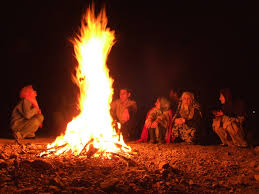

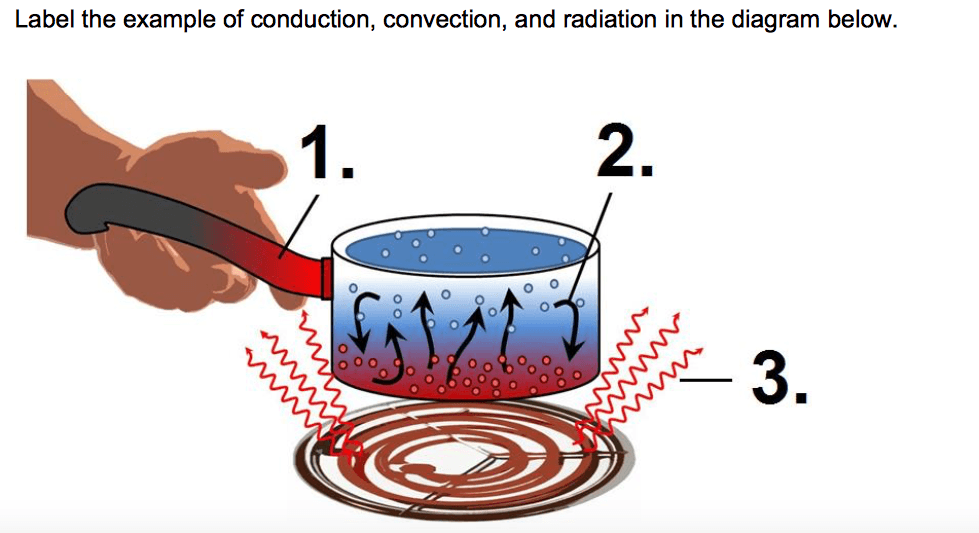
What type of thermal energy transfer is number 1 pointing to?
Convection
Conduction
Radiation
Insulation
Which phase changes require adding heat to a substance. Select ALL THAT APPLY.
Melting
Evaporating
Freezing
Condensing
Boiling

Look carefully at the image. Which glass of milk has the most thermal energy?
A
B
They have equal amounts of thermal energy.
What happens when molecules reach absolute zero?
The molecules move and stop alternately.
The molecules stop moving.
The molecules start moving.
The molecules continue to move.
The __________ scale is based on where water freezes at 0 and boils at 100.
Rankine
Fahrenheit
Celsius
Kelvin

