wayground logo

Free Printable Worksheets

Font size

S
M
L
XL
Worksheets

Benchmark Winter Review 2022

Total questions: 189

Worksheet time: 3hrs 36mins

Name
Class
Date
1.

What would you be measuring if you had the object's speed and direction

a)

momentum

b)

velocity

c)

force

d)

weight

2.

What factor will slow down an object moving through space?

a)

air resistance

b)

friction

c)

another object

d)

gravity

3.

What is the change in velocity divided by time?

a)

momentum

b)

force

c)

speed

d)

acceleration

4.

Charged particles exibit what kind of force?

a)

contact force

b)

electromagnetic force

c)

gravitational force

d)

frictional force

5.

The force of gravity is dependent on an object's ________.

a)

mass

b)

volume

c)

temperature

d)

speed

6.

Newton's second law states that greater the mass the more _________ will be needed to move the object.

a)

power

b)

force

c)

distance

d)

speed

7.

force equals mass times .......

a)

speed

b)

acceleration

c)

velocity

d)

momentum

8.

If you multiple velocity by mass you will get the object's .....

a)

acceleration

b)

force

c)

speed

d)

momentum

9.

If a speed boat is traveling at a constant rate and hits a large wave, how would the boat respond?

a)

It would keep going straight

b)

it would go backward a bit

c)

It would go forward a bit

d)

It would stop

10.

If I threw a rock in space what force would be acting against it?

a)

gravity

b)

friction

c)

electromagnetism

d)

nothing

11.
What is the unit to MEASURE force?
a)
Kilogram
b)
Meter
c)
Pascal
d)
Newton
12.
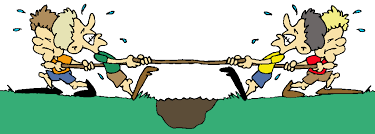
If these teams are pulling with the same amount of force what will happen?
a)
The boy in blue will win.
b)
They will not move at all.
c)
The boy in red will win.
d)
Both will fall down.
13.
The equation to calculate momentum is
a)
p=mv
b)
p=1/2mv2
c)
p=mgh
d)
p=mg
14.
Which has more momentum: a car stopped at a red light or a bike moving at 15 mph?
a)
car
b)
bike
c)
they are equal
d)
cannot determine using the info provided
15.
65mi/hr South is an example of...
a)
Speed
b)
Velocity
c)
Acceleration
d)
Direction
16.
If you increase the mass on an object, its acceleration
a)
decreases
b)
stays the same
c)
also increases
d)
stops
17.
What are Newton's 3 Laws? 
a)
Law of Action-Reaction, Law of Inertia and Law of Velocity
b)
Law of Speed, Law of Action-Reaction, Law of Force and Acceleration
c)
Law of Inertia, Law of Force and Acceleration, and Law of Action-Reaction
d)
Law of Mass and Acceleration, Law of Action-Reaction, and Law of Inertia
18.
Acceleration: is the rate of change in ___________.
a)
speed
b)
distance
c)
velocity 
d)
displacement 
19.
Newton's third law states that any action will have a(n) _______ and ______ reaction
a)
Equal and similar
b)
Equal and opposite
c)
Equal and different
d)
Greater and opposite
20.
the tendency of an object to resist a change in its motion
a)
acceleration
b)
inertia
c)
mass
d)
frame of reference
21.
Two girls are pulling on opposite ends of a thick rope. Both girls pull on the rope with the same force but in opposite directions. If both girls continue to pull with the same force, what will most likely happen? 
a)
One girl will pull the other toward her.
b)
Both girls will stay in the same place. 
c)
Gravity will cause the rope to sag. 
d)
The rope will break.
22.
When a bird flies, its wings push air downward. As a result the air pushes back upward on the bird. Which law of motion most applies to the way the wings of a bird beat? 
a)
Every action has an equal and opposite reaction
b)
The rate of acceleration of an object depends on the amount of force applied.
c)
Objects in motion tend to remain in motion until acted upon by an another force. 
d)
Force is defined by mass times acceleration
23.
A student walking quickly while carrying an orange on his lunch tray stops suddenly. The orange will most likely roll off the tray due to
a)
inertia of the orange. 
b)
centripetal force of the orange
c)
the friction acting on the orange.
d)
the balanced forces acting on the orange.
24.
 Alesia is taking an all­ day ride on her bicycle. The graph shows how far she is from home at different times during her ride.  During which time period is Alesia moving fastest?
a)
0–1 hours 
b)
3–4 hours 
c)
4–5 hours
d)
6–7 hours 
25.
Angela blows air into a balloon and holds the end of it closed with her fingers. When she lets go of the end of the balloon, Angela observes that the release of the air propels the balloon.  The propelling of the balloon from the release of the air is an example of which of Newton’s laws? 
a)
The force of an object is the product of its mass multiplied by its acceleration. 
b)
 A force of attraction exists between any two objects with mass. 
c)
 For every action, there is an equal and opposite reaction.
d)
An object in motion tends to stay in motion unless an unbalanced force acts upon it. 
26.
The graph shows the motion of four cars. All four cars are moving east.   
Which car has a constant velocity? 
a)
1
b)
2
c)
3
d)
4
27.
A student reads his paper on friction to the class. Which statement should he include in his paper if he wants to present accurate information? 
a)
Friction increases mechanical advantage
b)
Friction opposes the direction of movement. 
c)
Friction makes movement of an object easier.
d)
Friction reduces the amount of work used to move an object. 
28.
Kilometers per hour (kph) is a unit that describes which of the following?
a)
velocity
b)
direction
c)
position
d)
speed
29.
What is speed?
a)
Speed is how far something travels in one hour.
b)
Speed is how fast it takes something to travel a set distance
c)
Speed is the distance something travels in a set amount of time.
d)
Speed is the change in velocity of something.
30.
When an object's distance from another object is changing, the object is .... 
a)
under pressure.
b)
 in motion
c)
not moving.
d)
changing reference point.
31.
An airplane travels at 50 meters in 2 seconds. What is its average speed? 
a)
25 miles per hour
b)
100 miles per hour
c)
25 meters per second
d)
100 meters per second
32.
Which of the following is an example of acceleration?
a)
A book laying on a table
b)
An airplane moving at a constant speed of 500 mph in a straight line
c)
A race car going into a curve
d)
An object at rest
33.
 If an unbalanced force acts on a stationary object, the object will:.
a)
remain stationary
b)
move away from the force
c)
accelerate in the direction of the force
d)
accelerate in the opposite direction of the force
34.
If no force is being applied to a stationary object, the object will...
a)
remain stationary.
b)
accelerate in the direction of the force.
c)
move at a constant speed in the direction of the force.
d)
accelerate in the opposite direction of the force
35.
A helicopter ambulance flew from one hospital to another in a straight line. The pilot had to  change speed several times due to the presence of other aircraft. 
What was the average speed of the helicopter during the trip? 
a)
2.0 km/min 
b)
2.5 km/min
c)
4.0 km/min
d)
7.5 km/min
36.

The motion of atoms or molecules within a substance

a)

temperature

b)

thermal energy

c)

kinetic energy

d)

solid

37.

The average kinetic energy of the atomes or molecules within a substance.

a)

thermal energy

b)

kinetic energy

c)

temperature

d)

gas

38.

energy of motion

a)

thermal energy

b)

sondensation

c)

water vapor

d)

kinetic enetgy

39.

matter in which atoms are closely spaced and vibrate in a fixed position.

a)

solid

b)

liquid

c)

gas

d)

water vapor

40.

Matter in which atoms are constantly moving around and bumping into each other.

a)

mass

b)

gas

c)

liquid

d)

solid

41.

Matter in which atoms vibrate so much that they are far apart.

a)

liquid

b)

solid

c)

gas

d)

thermal energy

42.

Water in gas form

a)

water vapor

b)

solid

c)

kinetic energy

d)

heat

43.

The process when matter loses thermal energy and changes from a gas to a liquid.

a)

thermal energy

b)

kinetic energy

c)

temperature

d)

condensation

44.

The transfer of thermal energy from a hotter area to a colder area.

a)

liquid

b)

heat

c)

kinetic energy

d)

water vapor

45.

A process that creates new substances from existing substances and can absorb or release thermal energy

a)

chemical reaction

b)

thermal energy

c)

temperature

d)

kinetic energy

46.
Engineers are people who design and build things to solve _____
a)
riddles
b)
puzzles
c)
crosswords
d)
problems
47.
When they're trying to solve a problem, engineers follow a series of _____
a)
steps
b)
problems
c)
solutions
d)
tests
48.
When solving problems, the series of steps that engineers follow is called _____
a)
the engineering method
b)
the engineering process
c)
the engineering problem
d)
the scientific method
49.
Before you can solve a problem, the first thing you have to do is _____
a)
define the problem
b)
design your solution
c)
build a protoype
d)
test your solution
50.
A simple model that lets you test out your design is called _____
a)
protoplasm
b)
an archetype
c)
a prototype
d)
a proton
51.
To see if it works like they want it to, engineers need to _____
a)
do their research
b)
design their solution
c)
define their problem
d)
test their solution
52.
A lot of time and brainpower goes into the very last step: _____
a)
evaluating your solutions
b)
design your solution
c)
build a prototype
d)
test your solution
53.
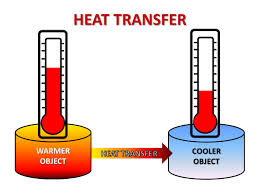
Heat transfer in the image.
a)
conduction
b)
convection
c)
radiation
54.
Heat transfer in boiling water.
a)
Conduction
b)
Convection
c)
Radiation
55.
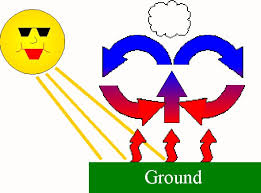
The heat transfer in the image is by
a)
convection
b)
conduction
c)
radiation
56.
On a cold rainy day a baby is touching a cold window.  It feels so cold. Which way is the heat moving moving? 
a)
Cold is moving from the window to the hand.
b)
Heat is moving from the hand to the window.
c)
Heat doesn't move.
d)
It moves in currents
57.
Heat transfer in wind.
a)
conduction
b)
convection
c)
radiation
58.
Which ice cube will melt first?
a)
The large cube
b)
The small cube
c)
They will melt at the same rate
59.
When you use a microwave, what is the main way that heat is transferred?
a)
Convection
b)
Conduction
c)
Radiation
60.
The Gulf Stream is a current that brings warm ocean water from the south to the north. What type of heat transfer is this?
a)
conduction
b)
convection
c)
radiation
d)
insulation 
61.
Heat transfers from an area of ____temperature to an area of ___ temperature.
a)
high to low
b)
low to high
c)
high to high
d)
It can travel high to low and low to high. 
62.
The baby chickens are kept warm from the heat lamps demonstrates this type of heat transfer. 
a)
conduction
b)
convection
c)
radiation
63.
Warm air rises and the cool air sinks demonstrates this type of heat transfer. 
a)
conduction
b)
convection
c)
radiation
d)
Insolation 
64.
An iron bar is placed in a flame, as shown, and is heated until the end glows.The other end of the iron bar soon becomes hot, too.  Which of the following statements best describes why the iron bar becomes hot to the touch?
a)
a convective flow of energy is set up inside the iron bar.
b)
energy is conducted from atom to atom along the length of the iron bar.
65.
Heat transfer occurs
a)
in many directions
b)
both from warm objects to colder ones and from cold objects to warmer ones.
c)
only from warm objects to colder ones.
d)
only from cold objects to warmer ones.
66.
A cup of tea with a temperature of 80 degrees Celsius is placed on a table in a 20 degree Celsius room.  What happens to the thermal energy and the molecular motion of the tea when it is left on the table?
a)
The thermal energy increases and the molecules move faster.
b)
The thermal energy decreases and molecules move more slowly.
c)
The thermal energy increases and the molecules move more slowly.
67.
A student touches a metal sink with her finger and notices that her finger feels cold.  Which of the following statements explains this observations?
a)
Heat energy flows from the student's finger to the metal.
b)
Heat energy flows from the metal sink to the student's finger.
c)
The student's finger was originally at the same temperature as the sink.
68.
Measurements inside a sealed container show that the pressure exerted by a gas increases as the thermal energy of the gas increases.  Which of the following best explains this pressure increase?
a)
The gas molecules stick to the walls of the container.
b)
The gas molecules begin to bond together into heavier molecules.
c)
The gas molecules move faster and strike the container walls more frequently.
69.
The average distance between molecules always increases during which of the following phase changes?
a)
gas to solid
b)
gas to liquid
c)
liquid to gas
d)
liquid to solid
70.

At which point is potential energy greatest?

a)

W

b)

X

c)

Y

d)

Z

71.
What kind of energy is in a moving skateboard?
a)
Potential
b)
Kinetic
c)
Both potential and kinetic energy
d)
none of the above
72.
What kind of energy is in a rock at the edge of a cliff?
a)
Potential
b)
Kinetic
c)
Both potential and kinetic energy
d)
none of the above
73.
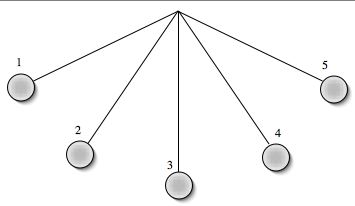
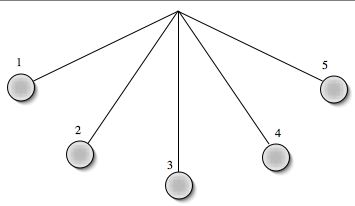
When a pendulum swings, at which point is kinetic energy highest?
a)
1
b)
2
c)
3
d)
4
74.

An object falling from 50m will have ___________ potential than an object falling from

30m.

a)

greater

b)

less

c)

equal

75.

A diver just before she dives off the 30m platform.

a)

potential energy

b)

kinetic energy

76.

A bobsled is moving at its fastest speed around the final

turn.

a)

potential energy

b)

kinetic energy

77.

A baseball just before being released by the pitcher.

a)

potential energy

b)

kinetic energy

78.

A golf ball as it gains height after being hit by the driver.

a)

potential energy

b)

kinetic energy

79.

A swimmer in the middle of a 50 m race.

a)

potential energy

b)

kinetic energy

80.
How does potential energy become kinetic energy?
a)
When something hot touches something cool, the potential energy in the hot object is turned into kinetic energy in the cool object
b)
When an outside force acts upon an object with potential energy, that force turns the potential energy into kinetic energy
c)
Potential energy becomes kinetic when an object remains in place and continues to build up more and more energy
d)
Potential energy has no relation to kinetic energy
81.
What is chemical energy?
a)
the potential energy in chemical compounds that is waiting to be released
b)
energy that is formed or caused by movement
c)
the movement of electrons throughout the world
d)
energy from the Sun or any other light source
82.

A girl sliding down a slide

a)

Kinetic Energy

b)

Potential Energy

83.

Dominos stand up on the floor

a)

Potential Energy

b)

Kinetic Energy

84.
What type of energy is in this picture?
a)
Kinetic
b)
Potential
c)
Chemical
d)
Sound
85.
On a roller coaster, where is maximum potential energy?
a)
At the bottom of a big hill
b)
When going around a corner
c)
When going upside down
d)
At the top of a big hill
86.
A baseball held by a pitcher has _____________energy.
a)
Kinetic
b)
Chemical 
c)
Potential
d)
Thermal
87.
The faster an object moves, the ________ kinetic energy it has. 
a)
more
b)
less
c)
none of the above
d)
all of the above 
88.
What kind of energy is in a moving skateboard?
a)
Potential
b)
Kinetic
89.
Explain what happens to the potential energy of a rock as it falls off the side of a cliff.
a)
The kinetic energy decreases as the potential energy increases.
b)
The kinetic energy decreases as the potential energy decreases.
c)
The potential energy decreases as the kinetic energy increases.
d)
The potential energy decreases as the kinetic energy decreases. 
90.
At which point is potential energy greatest?
a)
W
b)
X
c)
Y
d)
Z
91.
When a pendulum swings, at which point is potential energy at its greatest?
a)
1
b)
2
c)
3
d)
4
92.
What are the two factors that affect kinetic energy?
a)
time and energy
b)
power and mass
c)
mass and speed
d)
time and work
93.

According to the picture, how would the gravitational potential energy of the car change if its weight was doubled?

a)

The gravitational potential energy would be doubled

b)

The gravitational potential energy would stay the same

c)

The gravitational potential energy would be cut in half

d)

The gravitational potential energy would be increased by 750

94.

This is an example of what type of energy?

a)

Kinetic

b)

Potential

c)

Electric

d)

Thermal

95.

The region in which a magnetic force acts is called a

a)

line of force

b)

pole

c)

magnetic field

d)

field of attractio

96.

An example of a ferromagnetic material is

a)

copper

b)

wood

c)

cheese

d)

nickel

97.

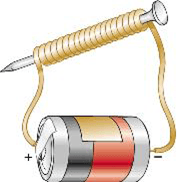
A coiled current carrying wire is called

a)

an electromagnet

b)

a solenoid

c)

a compass

d)

a ferromagnet

98.

Unlike poles of different magnets

a)

attract each other

b)

cancel each other out

c)

repel each other

99.

Electromagnets can be

a)

turned on and off

b)

made stronger

c)

made from iron

d)

made weaker

100.

The magnetosphere

a)

surrounds the Earth

b)

Surrounds the sun

c)

is shaped by the solar wind (charged particles from the sun)

d)

doesn't exist

101.

The magnetic field is strongest

a)

at the poles

b)

in the middle

c)

at the north pole

d)

at the south pole

102.

THe north end of a compass needle always points to

a)

our geographic north pole

b)

our geographic south pole

c)

our magnetic north pole

d)

our magnetic south pole

103.

Earth acts like a magnet because its core contains

a)

molton carbon

b)

solid nickel and iron

c)

rocks

d)

molten nickel and iron

104.

Which of the following would be an example of an insulator?

a)

iron

b)

aluminum

c)

rubber

d)

silver

105.

The rule of charged particles states that

a)

opposites attract

b)

opposites repel

c)

opposites don't interact

d)

likes attract

106.

These are responsible for the flow of electricity

a)

protons

b)

electrons

c)

neutrons

d)

wires

107.

Conduction is the transfer of electric charges by

a)

interaction of electric fields

b)

direct contact

c)

rubbing

d)

jumping

108.

If the magnets above were brought close together they would…

a)

attract each other with a a strong force

b)

repel each other with a strong force

c)

attract each other with a weak force

d)

repel each other with a weak force

109.

An example of static discharge would be

a)

using a compass

b)

an elecromagnet

c)

a lightning bolt

d)

rain

110.

Which position of the two magnets results in the greatest attraction between them?

a)

A

b)

B

c)

C

d)

D

111.

Current is the flow of these through a wire

a)

electrons

b)

protons

c)

neutrons

112.

Charging by rubbing is called

a)

friction

b)

induction

c)

conduction

d)

polarization

113.

Current, or the flow of charge through a wire is measured in

a)

volts

b)

amps

c)

Joules

d)

Newtons

114.

Induction is the charging of an object through

a)

direct contact

b)

rubbing

c)

interaction of electric fields

d)

pugging it in

115.
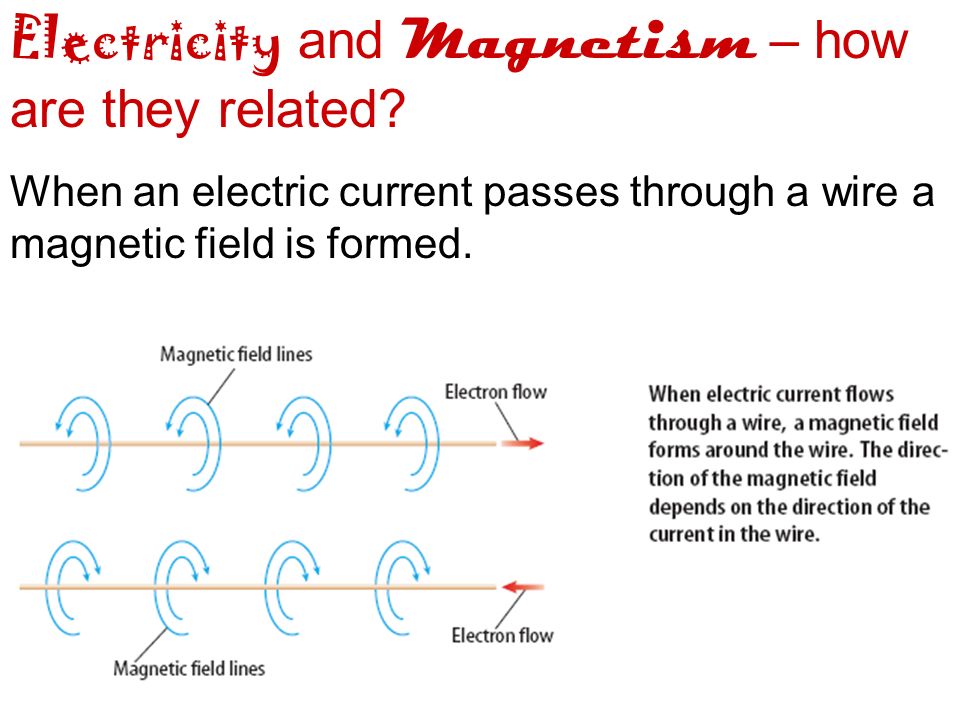
While electric current is flowing through a wire, what surrounds the wire?
a)
a magnetic field
b)
a glowing light
c)
neutrons
d)
protons
116.

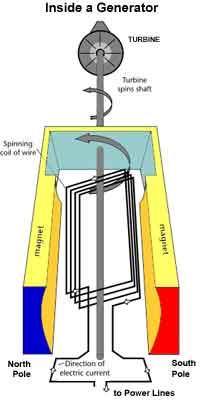
What two forces are required for generators and electric motors to work?

a)

magnetism and thermal

b)

electricity and thermal

c)

electricity and magnetism

d)

magnetism and radiant

117.
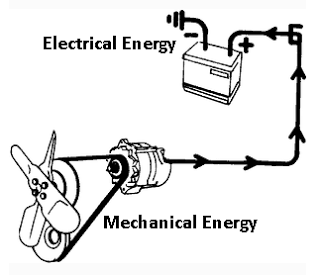
What is the transfer of electricity in a generator?
a)
Mechanical to Electrical 
b)
Physical to Potential 
c)
Electrical to Mechanical
d)
Yogurt to Light
118.
What is the transfer of electricity in a motor?
a)
chemical to mechanical 
b)
electrical to mechanical
c)
mechanical to electrical 
d)
physical to potential 
119.
This picture shows a turbine generator used to produce electricity at a geothermal power plant.
Electricity is produced by using steam to _____________.
a)
heat the turbine generators
b)
spin the turbine generators 
c)
reduce friction in the turbine generators
d)
reduce emissions from the turbine generators
120.

What would happen if you broke a bar magnet into 8 pieces?

a)

You would have 8 half magnets

b)

You would have 4 complete magnets

c)

You would have 8 complete magnets

d)

They wouldn't be magnets anymore

121.

A transformer actually transforms

a)

voltage

b)

magnetic field lines

c)

generators into motors

122.

A device that transforms mechanical energy to electrical energy is a

a)

generator

b)

motor

c)

transformer

d)

magnet

123.

A device that transforms electrical energy to mechanical energy is a

a)

generator

b)

motor

c)

transformer

d)

magnet

124.
The transformer shown is what type?
a)
step-up
b)
step-down
c)
current transformer
d)
isolation transformer
125.

Why did this simple electric motor work?

a)

The current from the battery induces a magnetic field in the copper loop, turning it into an electromagnet that repels from/attracts to the permanent magnet

b)

The electromagnet on top of the battery pulls on the magnetic copper wire

c)

The magnet induces a current in the copper loop which makes it rotate.

d)

The magnetic field from the battery induces an electric current in the copper loop, turning it into an electromagnet that repels from/attracts to the permanent magnet

126.
An electric motor changes electrical energy to _________ energy. 
a)
mechanical 
b)
chemical
c)
potential
d)
free
127.

How are electromagnets different from permanent magnets?

a)

magnets can be turned on/off

b)

you can turn an electromagnet on/off

c)

magnets are more powerful

d)

magnets have a North and South pole

128.
In large generators in power plants, ___________ rotate inside a coil of wire to produce an electric current.
a)
Wind
b)
Water
c)
Magnets
d)
Circuits
129.
Based on this picture, which side will have a higher voltage?
a)
Secondary
b)
Primary
c)
Both sides have the same voltage
d)
Cannot be determined
130.
A magnet is moved in and out of a coil of wire connected to a high-resistance voltmeter. If the number of coils doubles, the induced voltage 
a)
quadruples
b)
doubles
c)
is the same
d)
halves
131.

An ideal transformer has 12 V input voltage with 10 turns on the primary (input) coil, and 100 turns on the secondary coil has. What is the secondary voltage?

a)

0.12 V

b)

1.20 V

c)

12.0 V

d)

120.0 V

132.
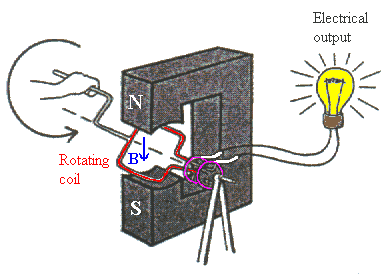
What is the device seen here?
a)
generator
b)
electric motor
c)
electromagnet
d)
magnet
133.
When John plugs in a toy and turns it on, a marble is carried up to the top of a slide. At the top, a marble is released and it goes down a slide. What kind of energy transformation occurs to make this toy work?
a)
chemical to heat
b)
electrical to chemical
c)
sound to electrical
d)
electrical to mechanical
134.
A device that converts kinetic energy into electrical energy
a)
A. electric generator
b)
B. electric motor
c)
C. electromagnetic induction
d)
D. electricity
135.
What is the relationship between electrical current and magnetic field strength in an electromagnet?
a)
When current is increased, magnetic field strength increases
b)
When current is increased the strength of magnetic field decreases
c)
When the current is decreased, the strenght of the magnetic field is increased.
d)
There is an "indirect proportion," meaning, if the value of one goes up, the value of the other goes down.
136.
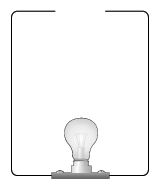
This circuit won't work. What essential part is missing from this circuit?
a)
resistance
b)
source of electric current
c)
conductor
d)
ammeter
137.
The force that pushes the electricity through a circuit is called...
a)
resistance
b)
voltage
c)
current
d)
switch
138.
The flow of electricity through a conductor is called...
a)
resistance
b)
voltage
c)
current
d)
source of electric current
139.
The best conductors for electricity are made of...
a)
wood
b)
plastic
c)
rubber
d)
metal
140.
This measures the speed of the current in a circuit
a)
voltage
b)
ammeter
c)
switch
d)
resistance
141.
What slows down the flow of electricity in a circuit?
a)
resistance
b)
voltage
c)
current
d)
source of electric current
142.
Which circuit (s) are parallel?
a)
A
b)
A and B
c)
B and C
d)
C
143.
Which one will still function if one light bulb goes out?
a)
A-Series
b)
B-Parallel
c)
A-Parallel
d)
B-Seriese
144.
Security alarms are made of _______ circuits because they turn on when the circuit is broken.
a)
Parallel
b)
Series 
c)
Fancy 
145.
If I add more light bulbs to a series circuit what happens?
a)
The current speeds up and the lights get brighter
b)
The current slows down and the lights dim lower
c)
The current speeds up and the lights dim lower
d)
The current slows down and the lights get brighter
146.

Which type of waves must have a medium in order to travel?

a)

electromagnetic wave

b)

mechanical wave

147.
All waves carry
a)
energy
b)
light 
c)
matter
d)
particles
148.

Mechanical waves usually travel fastest through:

a)

solids

b)

liquids

c)

gases

149.

Mechanical waves usually travels fastest as the temperature of the medium:

a)

increases

b)

decreases

c)

stays the same

150.
What is a medium?
a)
something between a small and a large?
b)
the substance through which a wave can travel
c)
a pattern of vibration that simulates when a wave is standing still
d)
the distance from any point on a wave to an identical point on the next wave
151.

What type of wave is this?

a)

Electromagnetic

b)

Mechancial

c)

Both Electromagnetic and Mechanical

152.

What type of wave is this?

a)

Electromagnetic

b)

Mechanical

c)

Both Electromagnetic and Mechanical

153.

True or False: Sound needs a medium.

a)

True

b)

False

154.

True or False: Sound waves are faster than light.

a)

False

b)

True

155.

Sound waves travel the fastest through ---

a)

Liquids

b)

Gases

c)

Solids

156.
Sound travels fastest through what type of medium?
a)
pond water
b)
cold air
c)
iced tea
d)
wooden desk
157.
Which travels faster: sound or light?
a)
light
b)
sound
158.

Which of the following does sound travel the fastest?

a)

solid

b)

liquid

c)

gas

d)

plasma

159.

What is the lowest point of a wave?

a)

trough

b)

crescent

c)

medium

160.

What unit is used to measure frequency?

a)

centimeters (cm)

b)

meters (m)

c)

hertz (Hz)

d)

miles per hour

161.

What is a wave?

a)

A disturbance that transfers matter from place to place.

b)

A disturbance that transfers energy but not matter.

162.

The number of waves that pass a fixed point in a given amount of time is...

a)

frequency

b)

wave speed

c)

amplitude

d)

wavelength

163.
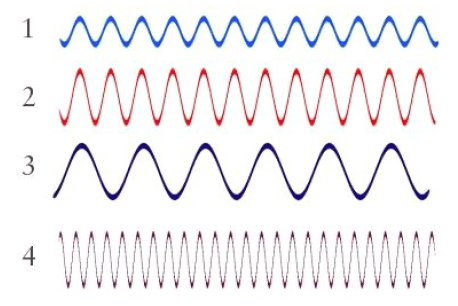
Which wave in the diagram has the greatest wavelength?
a)
1
b)
2
c)
3
d)
4
164.

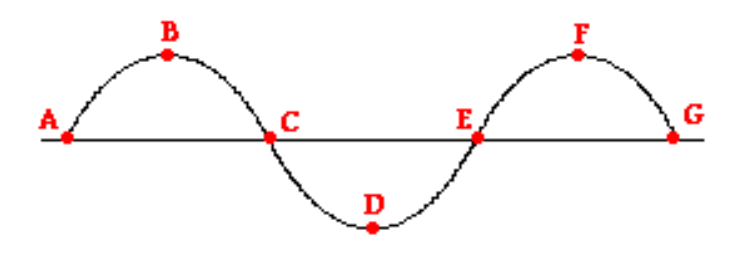
Which letter(s) represent the wavelength?

a)

A & B

b)

B & D

c)

B & F

d)

C & E

165.

What is amplitude?

a)

The distance from the center line ( or the still position) of a waveto the top of a crest or to the bottom of a trough.

b)

The number of waves passing a point in a certain time.

166.
The distance from one point to the next corresponding point on a wave is called the ________________.
a)
waveform
b)
peak
c)
amplitude
d)
wavelength
167.
What is a vacuum? 
a)
A space with only air in it
b)
A space with NO matter at all present
c)
A machine you use to do your chores
168.
EM waves  
a)
Must travel through a vacuum
b)
Can travel through a medium or a vacuum
c)
Are the same type of wave as mechanical waves
d)
Can only travel through a vacuum
169.
When the wavelength increases the frequency will
a)
increase
b)
decrease
170.
All EM waves travel at  
a)
different speeds
b)
the speed of sound
c)
the speed of light
d)
the speed of a vacuum
171.
What type of wave is sound?
a)
radio
b)
mechanical
c)
electromagnetic
d)
ocean
172.
Which wave type does not need a medium?
a)
sound
b)
electromagnetic
173.
Waves are a transfer of what?
a)
Heat
b)
Light
c)
Energy
d)
Food
174.
The type of waves that require medium to pass:
a)
Mechanical Waves
b)
Electromagnetic Waves
175.
What happens when a mechanical wave travels through a medium?
a)
Waves are transferred
b)
Energy is transferred
c)
Mass is transferred
d)
Particles are transferred
176.
Energy can be transferred from one medium to another through _________.
a)
vibrations
b)
stacking objects
c)
an ordered sequence
d)
colors
177.
Which of these waves cannot travel in a vacuum?
a)
light wave
b)
sound wave
c)
electromagnetic wave
d)
microwave
178.

Which of the following has the greatest effect on the speed at which sound travels through a gas?

a)

frequency

b)

amplitude

c)

proximity of subatomic particles

179.

A doorbell circuit converts electrical energy into mechanical energy. The mechanical energy is in the form of vibrations that ultimately produce

a)

EM waves

b)

Sound waves

c)

Thermal Energy

180.

Which wave has the longest wavelength.

a)

1

b)

2

c)

3

d)

4

181.

Which type of energy requires no matter to travel?

a)

Earth Quake

b)

Sound

c)

EM waves

182.
The type of wave that DOES NOT need a medium to travel through
a)
mechanical
b)
electromagnetic
183.

Which of the following is true for sound waves?

a)

They require a medium.

b)

They are unrelated to vibrations.

c)

They cannot travel through liquids

d)

They can travel in a vacuum

184.

How do electromagnetic and mechanical waves compare?

a)

Mechanical waves can only travel through a vacuum, but electromagnetic waves can travel through a solid, liquid, or gas.

b)

Mechanical waves can travel through a solid, liquid, or gas, but electromagnetic waves can only travel through a gas.

c)

Mechanical waves can only travel through a solid, liquid, or gas, but electromagnetic waves can travel through a vacuum.

d)

Mechanical waves can travel through a solid, liquid, or gas, but electromagnetic waves can only travel through a solid.

185.

Which of the following would EM waves moves the FASTEST through?

a)

solid

b)

liquid

c)

gas

186.

Which of the following would EM waves moves the FASTEST through?

a)

gold

b)

water

c)

air

187.

How do MECHANICAL waves travel?

a)

they transfer energy through particles that are touching each other

b)

they transfer energy between electric & magnetic fields

c)

they increase their amplitude to make waves travel faster

d)

they increase their frequency to make waves travel faster

188.

How do ELECTROMAGNETIC waves travel?

a)

they transfer energy through particles that are touching each other

b)

they transfer energy between electric & magnetic fields

c)

they increase their amplitude to make waves travel faster

d)

they increase their frequency to make waves travel faster

189.

What happens to the speed of a wave when it moves

from a gas to a solid?

a)

it speeds up

b)

it slows down

c)

it stays at the same speed