
 Worksheets
21-22 Semester 1 Review - 9th
Total questions: 35
Worksheet time: 37mins
What are context clues?
clues in the the text that help the reader identify the theme
Clues in the the text that help the reader identify the main idea
clues in the text that help the reader define unfamiliar words
clues in the text that help the reader identify the plot
Select all that apply: Which of the following is an type of context clue?
Synonyms
Hyperbole
Examples
Definitions
Antonyms
______________ are words with the same or similar meanings
antonyms
synonyms
homonyms
paranyms
_________________ are words with opposite meanings.
Antonyms
Synonyms
Homonyms
Paranyms

Based on its use in line 15, what is the meaning of the word moisten?
To make heavy
To keep hidden
To keep warm
To make wet

Which phrase matches the definition of the word reliable as it is used in paragraph 22?
able to be quiet
able to change plans if necessary
able to forgive easily
able to be trusted with responsibilities

What is the meaning of the word aisles as it is used in paragraph 1?
teams
rows
spaces
parts

What does the phrase “haven’t been up to snuff” mean in paragraph 8?
do not smell good
are not ready yet
do not cost much
are not good enough

n line 22, what is the meaning of the phrase "weak and gray"?
old
playful
shy
untidy

What is the meaning of line 4?
The lawn mower was put together poorly.
The lawn mower was powerful.
The lawn mower was able to move quickly.
The lawn mower was noisy
Theme is the
lesson or moral of a literary work
what I think it is.
ideas the author presents.
The + me
Authors organize their ideas in an informational text by using which of the following
compare/contrast, cause/effect, problem/solution,
chronological, sequence, spatial/descriptive
Passage #1 – Chemical and Physical Changes All matter, all things can be changed in two ways: chemically and physically. Both chemical and physical changes affect the state of matter. Physical changes are those that do not change the make-up or identity of the matter. For example, clay will bend or flatten if squeezed, but it will still be clay. Changing the shape of clay is a physical change, and does not change the matter’s identity. Chemical changes turn the matter into a new kind of matter with different properties. For example, when paper is burnt, it becomes ash and will never be paper again. The difference between them is that physical changes are temporary or only last for a little while, and chemical changes are permanent, which means they last forever. Physical and chemical changes both affect the state of matter.
How is the above text organized?
chronological
compare and contrast
cause and effect
problem and solution
Passage #2 – The Best PB & J Ever When I got home from school after a long boring day, I took out the peanut butter, jelly, and bread. After taking the lid off of the jars, I spread the peanut butter on one side of the bread and the jelly on the other, and then I put the two pieces of bread together. After that, I enjoyed it while watching “Cops” on the TV. I swear, that was the best peanut butter and jelly sandwich I ever ate.
How is the above text organized?
chronological
sequence/process
cause and effect
spatial/descriptive
Passage #4 – Save the Tigers
Dr. Miller doesn’t want the tigers to vanish. These majestic beasts are disappearing at an alarming rate. Dr. Miller thinks that we should write to our congress people. If we let them know that we demand the preservation of this species, maybe we can make a difference. Dr. Miller also thinks that we should donate to Save the Tigers. Our donations will help to support and empower those who are fighting the hardest to preserve the tigers. We owe it to our grandchildren to do something.
How does the author organize the passage?
cause and effect
problem and solution
sequence/process
spatial/descriptive
Passage #5 – The Great Recession
Many people are confused about why our economy went to shambles in 2008. The crisis was actually the result of a combination of many complex factors. First, easy credit conditions allowed people who were high-risk or unworthy of credit to borrow, and even people who had no income were eligible for large loans. Second, banks would bundle these toxic loans and sell them as packages on the financial market. Third, large insurance firms backed these packages, misrepresenting these high-risk loans as safe investments. Fourth, because of the ease of acquiring credit and the rapid growth in the housing market, people were buying two or three houses, intending to sell them for more than they paid. All of these factors created bubbles of speculation. These bubbles burst, sending the whole market into a downward spiral, causing employers to lose capital and lay off employees. Consumer spending then plummeted and most businesses suffered. The economy is like a big boat, and once it gets moving quickly in the wrong direction, it’s hard to turn it around.
How did the author organize the passage?
problem and solution
cause and effect
chronological
spatial/descriptive
Passage #6 – Screen Protector Before applying the screen protector, clean the surface of your phone’s screen with a soft cloth. Once the surface of your screen is clean, remove the paper backing on the screen protector. Evenly apply the sticky side of the screen protector to your phone’s screen. Smooth out any air bubble trapped on between the protector and the phone screen. Enjoy the added protection.
How did the author organize the text?
spatial/descriptive
problem and solution
cause and effect
sequence/process
what does chrono mean?
time
order
silver
science
Passage #10 What Happened to the Dinosaurs?
There are many theories about why the dinosaurs vanished from the planet. One theory that many people believe is that a gigantic meteorite smashed into the Earth. Scientists believe that the meteorite was very big and that the impact may have produced a large dust cloud that covered the Earth for many years. The dust cloud may have caused plants to not receive sunlight and the large plant eaters, or herbivores, may have died off, followed by the large meat eaters, or carnivores. This theory may or may not be true, but it is one explanation as to why these giant reptiles no longer inhabit the Earth.
problem and solution
cause and effect
sequence/process
chronological
Passage#13
Have you ever wondered what the inside of a volcano looks like? Deep underground is a magma chamber. The magma chamber is under the bedrock of the earth’s crust. The conduit or pipe runs from the magma chamber to the top of the volcano. The conduit connects the magma chamber to the surface. Most volcanoes also have a crater at the top. Volcanoes are quite a sight, and you can enjoy this site all over the universe. Volcanoes are found on planets other than Earth, like the Olympus Mons on Mars.
How did the author organize the passage?
chronological
spatial/descriptive
sequence/process
cause and effect
Passage#14
The ability of a building to withstand the stress of an earthquake depends upon its type of construction, shape, mass distribution, and rigidity. Different combinations are used. To reduce stress, first, the building's ground floor must be flexible. One method is to support the ground floor with extremely rigid, hollow columns, while the rest of the building is supported by flexible columns located inside the hollow columns. A different method is to use rollers or rubber pads to separate the base columns from the ground, allowing the columns to shake parallel during an earthquake. Next, the outdoor walls should be made with stronger and more reinforced materials such as steel or reinforced concrete. Then, to help prevent collapsing, the roof should be made out of light-weight materials.
How did the author organize this passage?
sequence/process
chronological
problem and solution
cause and effect
Passage# 15
When a river receives a lot of extra water it may flood. During a flood there is plenty of water, and most people wouldn’t think that dehydration was a serious risk, but flood waters are mostly polluted and not safe to drink. People who drink the contaminated water may suffer from illnesses or diseases such as typhoid. You can prepare for flooding by filling many containers with fresh clean drinking water. You can also use sandbags to protect your house and to soak up the water. Be prepared and be safe.
How did the author organize this passage?
cause and effect
problem and solution
sequence/process
chronological
Passage # 16
Lightning and thunder are related events. Lightning is a sudden, violent flash of electricity that occurs between a cloud and the ground or between two clouds in the sky. A lightning bolt can be several miles long and can be straight or forked. It is very hot, with an average temperature of 34 000 degrees Celsius. This causes the air around the electric bolt to expand, producing lots of sound energy. It is this sound energy that we hear as thunder. So, lightning and thunder are caused by the same event, but lightning is light energy, or electromagnetic energy, whereas thunder is sound energy. Thus, we see lightning and hear thunder.
How did the author organize the passage?
cause and effect
problem and solution
compare and contrast
chronological
What is the theme?
What is the theme?
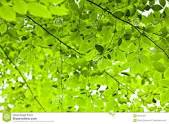
Her hardest hue to hold.
Her early leaf's a flower;
But only so an hour.
Then leaf subsides to leaf,
So Eden sank to grief,
So dawn goes down to day
Nothing gold can stay.
What is the central theme of this poem?
Exams will begin
(a)

