
 Worksheets
Science Finals Tri.2 GN
Total questions: 117
Worksheet time: 1hrs 1mins
A solid inorganic substance of natural occurrence.
Mineral
Crystal
Compound
Element
Has flat sides, called faces, that meet at sharp edges and corners.
Crystal
Compound
Element
Organic
A thing that is composed of two or more separate elements; A mixture.
Compound
Element
Organic
Inorganic
A substance composed of a single kind of atom.
Element
Organic
Inorganic
Streak
Relating to or derived from living matter.
Organic
Inorganic
Streak
Luster
Materials that are not a part of living things.
Inorganic
Streak
Luster
Mohs Hardness Scale
The color of a mineral’s powder.
Streak
Luster
Mohs Hardness Scale
Cleavage
The term used to describe how light is reflected on a mineral’s surface.
Luster
Mohs Hardness Scale
Cleavage
Fracture
Ranks the hardness of minerals from 1 (softest) to 10 (hardest).
Mohs Hardness Scale
Cleavage
Fracture
Conchoidal
The tendency of a mineral to cleave, or break, along flat, even surfaces.
Cleavage
Fracture
Conchoidal
Crystallization
The uneven breaking of a mineral.
Fracture
Conchoidal
Crystallization
Solution
Type of fracture that has uneven, smooth breakage.
Conchoidal
Crystallization
Solution
Vein
The process by which a solid forms, where the atoms or molecules are highly organized into a structure known as a crystal.
Crystallization
Solution
Vein
Magma
A mixture in which one substance is dissolved in another.
Solution
Vein
Magma
Lava
A narrow channel or slab of a mineral that is different from the surrounding rocks.
Vein
Magma
Lava
Rock
Molten material beneath Earth’s surface.
Magma
Lava
Rock
Igneous
Naturally occurring molten material above Earth’s surface
Lava
Rock
Igneous
Sedimentary
A naturally occurring, solid substance that is normally made of minerals.
Rock
Igneous
Sedimentary
Metamorphic
Forms from the cooling of magma or lava.
Igneous
Sedimentary
Metamorphic
Rock Texture
Forms when small particles of rocks or the remains of plants and animals are pressed and cemented together.
Sedimentary
Metamorphic
Rock Texture
Coarse Grain
Forms when a rock is changed by heat or pressure, or by chemical reactions.
Metamorphic
Rock Texture
Coarse Grain
Fine Grain
The look and feel of a rock's surface.
Rock Texture
Coarse Grain
Fine Grain
Conglomerate
Large and easy to see.
Coarse Grain
Fine Grain
Conglomerate
Brecca
So small you need a microscope to see.
Fine Grain
Conglomerate
Brecca
Extrusive
Contain rock fragments that are different sizes but have round(ed) edges.
Conglomerate
Brecca
Extrusive
Intrusive
Contain rock fragments that are different but have sharp/sharpened edges.
Brecca
Extrusive
Intrusive
Volcanic
Igneous rock formed from lava that has erupted onto the surface.
Extrusive
Intrusive
Volcanic
Plutonic
Igneous rock formed from magma that hardens beneath the Earth's surface.
Intrusive
Volcanic
Plutonic
Volcanic Glass
Related or produced by a volcano or volcanoes.
Volcanic
Plutonic
Volcanic Glass
Weathering
Produced by magma beneath the ground.
Plutonic
Volcanic Glass
Weathering
Erosion
Any glassy rock formed from lava or magma that has a chemical composition close to granite.
Volcanic Glass
Weathering
Erosion
Deposition
Wearing or being worn by long exposure to the atmosphere from weather or forces of nature.
Weathering
Erosion
Deposition
Compaction
The process by which running water, wind, or ice carry away bits of broken-up rock.
Erosion
Deposition
Compaction
Cementation
Is the process by which sediments settle out of the water or wind carrying it.
Deposition
Compaction
Cementation
Clastic Rock
New layers squeeze particles together.
Compaction
Cementation
Clastic Rock
Strata
The process in which dissolved minerals crystallize and glue particles of sediment together.
Cementation
Clastic Rock
Strata
Foliated Rock
A Sedimentary rock formed when rock garments are squeezed together.
Clastic Rock
Strata
Foliated Rock
Non-Foliated Rock
Layers in a sedimentary rock. Oldest are at the bottom while the youngest are at the top.
Strata
Foliated Rock
Non-Foliated Rock
Rock Cycle
Mineral grains are arranged in either parallel layers or bands. Thin, flat layering.
Foliated Rock
Non-Foliated Rock
Rock Cycle
Mineral
Mineral grains in the rocks are arranged randomly.
Non-Foliated Rock
Foliated Rock
Rock Cycle
Crystal
An idealized cycle of processes undergone by rocks in the earth's crust, involving igneous intrusion, uplift, erosion, transportation, deposition as sedimentary rock, metamorphism, remelting, and further igneous intrusion.
Rock Cycle
Mineral
Crystal
Compound
Select the answer that is NOT one of the characteristics of a mineral
Naturally Occuring and Inorganic
Solid Substance
Orderly Crystalline Structure
Definite Chemical Composition
Made of Plants
Is coal a mineral?
Yes
No
True or False?
Minerals are naturally occurring.
True
False
True or False?
Sometimes minerals are liquid, like jelly.
True
False
True or False
Minerals must have an orderly crystalline structure.
True
False
True or False?
Minerals can't have a chemical composition.
False
True
Do all minerals have compounds?
Yes
No

A mineral can scratch Gypsum and Fluorite but is scratched by Feldspar and Diamond. what is it's hardness?
5
6
3
4
Each mineral has a characteristic ____
density
mass
volume
area
How do scientists determine a mineral's density?
By measuring the mass and noting how much water is displaced by the mineral.
By measuring the volume and noting how much water is displaced by the mineral.
By measuring the volume and noting how much water is displaced by the rock.
By measuring the air and noting how much water is displaced by the mineral.
Name one special property possible for a mineral.
(a)
Choose the option that doesn't present how a mineral is formed.
Organic Processes
Crystallization From Solutions
Pressure and Temperature
Crystallization From Magma and Lave Cooling
Crystallization From Weathered and Eroded Minerals
Can some minerals form from organic material?
Yes
No
what is the limit of minerals a rock can hold?
Infinity
1
5
10
What is one type of rock?
(a)
True or False?
All rocks have a grain.
True
False
What is the difference between magma and lava?
Magma: Underground
Lava: Aboveground
Magma: Aboveground
Lava: Underground
Magma: Hot
Lava: Warm
Magma: Warm
Lava: Hot
Explosive material due to large volcanic eruptions lava cools as it falls.
Pyroclastic Flow
Pyroclastic Phobia
Pyrophobia flow
Pyroflasktic flow
True or False?
Weathering-->Erosion-->Deposition-->Compaction-->Cementation
True
False
How are sedimentary rocks used?
Tools and Building Materials
Sandcastles
Buildings/Brownstones
Heat can come from pockets of ____
Magma
Lava
Plutonic
Volcanic
Geologic uplift and the erosion of the rock and soil above them causes
Metamorphic rocks to be exposed to the Earth's surface.
Sedimentary rocks to be exposed to the Earth's surface.
Igneous rocks to be exposed to the Earth's surface.
Metamorphic rocks to be exploded to the Earth's surface.
Collisions between the Earth’s plates can push rocks down toward the heat of the ____
Mantle
Core
Outer Core
Crust
While mountains are formed, plate collisions can cause great ____ to rocks
Pressure
Density
Formation
Regional Metamorphism
The ____ a rock is in the Earth's crust, the greater the pressure.
Deeper
Shallower
Higher
Hotter
Can pressure deform or change the physical shape of the rock?
Yes
No
A rock melts due to pressure and becomes magma. What type of rock is it?
Igneous
Magma
Metamorphic
Sedimentary
How are metamorphic rocks classified?
By arrangement of the grains making up the rocks.
By arrangement of the colors making up the rocks.
By arrangement of the layers making up the rocks.
True or False?
Sedimentary rocks can't turn into igneous rocks.
True
False
Which of these rocks is harder?
Sedimentary
Metamorphic
Can possibly form in caves where mineral-rich water drips from the ceiling, creating stalactites & stalagmites made out of limestone
Chemical Sedimentary Rock
Chemical Metamorphic Rock
Chemical Igneous Rock
Clastic Sedimentary Rock
Biochemical
Made out of living things
Made out of non-living things
Rift valley formation causes lava to pour out of cracks in the ocean floor, on land, which leads to...
Mountain formation
Volcano formation
Volcanoes can form from what boundary?
Choose all that apply.
Convergent
Continental+Oceanic
Divergent
Oceanic+Oceanic
Convergent
Oceanic+Oceanic
Divergent
Continental+Oceanic
Convergent
Continental+Continental
Major belt of volcanoes.
Ring of fire
Pacific stress
Whakaari volcano
What's more dangerous; steam or water?
Steam
Water
The higher in silica, the ____ an explosion might have.
Greater damage
Less damage
Where can you find slow-moving lava that's low in silica?
Hawaii
Antarctica
Whakaari
Las Vegas
Thin layers of lava pour out of a vent and harden on top of previous layers.
Shield Volcano
Dormant Volcano
Active Volcano
Layered Volcano
A mass of rock formed when a large body of magma cools inside the crust.
Batholith
Pluton
Alahar
As stress increases, force...
Decreases
Increases
What type of stress occurs at a divergent boundary?
Tension
Shearing
Compression
What type of stress occurs at a convergent boundary?
Compression
Tension
Shearing
What type of stress occurs at a transform boundary?
Shearing
Compression
Tension
Name one type of fault that can occur between boundaries.
(a)
Normal faults occur at...
Divergent
Convergent
Transform
When two normal faults are combined, it forms a...
Reverse fault
Rift valley
Deep ocean trench
Mid-ocean ridge
A reverse fault occurs at a...
Convergent
Divergent
Transform
A thrust fault occurs at a...
Convergent
Transform
Divergent
Strike-slip faults occur at a...
Transform
Convergent
Divergent
Which seismic wave causes the most damage?
L wave
P wave
S wave
What's the first seismic wave to arrive?
P wave
L wave
S wave
What can hold more water vapor?
Hot air
Cold air
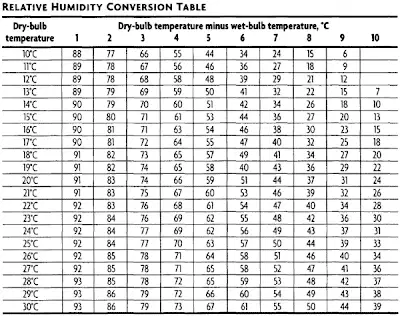
If the dry bulb is 12 degrees and the wet bulb is 7, what is the relative humidity?
48%
29%
68%
7%
Air goes from...
High--> low pressure
Low--> high pressure
East--> west
North--> south
The unequal heating of Earth's surface causes ____ differences
Pressure
Heating
Cold
Wind
Winds are described by their...
Choose all that apply.
Direction
Speed
Measurnment
Barometer pressure
Land cools and heats ____ than water
Faster
Slower
The Coriolis effect makes winds turn slightly to the...
Left
Right
What is the difference between freezing rain and sleet
Rain freezes after hitting the ground while sleet freezes before
Sleet freezes after hitting the ground while rain freezes before
Rain freezes after hitting the ground while hail freezes before
Which of these clouds show good weather for the day?
Choose all that apply
Cirrus
Cumulus
Stratus
Cumulonimbus
Cirrocumulus
Water vapor is the source of...
Clouds and precipitation
Clouds and Sunlight reflection
Precipitation and living organisms
Which is more dense?
Cold air
Warm air
The elevation above sea level.
Altitude
Height
Tree
Mountains
What is a maritime tropical air?
Moist and warm
Cold and dry
Moist and dry
Moist and cold
Which one is less dense?
Tropical air
Polar air
Which one forms over an ocean?
Polar
Maritime
Tropical
Continental
When warm air is trapped under two cooler air masses, this forms an...
Occlued front
Cold front
Warm front
Stationary front
Cyclones spin...
Clockwise
Counterclockwise
Anti-cyclones spin...
Counterclockwise
Clockwise
In an anticyclone, winds swirl clockwise ____ the middle
Away from
Towards
In a cyclone, winds swirl counter-clockwise ____ the middle
Towards
Away from
Hurricanes are dependent on
Moisture
Dryness
Air pressure
Momentum

Convert 10 kilometers to centimeters
1,000,000cm
10,000,000cm
.00001cm
If a hurricane is in the Indian Ocean, it is called a...
Typhoon
Cyclone
Anti-cyclone
If a hurricane is in the Western Pacific, it is called a...
Cyclone
Anti-cyclone
Typhoon

