
 Worksheets
Lesson 3 - Fun and Flow
Total questions: 15
Worksheet time: 8mins

The MDA framework by Hunicke&Leblanc provides a “taxonomy of fun”. Which one denotes gaming as a pastime?
Fantasy
Submission
Discovery
None of them

According to MDA, playing “charades” is mainly aligned with which type of fun?
Sensation
Fellowship
Discovery
All of them

Lazzaro’s study found that there are 4 “types of fun”. Which one corresponds to a sense of immersion and mystery?
Easy fun
Hard fun
People fun
Serious fun

Under Lazzaro’s “People fun”, there is an emotion related to feeling proud of others that are under your responsibilities, be it your apprentice or a tamagotchi. Which is it?
Fiero
Shadenfreude
Naches
Relief

Radoff proposes a list of 42 things to do that can be considered fun. Among them, the ones related to playing a role are of significance. For example...
Being a rebel
Being a villain
Being a hero
All of them

Riess’s approach is based on 16 basic desires of all human beings that empower intrinsic motivation. Among them, we can find “Honor: the desire for upright character”. Going back to SDT and Drive, that would be categorized be under…
Autonomy
Purpose
Competence
Relatedness

Marczewski’s approach to “fun” is based on 5 categories. Which one is motivated by curiosity and learning?
Achievement
Free Spirited
Facilitated
None of them

Of course, every recurrent approach to “fun” is not 100% groundbreaking and always have some overlap among them. For instance, Marczewski’s “Free Spirited Fun” would be similar to Lazzaro’s…
Serious Fun
Hard Fun
People Fun
Easy Fun

Radoff considers that “#20: Pretending to Live in a Magical Place” is a fun thing to do. Using Marczewskis’s classification, this could be included under…
Achievement Fun
Social Fun
Facilitated Fun
Unfacilitated Fun

Reiss includes the basic desire “Tranquility”, or to avoid experiencing pain or stress. Using Marczewskis’s classification, this could be included under…
Achievement Fun
Free Spirited Fun
Social Fun
Unfacilitated Fun

How would you phonetically pronounce ”Csikszentmihalyi”?
Cheek-sent-me-high
Case-zen-may-hail
Chic-zen-may-holy
Cast-sent-me-heily

In Flow theory, low challenge level and low skill level lead to…
Boredom
Worry
Relaxation
Apathy

Flow is not volitional, but we can create the circumstances that may facilitate it. Which one is true?
In company
Clear goals
Sense of control
All of them

When designing the flow experience, what is the phase when you surpass your current competence level and actively start harder challenges (and probably failing quite a bit in the process…)?
Testing
Mastering
Grinding
Levelling
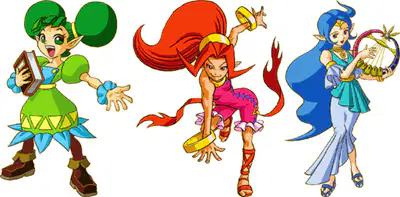
QUALITY ROUND: I hold the Triforce of COURAGE.
Zelda
Link
Ganondorf
None of them

