
Font size
 Worksheets
Fossils Review
Total questions: 14
Worksheet time: 11mins
What are some things scientists can learn from studying fossils? Select ALL that apply
Scientists can learn about the plants that used to live in the area.
Scientists can learn about what the animals did for fun.
Scientists can learn about the animals that used to live in the area.
Scientists can learn about what the environment was like in the area.

The diagram shows one rock layer on top of another. The table shows the habitats of different plants and animals. Using this information, what was the order of habitats in this area?
Sea shore and then forest
Forest and then sea shore
Sea shore and then desert
Swamp and then forest

Below the ice in the Arctic are rocks with fossils. Some fossils found there are plants that only grow in warm places. Finding this fossil here can tell us what?
Rock is always covered with ice.
The Arctic is not a very old place.
The land was not always in a very cold area.
Some plants can grow in rock.
Extinct
We can study fossils to learn about what?
How living things need rock to live
What the temperature will be tomorrow
How icebergs form
What plants and animals lived long ago

The map shows where fossil plants were found. The table shows the habitat where these plants grew in the past. In which area on the map was there previously an ocean?
A
B
C
D
If you were to create a model of fossil layers, which of the following details would make your model more accurate? Select ALL that apply.
I would put the oldest fossils on the bottom layer.
I would put the newest fossils on the top layer.
I would put the oldest fossils on the top layer.
I would use different colors to show the different layers.

Which fossil would tell us that the area had been covered with trees in the past?
Snail shell
Millipede
Scorpion
Dragonfly
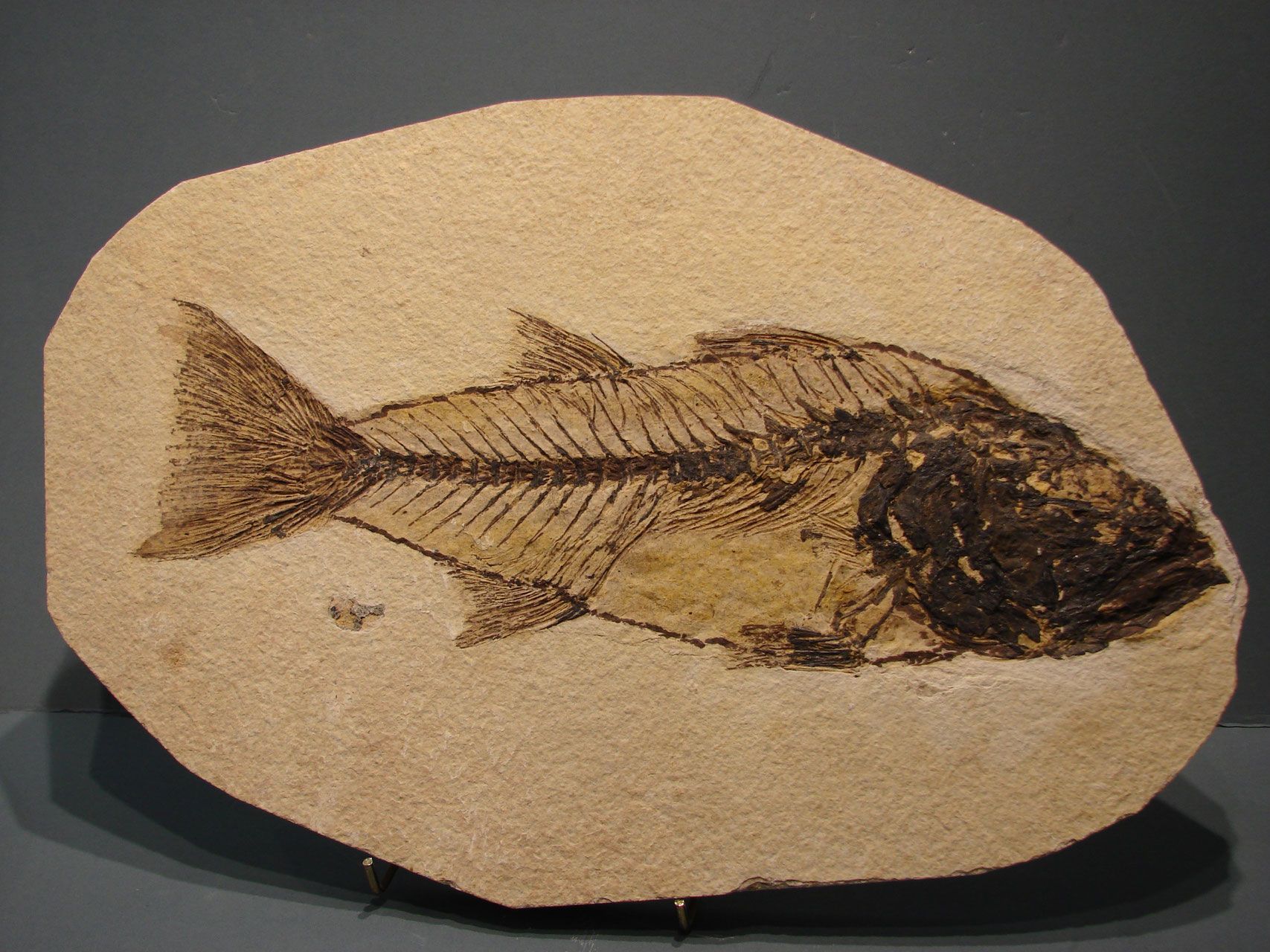
If a scientist found a fish fossil in the desert, what can they assume?
An animal ate the fish.
The water covered the area long ago.
Today's fish looks the same
The fish is endangered.

What is the correct listing of steps for a fossil?
1) Pressure created a rock.
2) Plant or animal is buried.
3) Plant or animal is left alone for years.
4) Plant or animal dies.
1) Plant or animal dies.
2) Plant or animal is left alone for years.
3) Pressure created a rock.
4) Plant or animal is buried.
1) Plant or animal dies.
2) Plant or animal is left alone for years.
3) Plant or animal is buried.
4) Pressure created a rock.
1) Plant or animal dies.
2) Plant or animal is buried.
3) Plant or animal is left alone for years.
4) Pressure created a rock.
Two fossils are found in a cold mountain region. One is a fish fossil and the other is a palm tree fossil. What can you infer about the environment in which these organisms lived?
A warm ocean environment because fish are found in areas with water and palm trees are found in warm ocean environments.
A cold mountain region because an environment cannot change its type of environment over time.
A warm mountain region because since there are palm trees, the area needs to be warm.
A hot desert because palm trees are found in hot areas.
Which type of rock are most fossils found?
sedimentary rock
metamorphic rock
igneous rock
fossils
What needs to happen FIRST for a fossil to form?
A plant or animal must be covered by sediment.
A plant or animal must die and decompose.
Sediments fill a a mold to form a cast.
An earthquake shifts the land up.

