
Font size
 Worksheets
Biology - Unit 4
Total questions: 48
Worksheet time: 49mins
The different forms of a gene are called
Traits
Pollinations
alleles
hybrids
The arctic fox is blue-gray in the summer and white in the winter. What most likely influence(s) this change?
Genes and the environment
Dominant alleles
The environment alone
Codominant alleles
Darwin noticed that many organisms seemed well suited to
Being preserved as fossils
Providing humans with food
Surviving in the environments in which they lived
Biologists in Darwin’s time had already begun to understand that living things change over time. How did Darwin contribute to these ideas?
He found many fossils that showed that these changes could not possibly happen on islands.
He figured out and explained how these changes happened and supported his ideas with evidence.
Darwin first began to formulate his concept of evolution by natural selection after
Experimenting with animals
Observing patterns among the geographical location of certain species
Reading the writings of Wallace
Agreeing with Lamarck about the driving force behind evolution
People of Charles Darwin’s time understood that fossils were
Preserved remains of ancient organisms
Available for every organism that ever lived
Unrelated to living species
Evidence for the evolution of life on Earth
When a dairy farmer chooses to breed cows that give the most milk in the herd, the farmers are following the principle of
Acquired characteristics
Descent with modification
Artificial selection
Natural selection
When farmers select animals or plants to use for breeding, they look for
Species that are perfect and unchanging
Homologous structures
Characteristics acquired during the lifetime of the organism
Natural variations that are present in a species
When a farmer breeds only his or her best livestock, the process involved is
Natural selection
Artificial selection
Artificial variation
Survival of the fittest
According to Darwin’s theory of natural selection, individuals who survive are the ones best adapted for their environment. Their survival is due to the
Possession of adaptations developed through use
Possession of inherited adaptations that maximize fitness
Lack of competition within the species
Charles Darwin called the ability of an organism to survive and reproduce in its specific environment
Diversity
Fitness
Adaptation
evolution
According to Darwin’s theory of natural selection, the individuals that tend to survive are those that have
Characteristics their parents acquired by use and disuse
The greatest number of offspring
Variations best suited to environmental conditions
Which of the following phrases best describes the results of natural selection?
The natural variation found in all populations
Unrelated species living in different locations
Changes in the inherited characteristics of a population over time
Charles Darwin viewed the fossil record as
Evidence that Earth was thousands of years old
Useful support for his theory
Evidence that traits are acquired through use or disuse
A chart that traces the inheritance of a trait in a family is called a(n)
Pedigree
Karyotype
Genome
autosome
Why do scientist use Punnett Squares?
A tool scientist use to to see alleles
A tool scientist use to see which alleles are dominant
A tool scientist use to determine possible genotypes for offspring

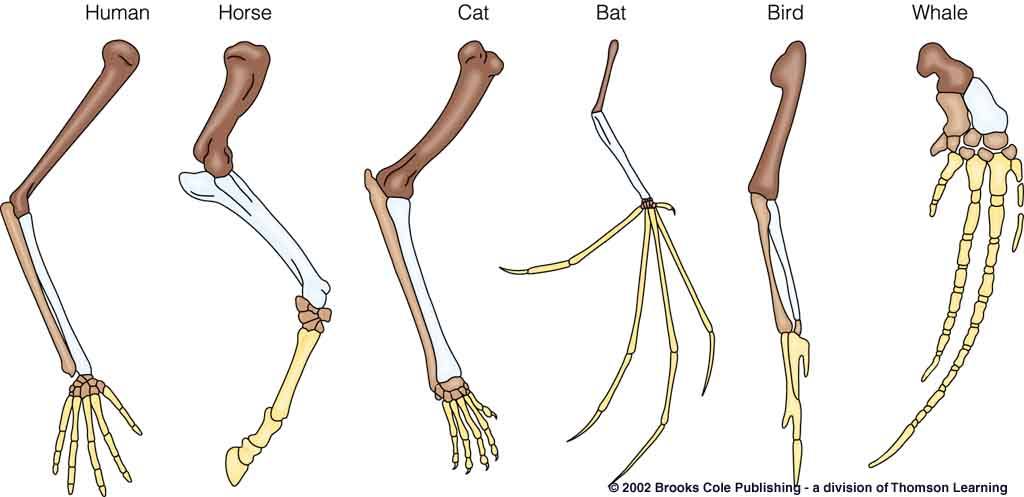
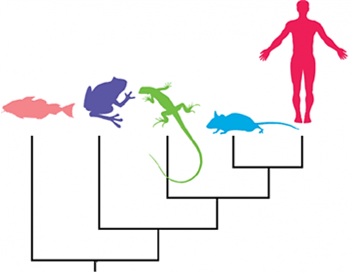
What is the human most closely related to?
Fish
mouse
Salamander
Human
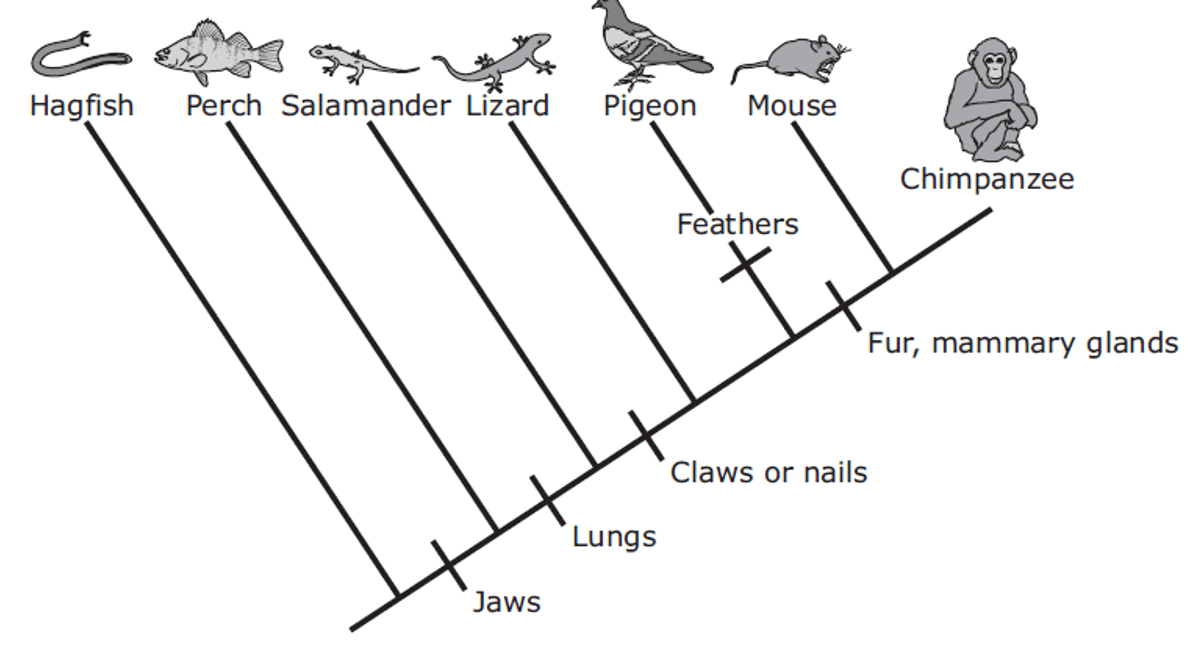
What is the purpose of a cladogram?
To map the ancestral relationships and shared traits of different organisms.
To trace the inherited traits of a single species over time.
To check the likelihood of an offspring having a particular trait.
To monitor mutations that arise among different populations.

What do both the squirrel and lion have in common that the other animals do not?
They are both vertebrates
They both have lungs
They are both mammals
They both lose their canine teeth.

What do amphibians, birds, prosimians and humans all have in common? Check all that apply.
Hair
Endothermic
Eukaryotic
Tetrapod
Vertebrate

Which trait should go where A is on the cladogram?
eyes
feet
lips
hat

According to the diagram, what is the common ancestor of ALL organisms on the phylogenetic tree?
B
C
D
E

What is the common ancestor of Letters A, B, C, D, E?
1
2
3
4

Using the cladogram, which two organisms are more closely related Lizards and Newts OR Lamreys and Sharks
Newts and Lizards
Lampreys and Sharks
Which is NOT a eukaryote?
Plants
Animals
Archaea
Protists
Which of the following is the correct order for least related to most related?
Domain
Kingdom
Phylum
Class
Order
Family
Genus
Species
Species
Kingdom
Phylum
Class
Order
Family
Genus
Domain
Species
Genus
Family
Order
Class
Phylum
Kingdom
Domain
Domain
Kingdom
Class
Phylum
Order
Genus
Family
Species
Which of the following sets of animals would be the most closely related?
Animals in the same order
Animals in the same genus
Animals in the same class
Animals in the same family
Which of the following sets of insects would be the most closely related?
Insects in the same class
Insects in the same family
Insects in the same order
Insects in the same species
Which of the following taxonomic groups would contain the most related set of animals?
Domain
Species
Family
Order

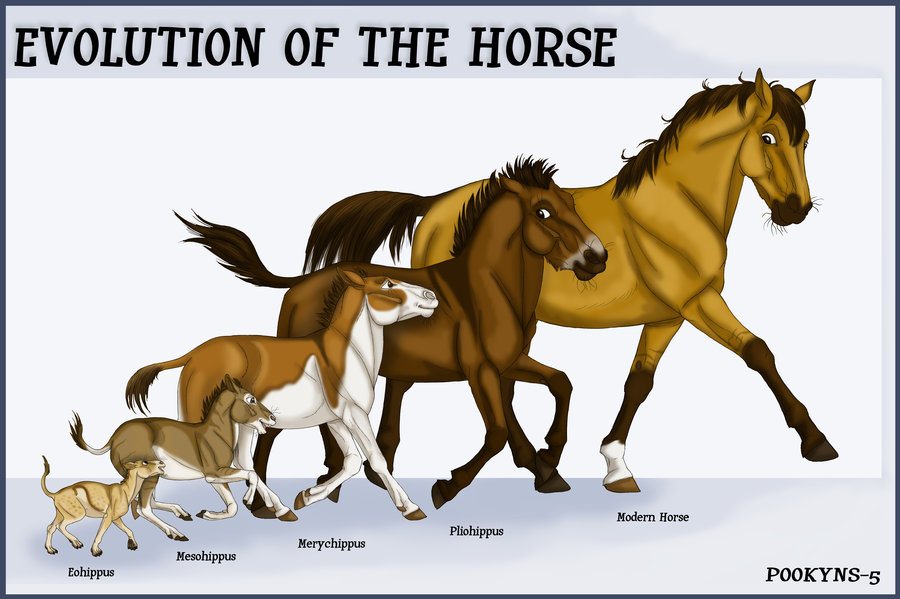
An anatomical feature that no longer seams to have a purpose in the current form of an organism
Homologous structure
Analogous structure
Vestigial structure
None of the above

Whales have pelvic bones. What type of structure does this best represent?
Homologous structure
Analogous structure
Vestigial structure
None of the above


